The Associated Press published a recent report indicating that “Lebanon, a small country, possesses one of the largest gold reserves in the Middle East,” noting that “the Lebanese government is studying the possibility of using this reserve to revive its exhausted economy, while its citizens look to gold as a means to protect their damaged savings.”
The Lebanese economy suffered during 2026, as inflation continued and conditions deteriorated, with the absence of any anti-corruption reforms.
In 2019, banks faced a severe financial crisis that wiped out depositors’ savings and pushed nearly half of the population, 6.5 million people, into poverty, after decades of corruption, waste and mismanagement.
The country incurred losses estimated at about $70 billion in the financial sector, and these losses increased due to about $11 billion in losses from the 2024 war between Israel and Hezbollah.
The price of gold rose to a record level of $5,354 before falling below $5,000. This rise was driven by geopolitical instability and doubts about US President Donald Trump’s desire to cut interest rates, which will ultimately lead to a decline in the value of the dollar.
Global central banks were among the largest buyers of gold, and at the same time, silver prices also rose due to industrial demand and its low price compared to gold.
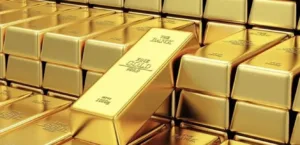
The Central Bank of Lebanon has maintained a gold reserve of 286 tons, equivalent to 9 million ounces, since the 1960s.
The government is considering using part of its gold reserves to rescue banks and repay depositors who lost all their savings, but doing so not only contradicts historical norms, but is also a violation of a law issued in the 1980s, according to what the Associated Press report says.
In the meantime, these depositors want to offset some of their losses by buying gold and silver, hoping that prices will rebound after the decline witnessed in recent days and record new highs.
Lebanon’s gold reserves were at one time worth $50 billion, more than double the country’s gross domestic product.
After years of economic crisis, and resistance to serious reforms that would revive the economy, a sensitive question is once again being asked: Is it finally time to exploit this gold mine?
A senior banking official told the Associated Press, “Some banks are proposing to resort to gold reserves to help repay depositors’ money they lost during the currency crisis.”
This amounts to a partial bailout of banks using the country’s only usable public asset. In 1986, Lebanon banned the sale of its gold in the midst of the civil war to protect state assets during a period of extreme instability.
Its reserves were never touched, neither after the 15-year war in 1990, nor after numerous wars with Israel.
According to the report, some economists have suggested using a small percentage of gold, in conjunction with comprehensive reforms, to reform the deteriorating electricity sector in Lebanon or to revive the dilapidated education and health care systems, in a way that serves the public good.
Using gold reserves in any way would require parliamentary approval, a widely unpopular step that is not expected to be taken anytime soon, especially months before a general election.
When the issue of gold was raised in a session held a few days ago, Parliament Speaker Nabih Berri quickly interrupted the discussion, saying firmly, “It is not possible.”
The draft law to bridge the financial deficit, which provides a framework for recovering some depositors’ losses, is still in Parliament amid controversy over who will bear the losses: Is it the exhausted Lebanese banks, which are often reluctant to hold themselves accountable, or the debt-burdened and wasteful state?, says the report.
Most Lebanese lack confidence in the authorities, who have evaded implementing fundamental reforms to combat corruption, reduce waste, and improve public services for years. Given this record, many believe that gold should remain untouched for future generations.
As authorities debate the future of gold in the country, many depositors who lost most of their savings in banks are turning to gold and silver to own something more tangible, hoping it will offset some of their losses.
On a recent day, crowds of people lined up in front of the main metal shop, located on the northern outskirts of Beirut, in a desperate attempt to get in and buy coins, medals, and gold and silver bullion.
People no longer trust banks, and are trying to get by in a turbulent monetary economy suffering from hyperinflation, and without any real reforms in sight.
“For those seeking to recover their losses, gold is not only a safe haven, it is the only haven,” says Chris Bogus, Managing Director of Bogus S.E.L., a precious metals company.
Business in this trade is witnessing a remarkable boom, as dealers now pay in advance to obtain their metals months later due to high demand.
Lebanon has long suffered from a turbulent history in a turbulent region, witnessing many conflicts and economic shocks, with a lack of confidence in the possibility of changing structural problems, according to the “Associated Press.”
“The Lebanese have always had a tendency to buy gold to hedge against potential inflation, because this country has witnessed repeated periods of hyperinflation throughout its history,” says Sami Zgheib, an economist at the Beirut-based think tank Policy Initiative.
He adds that this transformation is also easy, given the long-standing tradition in the region of the groom or his family presenting gold jewelry to the bride before marriage as her own wealth, even among families with limited income.
Zgheib confirms in his statements that this tradition still exists to a large extent despite the entry of many Lebanese women into the labor market.
Outside one of the gold markets in Beirut, Alia Shehadeh wanders between the storefronts and confirms that her collection of gold jewelry, as a woman, gave her a sense of security in the midst of the financial crisis, pointing to an Arabic proverb that translates to “adornment and treasure.”
In an interview with the Associated Press, Shehadeh said: “If a woman is in a difficult situation… she can sell her gold. When gold prices rise, she is the winner,” but at the same time she refuses to sell any of her gold.
When looking at the reluctance of citizens and authorities to sell gold, Zgheib said: “I think this indicates how important gold is in people’s psychology.”
He added: “They cannot even imagine any use for it other than as a hedge.” (Associated Press)