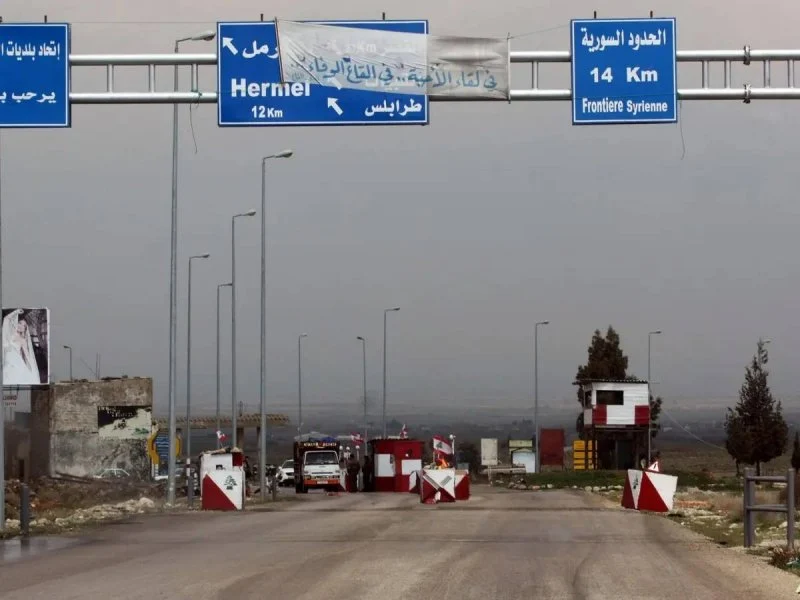
In a development that sparked widespread dissatisfaction among land transport circles, Bassam Tlais, head of the land transport sector federations and syndicates, criticized the recent Syrian decision to regulate the movement of freight through border crossings and ports, which imposes restrictions on the entry of non-Syrian trucks into Syrian territory, with the exception of transit trucks.
In a statement to, Tlais considered that the decision “was issued at an inappropriate and uncoordinated time, neither at the level of coordination with the Lebanese authorities, nor even at the internal level in Syria.”
He stressed that “immediately after the decision was issued, I communicated directly with the Minister of Works and the Minister of Agriculture regarding this issue. It became clear that the ministers and their representatives in Syria were not aware of the decision, and there are ongoing communications in this context to address the issue.”
Tlais pointed out that the decision “has many and serious repercussions, not only on land transport and drivers, but also on the Lebanese national economy, agricultural and industrial products, foodstuffs, and general trade, in addition to the tourism sector.”
He added: “This file needs comprehensive research and coordination. No one can sever relations between Lebanon and Syria, especially on the issue of shipping and transit. There is also a problem in the tourism sector, as Lebanese public tourist cars are prevented from moving in Syria, while Syrian public cars move freely in Lebanon and transport passengers even to Beirut airport. Therefore, I asked the Minister of Public Works to hold a quick and in-depth meeting to discuss this issue at the Lebanese level first, in coordination with the unions and sectors concerned, as well as with the Syrian side, to reach a permanent formula of understanding that can be amended when “Need.”
Tlais also clarified that the decision “is not in the interest of either party, the Lebanese or the Syrian, and according to what we know, what is meant by it is not Lebanon specifically, but rather other countries neighboring Syria. However, Lebanon should not be weakened in this context. The Lebanese trucks heading to Syria do not exceed a hundred, while the Syrian trucks entering Lebanon are more than that, which indicates a flaw in the logic of justice.”
He added: “Today there is a meeting in Syria between the ministries and departments concerned with this issue, and we hope to reach positive results, noting the speed of communication between the Ministers of Works and Agriculture with the Syrian authorities.”
At the conclusion of his speech, Tlais said: “We are following up on the issue with the Director General of Land and Maritime Transport and all those concerned, knowing that this matter required holding an emergency meeting headed by Prime Minister Nawaf Salam, in the presence of the relevant ministers and unions, but it coincided with the Prime Minister’s visit to the south, which is considered a priority due to its sovereign and national character, and matters are supposed to be addressed within 48 hours, as the situation cannot be postponed any longer.”