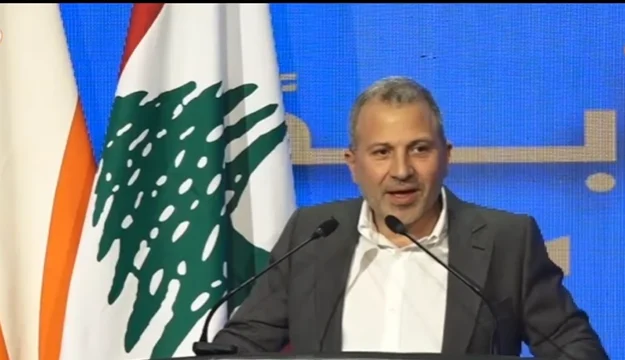
During a dinner party in the Jbeil district, the head of the “Free Patriotic Movement,” MP Gebran Bassil, wrote through his account on the “X” platform, saying: “Elders in politics left the land of Jbeil, not the least of whom was Brigadier General Raymond Edde, who stood against the Cairo Agreement, against the civil war, and against the Syrian and Israeli occupation,” adding that “he was truly sovereign, not selectively sovereign, not against the Syrian occupation only and with the Israelis, and not against the Israeli occupation only and with “The Syrian.”
Bassil continued: “Jbeil has given us its trust, and whoever gains people’s trust does not flee or betray, but rather stays and takes root,” stressing that “the movement remains and is rooted in Jbeil, and knows the meaning of loyalty to it and its people.” He declared that the movement “teaches lessons in loyalty because it is loyal to its pillar, its school, and its national line,” noting in return that it “learned lessons about treachery, and that the people’s voice needs protection so that it is not stolen.”
Bassil stressed that the movement is “determined to protect the votes of free people who are steadfast in their loyalty,” considering that “whoever reaches the people’s votes and then changes his position does not become independent but rather a traitor,” adding that “whoever betrays will fail the test of dignity and will be removed from the conscience of the people.” He explained that the movement “expresses the will of a section of the people of the Jbeil district and is entrusted with protecting this will,” considering that what is happening is “the restoration of the parliamentary seat that was stolen in an act of treachery,” stressing that this is “not revenge or revenge, but rather correcting the will of the people and returning things to their democratic and moral place.”
He pointed out that “Jbeil’s seat is the trust of the people, and whoever took it from them voluntarily departed from the trust of those who delivered it,” stressing that “Jbeil is not a gray area, but rather knows what it wants: a state, dignity, and partnership.” He added that Byblos “wants dignity, not betrayal, partnership, not dependency, a state built by plans, not by chance, and clear, non-fluctuating political representation,” stressing that it “is not taken by chance, nor is it represented by ambiguity.”
Regarding the upcoming elections, Bassil stated that “the movement’s message is clear: it must be present, and its people must vote with intensity, confidence, and awareness,” considering that the vote “does not only restore a position and a chair, but rather restores the meaning of commitment and politics, and the meaning of the representative being a son of his cause, not a passerby in it, and not a political tourist, but a representative committed to the trust of the people.”
He went on to say: “The battle is before us, and the decision is in your hands. It is a battle for the advancement of the movement and the nation, in which there is no place for grayness or opportunism, nor for those who consider acting a personal opportunity rather than a public trust.” He stressed that the battle “is not against people, but rather against the mentality of disintegration and the transformation of politics into commerce, and honorable activists into merchants who sell issues for their personal interests.”
Bassil wondered about “the value of the individual representative if he wins himself and loses the bloc or bloc,” considering that real parliamentary work is based on blocs and not on individuals, whether in legislation, projects, national partnership, or sectarian balance, all the way to confronting projects of division, displacement, and attacks on identity. He concluded that “the importance of parliamentary entitlement does not lie in the number of seats, but in protecting identity and existence,” stressing that “parliamentary representation is a public responsibility, not a personal gain.”
He concluded his speech by saying that “the movement is neither a false witness nor a decoration in the settlements of others, and it has never accepted directives from major powers or countries to accept directives from internal authorities,” calling for “turning treachery into motivation, anger into participation, and injustice into an uprising of votes in the ballot boxes,” stressing that “Jbeil was and will remain the fortress of the movement, and the movement exists to preserve its history and the honorable history of Lebanon, which cannot be bought or sold.”