The situation on the ground in the south, in light of the increasing anticipation of the course of events between the United States of America and Iran, remains the main focus of all diplomatic movements and communications related to Lebanon. Concerned circles noted that the pressure on
Lebanon escalated in a remarkable manner in response to the visit of the Army Commander, General Rudolf Heikal, to Washington, whether through daily Israeli raids or through diplomatic channels, drawing a strict and strict framework for the results that the visit will lead to.
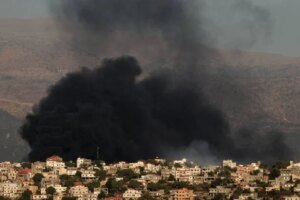
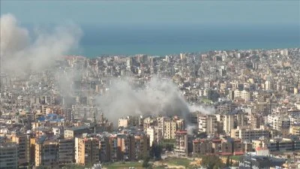
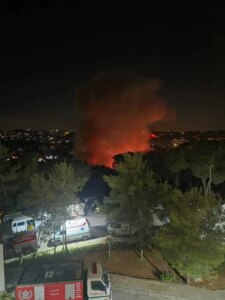
In light of the continued Israeli attacks on a number of villages in the south, General Heikal began his visit to the United States, carrying a complete file on what had been accomplished in the southern Litani region, and the plan of action to move to the northern Litani phase, in addition to a list of the needs of the military establishment, in light of warnings that failure to meet them may reflect an inability to perform the role required of the army in the next phase. Heikal began his visit from the state of Florida, specifically the headquarters of the US Central Command in Tampa, where he met with Admiral Brad Cooper, showing maps of the army’s performance with regard to the army’s deployment south of the Litani. He will move today to Washington to hold meetings with American officials in the White House and members of Congress.
The US Marine Corps Central Command website published yesterday that this command “hosted a bilateral security summit, in which senior military leaders from the Lebanese Army participated, at MacDill Air Force Base in Tampa, Florida, on January 29 and 30. The Lebanese army leaders briefed the US military leadership on developments related to regional security, including operational updates and the progress achieved in the path of the army’s disarmament plan. The security summit also supported the existing dialogue within the framework of the Oversight Committee. On the cessation of hostilities, known simply as “the Mechanism,” Lieutenant General Joseph Clearfield, Commander of the US Marine Corps in Central Command and head of the “Committee,” led discussions that focused on military cooperation and the importance of the role of the “Mechanism,” saying: “We are committed to achieving sustainable peace and stability in the region.”
Al-Diyar wrote: According to informed sources, the first indicators of the army commander’s meetings in Florida appear positive, and he heard praise from the American military leadership, after he presented a presentation of what the army carried out through about 8,500 operations in the south of the Litani. Heikal insists on stressing that “Israel” is not adhering to what was agreed upon. Heikal will not back down from affirming that the army will not go into an internal conflict, no matter how great the pressure is. But America is required to intensify logistical support because the tasks assigned to the army are greater than its ability to carry out, in light of the severe shortage of armament and many.
These circles pointed out that the commander will draw the attention of American officials, saying that it is wise not to put pressure on the military establishment regarding the issue of restricting weapons north of the Litani, and to keep time open without setting specific time limits, so that everyone is not involved in an incomplete “slavery” that may cause uncontrollable chaos.
Al-Liwaa wrote: No official results have yet emerged from the meetings of Army Commander General Rudolph Heikal to the United States, after he moved yesterday from the US Forces Central Command Center in Florida to Washington to hold military and political meetings. According to media information from Washington, his meetings include: Daniel Zimmerman, US Assistant Secretary of Defense, and Dan Keane, Chairman of the Joint Chiefs of Staff of the Army. Sebastian Burka and Wayne Wall, who are officials in the National Security Council. And Robert Balbio, the State Department’s highest-ranking official for Near Eastern affairs. Then he will meet in the Congress building with Gregory Meek, Chairman of the Foreign Affairs Committee, Republican Senator Lindsey Graham and Democratic Senator Jeanne Shaheen. He will also meet with members of the American Friendship Caucus.
Army support conference
On the other hand, and a little more than a month before it is held, Paris is betting on the success of the army support conference that it will host on March 5, which will be moderated by President Emmanuel Macron.
France expects 50 countries and about 10 international and regional organizations to attend, which means, if these expectations are correct, that it will be a major conference that reflects the great international bet on the role assigned to the army and the importance of supporting it.
Al-Sharq Al-Awsat wrote: The date of the conference comes with the start of the second phase of the process of confiscating weapons in the hands of the Lebanese state, starting from the north of the Litani River in southern Lebanon and in the area extending from it to the Awali River. Work is currently underway on the preliminary meeting of the conference, which will take place in two weeks.
According to Paris, it will be held either in Riyadh or in Doha. Paris reported that the Lebanese Army was asked to “update” its various needs in terms of armament, equipment, and financing for the coming years so that the conferees would be able to provide appropriate responses to these needs.
Paris reports that the conference, the ongoing preparations for it, and the Lebanese situation, with all its ramifications and regional extensions, will form the topics of the meetings that Jean-Noel Barrot, the French Minister of Foreign Affairs, will conduct in his Lebanese stop, as part of the tour that will lead him this week before Beirut, to Baghdad, Erbil, and also Damascus. This visit is the third of its kind for the French minister, who visited Lebanon twice, but before President Joseph Aoun arrived in Baabda and the formation of President Nawaf Salam’s government.
It goes without saying that the dominant issue in Barrow’s meetings in his tour with the three presidents, and his meeting with his counterpart, the Lebanese Foreign Minister, will undoubtedly be the issue of collecting Hezbollah’s weapons, and what is being raised about the refusal of the party’s leadership, on the one hand, to comply with this request, and on the one hand, its Secretary-General Naim Qassem’s confirmation of his lack of hesitation in engaging in the war against Iran, in the event that it is targeted by an American and/or an Israeli.
In this context, Barrow’s advice will be categorical, as Paris does not rule out that Iran, whose relations with France have become strained in recent weeks, as have the relations of other European countries, will try to drag a number of its allies into this war.
Paris says that in this case, Hezbollah will be concerned. Therefore, it hastens to warn against sliding into this war and its advice is that the interest of Lebanon, which faces a set of internal and external challenges of various forms, lies in remaining outside the Iranian-American-Israeli conflict in order to preserve its safety, sovereignty, and the security of its citizens.
Paris believes that Hezbollah is not in an easy position after its material and military capabilities have weakened due to the “defeat” it suffered in the war against Israel, which puts it in an extremely fragile position. However, it estimates, despite this, that with its current strength, it can refuse to hand over its weapons even by resorting to force, according to what its leaders confirm, morning and evening, after they accepted its handover south of the Litani.