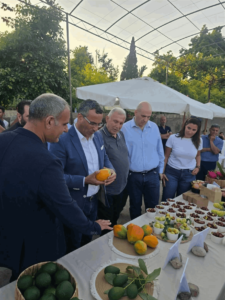
As the holy month of Ramadan approaches, the markets are witnessing remarkable activity, as there is an increasing demand for purchasing food and basic commodities related to the Ramadan table. This annual spectacle, which has always been associated with preparations and joy, is now restricted by difficult economic conditions, due to rising prices and a decline in the purchasing power of many citizens.
Shoppers are observing active movement in supermarkets and popular markets, especially on basic items such as rice, sugar, oil, grains, dates and juices, in addition to meat and poultry. But this movement is accompanied by increasing fears of a new wave of high prices preceding the holy month, which prompts many families to buy early or reduce quantities.
In this context, economic expert and writer Raif Mneimneh stated: “What the markets are witnessing before Ramadan is a natural result of the rise in seasonal demand, but the current circumstances are exacerbating the severity of the impact.” He added: “The demand for foodstuffs increases significantly during the weeks leading up to the Holy Month, which puts additional pressure on the markets.”
He also explained: “The cost of import is a key factor in determining prices, as it is directly affected by fluctuations in the exchange rate and global shipping rates.” He stressed: “Any increase in this cost is immediately reflected on the consumer, especially in a country that relies heavily on imports.”
He pointed out: “The weakness of official oversight opens the door to a large discrepancy in prices from one store to another, stressing that the absence of clear pricing constitutes an additional burden on citizens.” He also stressed: “Purchasing power has not witnessed a real improvement, which makes any increase, even a slight increase in prices, a heavy burden on families.”
He also explained: “Some merchants resort to storing goods before Ramadan, either to hedge against any potential shortage, or to benefit from the high demand, calling for controlling these practices to ensure market balance. He concluded by stressing that the solution lies in strengthening control and supporting basic goods during sensitive seasons.”
For his part, Abu Karim, a wholesale food merchant, explains: “The movement in the markets started early this year,” noting: “The demand for some goods has increased for weeks.”
He said: “Merchants are working to secure additional quantities to avoid any shortages during the month of Ramadan.”
He added: “Prices are not uniform, as they vary according to the country of origin and the cost of import,” stressing: “Any increase does not come from exploitation, but rather as a result of high operational and transportation costs.” He stresses: “The profit margin has become limited compared to previous years.”
Abu Karim confirms: “Some companies try to offer special offers during Ramadan, but their ability remains limited in light of the difficult economic conditions.” He also pointed out: “Cooperation between traders and regulatory authorities can contribute to market stability.”
As for citizens, opinions vary between those who believe that high prices have become a reality and cannot be avoided, and those who consider that some of the increases are unjustified. One housewife says that she now plans her purchases carefully and focuses on the necessities only. While a family head confirms that offers and discounts have become the main factor in purchasing decisions.
Other citizens point out that the spirit of Ramadan is still present, despite the difficulties, through charitable initiatives and social solidarity, which partially alleviate the burdens of living.
Between the increasing market activity and price concerns, the month of Ramadan this year comes carrying clear economic challenges. Between the responsibility of merchants to take into account living conditions, and the role of the state in controlling markets, the suffering of the ordinary citizen remains the most important issue. The hope remains that the holy month will bring a breakthrough, even if it is limited.