January 25, 2026
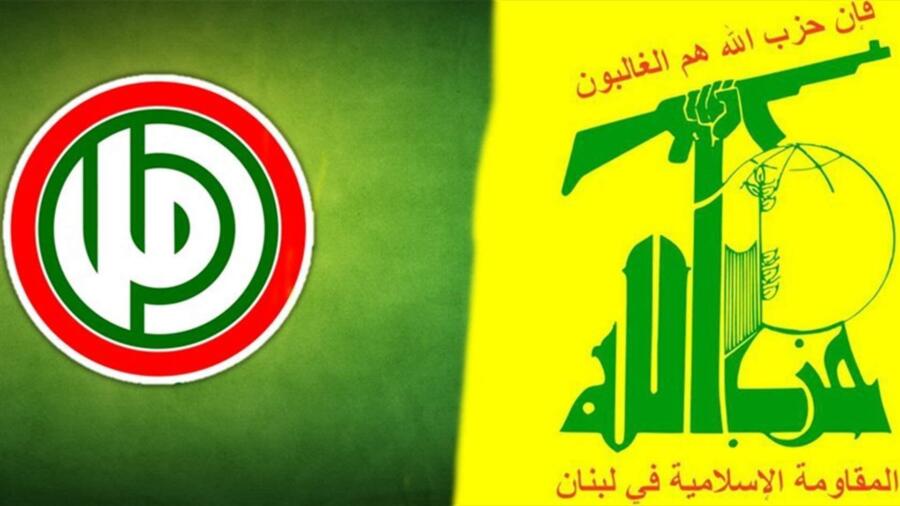
In the past two days, the voices of citizens belonging to the Shiite sect were heard – they wished the state of President Nabih Berri a long life, and wished for themselves salvation from a senseless war that strikes them to the core. They introduced themselves as: “The Amalites.” Some of them wrote IMDb and deleted it. Some wrote and moved on. Others wrote and insisted: “We are willing to talk as if we were not the ones who opened a battle without taking anyone’s opinion (…) Let us admit, we are not the first to lose a battle in history.” Photographs of “the beloved of the heart, His Excellency President Nabih Berri,” which have increased greatly in the southern suburbs recently, were accompanied – via social media – with songs prepared for him: “Oh, you stand tall with our waistcoats, the sky’s forehead is your limit, you are the echo of our stories, your steadfastness never ends, our minds are painted, oh moon, there is no absence.” There are those who saw this as a “state of objection” towards “Hezbollah” who swear their loyalty to its state, objecting to those who insist on keeping them immersed “in slogans and illusions”? Condition is increasing. Is there a secret word that passed between the “Amalians”? Is their objection real? What might remain of “hope” if “Hezbollah” ends? Is what we see and hear worth considering? More clearly, has the confrontation begun between the “Amal” electronic army and the “Hezbollah” military army?
“Lebanon Debate” – Nawal Nasr
It is too early to talk about confrontation. Those familiar with the “duo” environment notice this for more than one reason, the first of which is that the end of the “party” does not mean the brilliance of the “movement.” Let’s start from here. Nabih Berri, who always “cools the atmosphere” when he commits every crime committed by the “party,” never loses his smile. The man has been skilled in the political game for more than forty years. In appearance, he is still able to play a diplomatic “solo.” But, what actually? Is a man’s smile enough to control the land between Baabda and Haret Hreik and between Haret Hreik and Ain al-Tineh?
What does political analyst and writer Ali Al-Amin think of the “hopeful” voices increasingly objecting to the “party’s” performance? He answers, “In principle, the arteries of the two parties are interconnected, and the end of either party may lead to curtailing the other’s function. The interconnectedness is great. Nabih Berri has played in the last twenty years, specifically since the year 2005, a specific function assigned to him by the ‘party’ – and the Iranians – playing the role of the Shiite party with whom one can – at every bump – talk. Long, long years have passed in which no deep problem occurred. Years in which both parties played under the Iranian roof. And Nabih Berri’s growing role The “movement” did not benefit from it. It weakened as it grew, until it became a regional and international need.
Yes, Nabih Berri is in need today. A man is a local, regional and even international political need, and a very, very urgent need in his environment as well. Note – and this is something that many people do not know – that the “party” was thinking before the outbreak of the last war about the fate of the “movement” after Nabih Berri. This scenario was discussed in Hezbollah’s internal councils under the title: How can the legacy of Nabih Berri be dealt with? However, everything has changed, and the question has been replaced in the “Amal” councils today: How can we deal with the stage that follows the “party”? The picture was turned upside down.
Dome Bat
Let’s continue. Observers believe that whoever dares today, in the Shiite environment affiliated with the duo, to “restlessness” has the cover of the “movement” that practices a form of “armpit” according to its interests. Yesterday, after members of the Shiite sect “rose out” and crossed all limits in criticizing the President of the Republic, Joseph Aoun, “Amal” gave those loyal to it “safety” by attacking “online” the approved approach. Therefore, it is an objectionable condition that exists, but it will continue to be used until “absent the request.”
Let us return to Ali Al-Amin to ask him about the restless Shiite street in general? He answers: “There is, of course, a huge discrepancy. People feel anxious and suffocated and want salvation, but change requires courage and elements. The ability of these people to change is not available until this moment. People, in other words, are looking for safety. They stood by Hezbollah because it represented – for a long time – a form of safety for them. However, recently, after the Israeli raids turned from surgical strikes to strikes affecting civilians, voices began to rise more. Here, it is important to say that the Amal Movement usually goes along with the popular atmosphere, walking Behind it, and do not create it. As for the “party,” it is different. It creates the popular atmosphere.”
“Amal”… “Amalat”?
There is no “hope” without Nabih Berri. “The movement after Nabih Berri will turn – according to Al-Amin – into ‘movements of hope’, into power groups, because there is no number two today in the ‘movement’, not even three or four. There is Nabih Berri and after him number 5 and below. The next in rank is similar to all the others: Qabalan Qabalan, Ali Hassan Khalil, Hani Qubaisi, and Ahmed Baalbaki… No one is able to replace Nabih Berri. So all the ‘loving’ voices wish him a long day.” Age. Knowing that all the equations are different, and Nabih Berri, who has always been in the position of winner for more than four decades, this will be difficult – in the next stage – as the changes are great, and the man – may God prolong his life – is not in his beginnings and he is going to an end, not a renaissance.
So, we feel as if the question should be: What comes after Hezbollah and Amal? The gamble today, according to Al-Amin, is to enhance the state’s prestige. What is required is for the citizen to become accustomed to the fact that his security will only be found in the state and its institutions. But, unfortunately, the citizen still feels, up to this moment, that power does not exist except with the “party.” No army checkpoints. Cars without plates. It is true that the Lebanese army carries out major missions, but what the ordinary citizen feels is the presence of only Hezbollah, which continues to provide him with a safe option.”
Is it difficult to see “Amal” without “Hezbollah”? A question we repeat to our followers.
What observers see is that there is something in the structure of “Amal” that will cause it to collapse at the moment of the fall of “Hezbollah.” It will turn into groups. This is what the members of the sect feel. There is a feeling of a Shiite catastrophe and a state of chaos until the moment comes for something to be born. Nature does not accept a vacuum. There are, of course, objectionable voices, and there are cases that grow, but there are also emergency people whose mission is to booby-trap these cases from within. These are situations known as “absence of demand.” Therefore, alternative Shiite options are not – even today – on the serious agenda. Despite the urgent need to create new options.
Taif and the golden opportunity
Of course, the pivotal political role played – and still is – by Nabih Berri, was paralleled historically by the departure of leaders from the “Movement of the Dispossessed” – or the “Justice Movement” as Mr. Musa al-Sadr liked to rename it. One of those emerging from the womb of the “movement” says: “Whoever reads the Shiite working paper drawn up in 1977 by Mr. Musa and reads the Taif Agreement will see that seventy percent of it is derived from it. The credit for that goes to President Hussein al-Husseini, who was one of the most prominent participants in drawing up the paper in 1977, and contributed to approving the details of the Taif Agreement. The movement’s program was fulfilled in Taif and all that remained was implementation. Amal reached the highest legislative position, and was present in the most important ministries and in Prosecutors. The “Harkis” had to implement the Taif, which is essentially a document of hope.
But we, in the movement, did not implement the document. We did not prevent deprivation. The movement was able to undertake, through the Southern Council, some reconstruction projects, but did it reduce the migration of villagers to the city? Has it ended the misery of the suburb? Did you prevent or face deprivation in the Bekaa? Or have we entered into a whirlpool of influence and interests? The Taif application was our golden opportunity and we lost it. Today, “Amal” will also not be ready in a time of change.”
Everything changes. The strongest in the next stage is the one who has the “readiness,” “intentions,” and, of course, the “capacity” to establish “Bra.” Let’s watch.