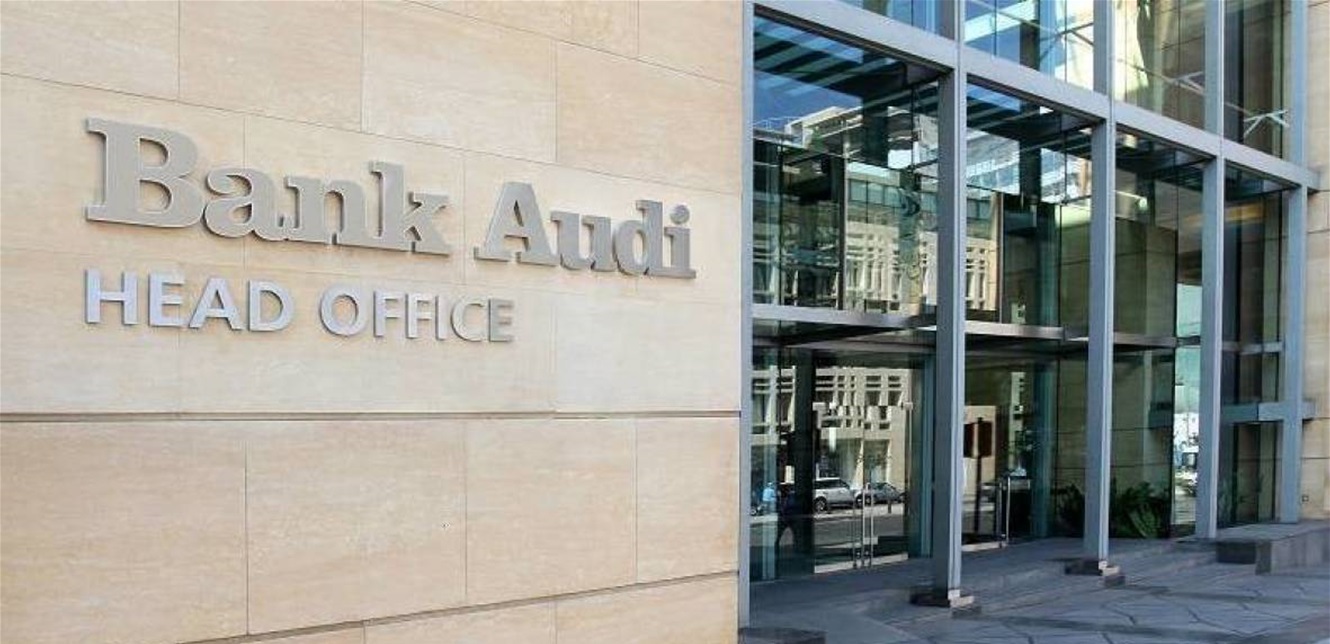
The Audi Bank economic report for the year 2025 was released under the title: “Economic Results in Numbers for the First Year of the New Presidential Term.” The report indicated that the political turmoil that Lebanon witnessed at the beginning of 2025 had significant economic and financial effects, leading to major changes in economic trends at various levels. The overall economic achievements of the first year of the new presidential term can be summarized in the following points:
Regarding the real economy, real GDP growth is estimated at 5% in 2025, after the significant contraction witnessed in 2024 as a result of the repercussions of the war. Due to the improvement in demand for consumer and investment goods, imports increased nominally by 12% during the first eight months of 2025, leading to real growth in imports of 6.7% year-on-year after adjusting for imported inflation.
At the same time, the balance of payments recorded a real surplus of $3 billion during the first eleven months of 2025, which is a result of the increase in net foreign assets in the financial sector after excluding the increase in the price of gold. This surplus of $3 billion reflects the net impact of money inflows into Lebanon versus outflows.
The liquid foreign currency reserves of the Banque du Liban (BDL) have increased by about $2 billion since the beginning of the year to reach nearly $12 billion currently. This is attributed to the BDL’s intervention in the exchange market, where it purchased surpluses in the circulation of the Lebanese lira from the market, taking into account the portion of the increase in foreign exchange reserves resulting from interest earned on reserves deposited abroad, and the impact of the rise in the euro exchange rate against the dollar on the value of reserves held in euros. At the same time, the BDL’s gold reserves reached an unprecedented record level exceeding $40 billion, which is a significant increase of $16 billion since the beginning of the year, or a growth rate of 67%.
In addition, cash (fresh) deposits in foreign currencies increased by $1.3 billion during the first eleven months of 2025 to reach nearly $4.5 billion at the end of November, a growth rate of 40%. This significant growth is attributed to the return of the political situation to its relatively normal course, which has had positive economic, monetary, and financial repercussions, noting that greater progress could be achieved if the long-awaited “Financial Gap Law” is approved.
Furthermore, the prices of Lebanese Eurobonds more than doubled during 2025, from 12.75 cents per dollar at the beginning of the year to about 28 cents today, noting that prices were around 6 cents per dollar during the war that broke out in September 2024. This jump in Eurobond prices is a result of increasing demand from foreign institutional investors who are betting on the reform path in Lebanon and its impact on the debt restructuring process in general.
On the financial performance front, public finances in Lebanon are likely to have achieved a net surplus of $1 billion during 2025, which significantly exceeds the “zero deficit” targeted in the budget for the year. In fact, public revenues exceeded the target size in the budget by 21% to reach more than $6 billion US dollars.
In conclusion, the Audi Bank report addressed the prospects for the year 2026 in light of the continuing security challenges, financial imbalances, and the fate of the reform path.
In reality, the report relied on three scenarios for the year 2026: the positive scenario with a 45% probability of realization, the moderate scenario with a 35% probability of realization, and the negative scenario with a 20% probability of realization.
The positive scenario assumes the continuation of security stability during 2026, which is supported by the prospect of large-scale reconstruction, a significant inflow of foreign funds, and the ratification of a law for the financial gap. This scenario also assumes reaching a final agreement with the International Monetary Fund, which would lead to a noticeable economic recovery.
As for the moderate scenario, it assumes the continuation of security stability during 2026, while the prospect of reconstruction will be limited with the continuation of political bickering on the local scene. This scenario assumes the non-implementation of significant reforms and the failure to reach an agreement with the International Monetary Fund, which will lead to a relatively modest recovery.
Regarding the negative scenario, it assumes the occurrence of security slippages, sharp political tensions, and the absence of significant foreign flows. It assumes the absence of any reforms and the failure to reach an agreement with the International Monetary Fund, which will lead to a significant economic deterioration.
If the positive scenario is realized, economic conditions will flourish, with favorable monetary and financial repercussions. In fact, the real GDP growth could reach 8.0%, the balance of payments will record a real surplus exceeding $6 billion, inflation rates will remain controlled, the BDL’s foreign currency reserves will grow by at least 40%, public finances will record a surplus of more than 4% of GDP, Eurobond prices will break the 30-cent barrier upwards, and cash (fresh) deposits in the banking sector will record significant growth.
As for the moderate scenario, economic conditions will stagnate, where real GDP growth will be limited to 3%, and the balance of payments may record a slight real surplus of $1.5 billion, the BDL’s foreign currency reserves will increase slightly, public finances will witness a balance between expenditures and revenues, Eurobond prices will fluctuate around 25 cents, while cash (fresh) deposits in the banking sector will witness negligible growth.
In the case of the negative scenario, economic conditions will deteriorate significantly, where the real economy will record negative growth, the balance of payments will return to record deficits, the BDL’s foreign currency reserves will decline, passing through a deficit in the public finance situation, and inflation will reach high levels, while Eurobond prices will fall below 20 cents, and cash (fresh) deposits in the banking sector will witness a net contraction.
Given these striking differences between the outcomes of the three scenarios, the Lebanese hope that politicians will adhere to a conciliatory behavior that can be built upon productively, that policymakers will begin to move forward on the desired reform path, and that the international community will show its willingness to provide urgent support in order to achieve the desired internal recovery and revitalization in general.