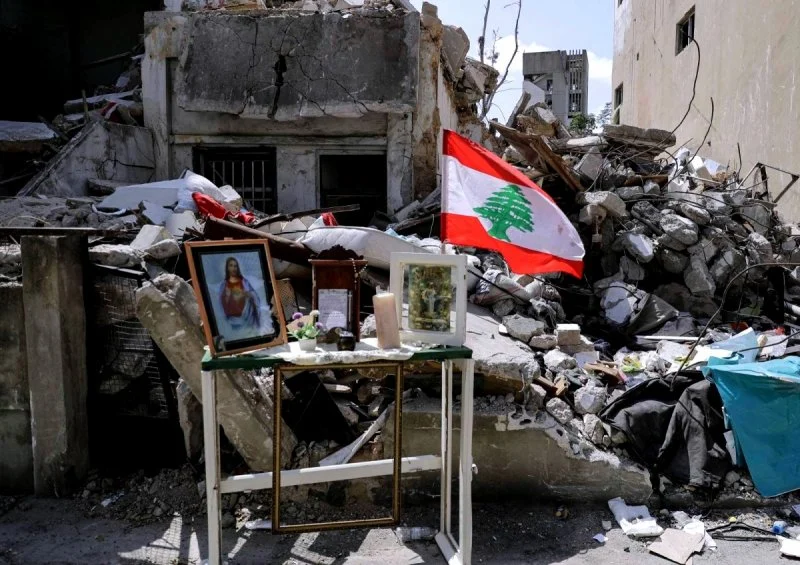
In a night overwhelmed by shelling and warnings, with the intensity of Israeli airstrikes escalating on many villages in southern Lebanon, people did not wait for directives or official initiatives. Amid alerts that affected various towns and regions, a prominent humanitarian scene emerged in the form of spontaneous acts of solidarity, as citizens rushed to open their homes and hearts to affected families, affirming that the bonds that unite the Lebanese in moments of danger outweigh any attempts at division and discord.
With homes and residential buildings being targeted in more than one southern village, social media was flooded, during the night hours, with successive humanitarian appeals to receive those affected and provide temporary shelter that protects them from the cold, and grants them the minimum amount of safety, even if for a short time. What is striking in these appeals is that they did not come from the people of the South alone, but from various Lebanese regions, from Beirut to the mountains, the North, and the Bekaa, in a scene that reaffirms that when danger strikes, it does not differentiate between one region and another.
These initiatives did not start within organized frameworks or official campaigns, but rather spontaneously emerged from a collective conscience that regained its correct direction in the most difficult moment. Families offered what they had: modest apartments, furnished houses, or empty rooms, without compensation and without asking about affiliation or stance. The message was clear: “We are for each other.”
In the midst of this scene, remarkable individual initiatives emerged with deep connotations, including a humanitarian announcement that spread on social media, stating: “I am a Sunni from Beirut, my heart and mind are with the people of the South. My home and my family’s home are open to all our people in the South. If we disagree in politics, this is a right, and if we disagree sectarianly, this is God’s will and natural, but I cannot sleep in my home while there are Lebanese families displaced under bombardment.”
Simple words that immediately dropped all inciting rhetoric, and provided a practical response to efforts to sow discord.
It is worth mentioning that this popular chivalry coincided with the expansion of the scope of alerts and raids to include several towns, which brought back familiar images from previous wars, when popular solidarity preceded political and sectarian calculations. Despite years of incitement and attempts to incite strife, this moment came to disprove all misleading narratives: in danger, the Lebanese stand as one.
At a time when talk and slogans abound, people chose action instead of mere statements. They opened the doors of their homes before being asked to do so. Amidst the smoke of the bombing and the sounds of explosions, a true meaning of Lebanon emerged: a country that may be exhausted by aggression, but it does not break, and a country whose components may differ politically and sectally, but in critical situations, nothing separates it, but rather a single humanitarian stance unites it in the face of a brutal enemy: humanity first, and above all else.
In contrast to this honorable humanitarian scene, the stark absence of the state and its institutions stands out, which left people to face the bombing and displacement with their own efforts. The Lebanese have proven once again that they are stronger than neglect, and that popular solidarity fills the vacuum of power at every dangerous juncture. But the question that arises: how long will the citizen remain the first line of defense alone, while the concerned parties are content with watching?