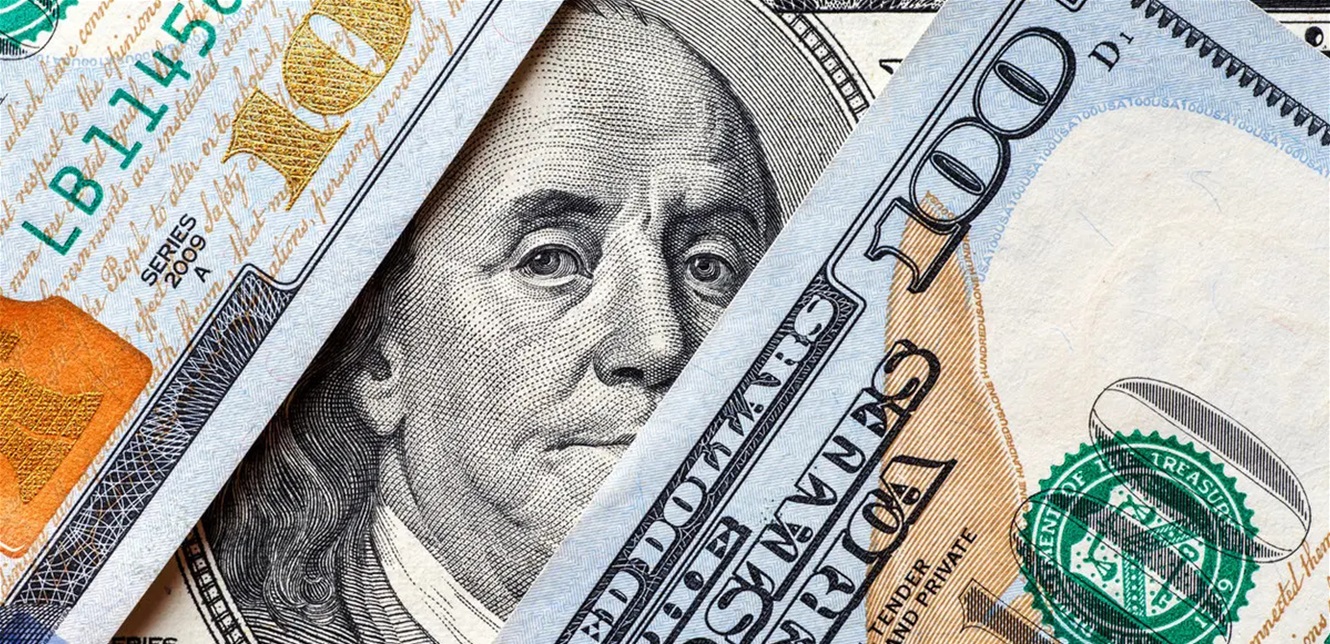
The Wall Street Journal published a new report discussing the state of the dollar in 2026, noting that currency markets at the beginning of 2026 appear to be entering a quiet but profound repositioning phase, with increasing bets on the decline of the US dollar against most major currencies.
According to cross-readings reported by The Wall Street Journal from major financial institutions, a combination of factors, including US interest rate cuts, political risks, and changing hedging calculations, are reshaping the global monetary landscape.
In the same context, analysts at Bank of America believe that the dollar is poised to decline this year as interest rate differentials narrow, due to the Federal Reserve’s move towards interest rate cuts.
The note explains that the reduced cost of hedging against dollar weakness may encourage investors to increase risk hedging, after “high hedging costs were a major obstacle limiting the expansion of these activities in 2025.”
Estimates also indicate that President Donald Trump’s move to reduce housing costs may stimulate further interest rate cuts, amid growing questions about the independence of the Federal Reserve, which puts additional pressure on the US currency.
In a more critical analysis, Commerzbank warned that Trump’s threats to seize Greenland could represent a “disastrous signal” for the dollar. Analyst Thu Lan Nguyen says that any public clash between America and Europe could lead to mutual sanctions, “which poses a real threat to the dollar’s status as a global reserve currency” and may push European companies to reduce their dollar transactions to avoid risks.
In contrast, Bank of America estimates that the pound sterling may benefit from the decline in long-term yields in Britain, after the financial concerns following the November budget have receded, while the currency received additional support from the potential improvement in relations with the European Union. The pound has risen to about $1.34, according to data reported by the newspaper.
As for the euro, it seems desirable as a funding currency in “carry trade” deals (profiting from the interest rate differential between two currencies), according to an analysis by ING Bank, benefiting from lower volatility compared to the Japanese yen, which is still under the scrutiny of authorities in Tokyo.
In Japan, Bank of Japan analysts believe that the chances of intervention to support the yen before the monetary policy meeting on January 23 remain limited, given Bank Governor Kazuo Ueda’s caution against further tightening of interest rates. However, any clear signal of opposition to the weakening of the yen could change market calculations.
Will the dollar lose its dominance?
Despite these pressures, some economists downplay concerns about “de-dollarization.” Jeffrey Cleveland of Payden & Rygel affirms that foreign demand for US assets, including bonds and stocks, remains strong, and that dollar movements mainly reflect changing interest rate and growth expectations, rather than a decline in confidence in the currency.
Accordingly, the dollar enters 2026 under a delicate balance between the pressures of monetary policy and geopolitics, and between the strength of global demand for US assets, in a scene that carries gradual shifts rather than sharp shocks. (Al Jazeera Net)