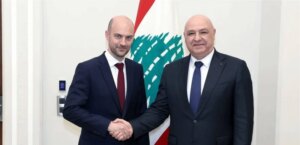
The decision to appoint Gracia El-Kazzi as Director-General of Customs continues to spark heated debate in political and public circles, especially since El-Kazzi is still accused in the Beirut port explosion case, which has not been closed and carries very sensitive national and humanitarian dimensions.
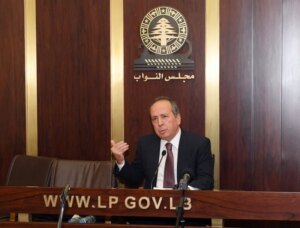
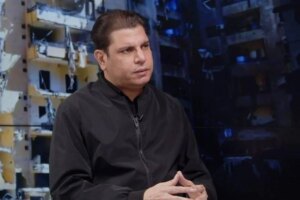
In this context, MP Adib Abdel Massih stated to that “The decision to appoint Gracia El-Kazzi as Director-General of Customs is a misstep by the Council of Ministers. I personally do not know her and cannot be certain on this matter, and it is possible that her innocence will be proven later, but on the other hand, we are facing a national issue surrounded by serious suspicions. We have previously witnessed the arrest of officers and concerned parties in this file, which has not yet been closed, and the wound of the families of the victims of the Beirut port explosion is still open and has not healed.”
Abdel Massih believes that “It is unacceptable to deal with this file in this way and at this time in particular, regardless of whether the person concerned deserves the position or not. There are other names that can be appointed without being surrounded by suspicions, so why do we keep the rope of doubt hanging in this sensitive circumstance? It was supposed to be more cautious or make a different decision.”
He points out that “The Customs Administration has performed very well during the past year and has witnessed significant improvements,” adding: “It would have been better to change the head of the Supreme Council, while keeping the current director temporarily, until the issuance of the circumstantial decision related to the Beirut port explosion file.”
In a related context, Abdel Massih clarifies that “The appointments that took place in previous stages came in many positions below the required level,” adding: “Frankly, I am not satisfied with them in more than one instance, and a different approach was supposed to be adopted, but unfortunately there was not enough attention, so I see that the government is not doing its job one hundred percent in a number of files, and there is a clear shortcoming in many issues.”
Regarding the parliamentary elections, Abdel Massih says: “According to the information, the technical postponement of the elections has been decided, and it may exceed two months. In any case, it seems that the option of postponement has become a reality, and the proof is the lack of major objections to it, which means that the majority agrees on this path.”
Regarding the speech of the Secretary-General of Hezbollah, Sheikh Naim Qassem, today, and the issue of adhering to weapons, Abdel Massih believes that “Sheikh Naim Qassem appears in his speech as if he is invited to political action, but on the other hand, he invites Israel to launch a new war against Lebanon. This behavior does not fall within responsible political practice, but rather seems closer to a media show on screens, without actual commitment to politics in its true sense, nor to the presence of the state and its role, nor to serious communication with the people.”
He concludes by saying: “Naim Qassem’s words are a clear implementation of a foreign, non-national agenda, and he is embroiling the Lebanese state, and what we will witness in practice is an increasing Israeli escalation. Instead of leaving the file in the hands of the state and strengthening its position and role, it is being weakened more and more. This speech confuses the interior and sends a message that the Lebanese state does not exist, and that the actual power is in the hands of Hezbollah, which strikes the state’s role at its core and undermines any serious attempt to build it or strengthen its position internally and externally.”