Recent Israeli developments have cast a shadow over the intense diplomatic efforts in Beirut, where Lebanon is facing a crucial moment. The desire of Western and Arab capitals to support the Lebanese state’s efforts to enhance stability and enforce the rule of law throughout Lebanese territory converges.
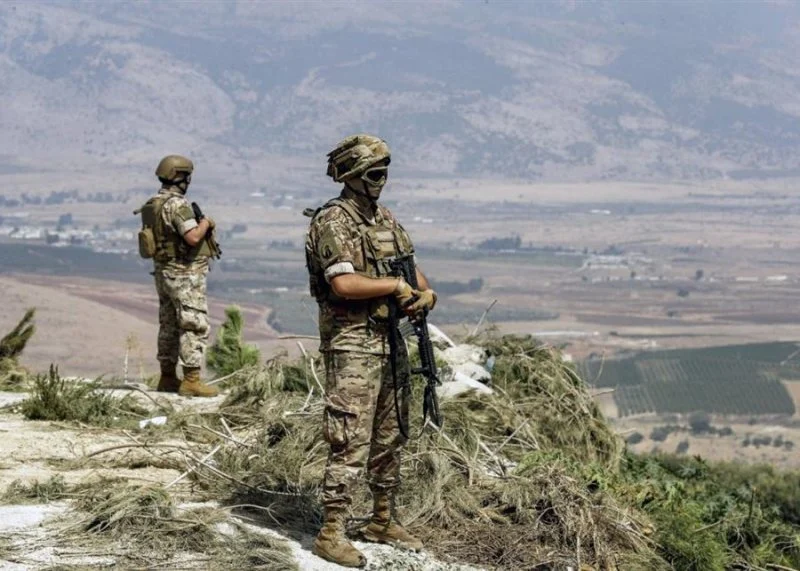
The agreement of the “Friends of Lebanon” to support the Lebanese army in completing its plan to confine weapons to the state, amid political debate about Hezbollah’s weapons, gives the military institution an opportunity to strengthen its capabilities to face its difficult mission.
In parallel, the European Union announced the signing of financing agreements worth 110.5 million euros as grants to support the security forces in strengthening their capabilities in combating crime, terrorism, smuggling, and managing borders at land and sea crossings, thereby achieving stability in Lebanon.
Also, US Ambassador Michel Aissa made field visits to the Port of Beirut, confirming his country’s support for the return of this vital facility to the state. Sources following the matter believe that this reflects the United States’ interest in the path of reforms, the regularity of official institutions, and the restoration of state control over them.
The sources consider these tours to be dual messages: supporting Lebanese institutions on the one hand, and pressure to accelerate reforms on the other. This comes in light of the absence of a comprehensive reform vision for the social crisis suffered by public sector employees, where salaries are no longer sufficient to cope with inflation, while the government is still looking into administrative and financial files without achieving any tangible progress to end the public sector strike that has begun to paralyze some departments.
In this context, the government is looking for “unavailable” revenues to meet the demands of employees, who reject temporary “patchwork” solutions.
Regarding preparations for the parliamentary elections, tasks were handed over between former and current members of the Supervisory Authority for Parliamentary Elections, confirming the Ministry of Interior’s readiness to hold the elections on time, as emphasized by Minister of Interior Ahmed Al-Hajjar.
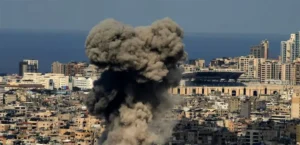
Regardless of the diplomatic dynamics and care for stability and security, Israeli attacks have escalated and their geographical scope has expanded to include the Western Beqaa and Baalbek, which represents a constant threat to the Beqaa and the South. This reflects Lebanon’s continued role as a testing ground between Israel and Hezbollah, making any international initiative to support the army through the special conference in March, contingent on this security situation.
While Iranian-American tensions have subsided, indications suggest that Beirut is not just a stop for diplomatic delegations, but has become a stage where internal crises intersect with regional and international calculations, meaning that Lebanon is not outside the equation of the American-Iranian conflict.