The economic repercussions of political decisions are not always immediately and directly apparent, but rather often seep in by impeding investment decisions and postponing consumption operations, before later being reflected in indicators related to inflation and growth.
According to an analysis published by Bloomberg, the policies pursued by US President Donald Trump in the trade and immigration files have entered a phase of delayed impact, where uncertainty has turned from a mere prevailing psychological state in the markets into a tangible economic factor, which portends a broader inflationary wave during 2026, despite the strong growth we are currently witnessing.
Misjudging the Strength of the Economy:
Bloomberg indicates that a number of investors have misread the American economic scene, believing that the decline in inflation in 2025 and the acceleration of growth are conclusive evidence of the failure of tariffs and deportation policies to cause the expected damage. However, the report confirms that this assessment stems from a lack of understanding of the mechanism by which political uncertainty works and its cumulative impact on the economy.
The agency points out that the American economy has not witnessed a similar level of political ambiguity imposed on the private sector in more than a century, which was temporarily covered up thanks to the huge investment boom in the field of artificial intelligence.
Tariffs… a delayed cost:
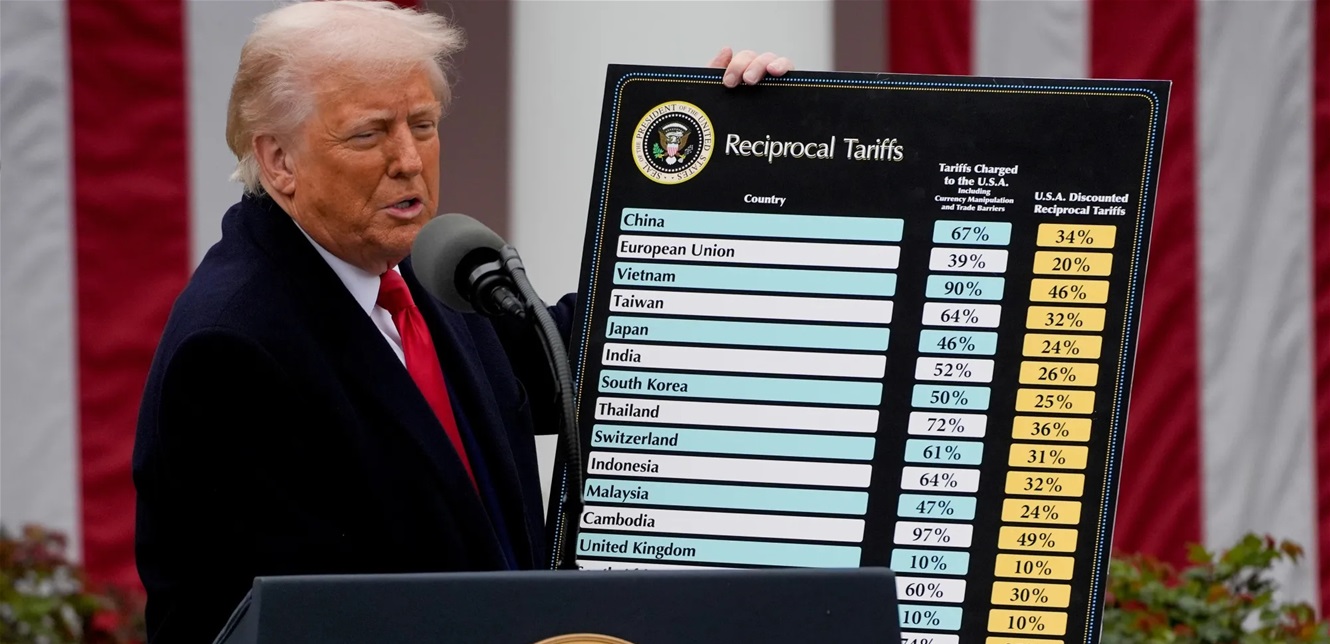
Bloomberg explains that the impact of tariffs does not appear immediately, but after a period of hesitation and paralysis in decision-making, as companies need a period of time to determine whether they will raise prices or restructure their supply chains.
Many companies have resorted to stockpiling imports to avoid passing on the additional costs to the consumer, but this protective margin has gradually begun to run out, making raising prices a matter of time only.
Immigration and the Labor Market:
In the immigration file, and despite the Trump administration’s announcement of the deportation of nearly one million undocumented immigrants, no direct effects on the labor market have yet appeared, as employment levels in the sectors that rely on this labor have remained almost stable. However, Bloomberg warns that the real shortage of labor may appear during 2026, which will push wages up and add additional inflationary pressure.
Artificial Intelligence Covers the Defect:
Bloomberg monitors a clear division in the American economy, where investments in the field of artificial intelligence lead growth, in contrast to an almost complete stagnation in the rest of the other sectors. It believes that this contradiction reflects a state of investment freeze resulting from a state of political uncertainty, similar to what Britain witnessed after “Brexit”.
Bloomberg concludes that the artificial intelligence boom may delay the emergence of the crisis, but it will not completely eliminate it, warning that the coincidence of labor shortages and high import costs may make inflation in 2026 more severe, after its appearance has been delayed for a long time.