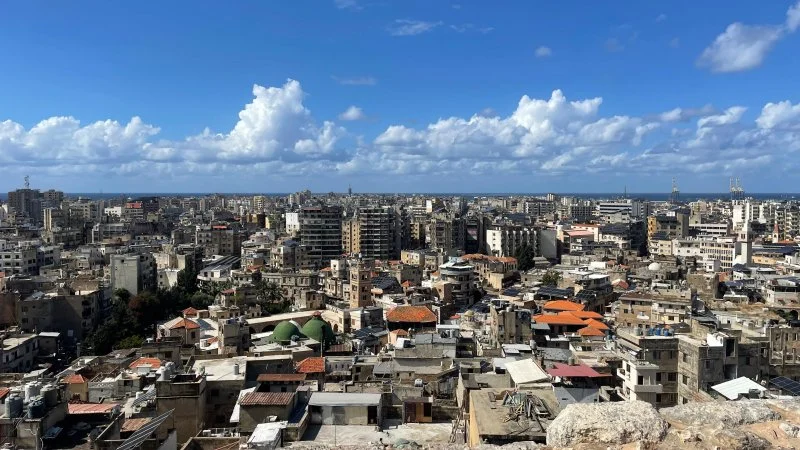
Concerns are growing about the safety of old buildings in the city of Tripoli, as official data indicate a large number of buildings are at risk. This is especially true after the collapse of the Al-Jundi building on Syria Street, Al-Tabbaneh – Tripoli, where the roof of a residential apartment collapsed, and injuries were reported. This reality poses a growing constructional and humanitarian challenge to the municipality and the state, which calls for urgent treatments and sustainable funding.
In this regard, the mayor of Tripoli, Abdul Hamid Karimeh, explained in an interview that the figures circulating about the existence of about five hundred buildings at risk do not accurately reflect the reality, pointing out that the actual number exceeds six hundred buildings, based on the comprehensive survey conducted by the municipality.
Regarding the measures that the municipality intends to take, Karimeh indicated that the municipality is issuing warnings to building owners, either for restoration or evacuation, in cases where the engineering inspection shows that the building’s condition is very dangerous.
He pointed out that restoration or reinforcement work requires large financial budgets, exceeding the capabilities available in the Tripoli municipal budget, which limits the municipality’s ability to address this file comprehensively.
In response to a question about the post published by MP Ashraf Rifi via the “X” platform, in which he warned of the imminent danger threatening the residents of Tripoli with death under the rubble, demanding that this file be included as an emergency item on the Cabinet’s agenda and finding radical and quick solutions that go beyond paper promises, Karimeh confirmed that communication has already been made with Rifi in this context, and that all efforts will be made to find solutions to this crisis.
Regarding the ongoing efforts to address this issue, Karimeh confirmed that he expects its development in the near term, expressing his hope for positive results that include this file and other files under follow-up.
He concluded by emphasizing that addressing this file properly remains dependent on the state securing the necessary funding within the general budget, considering that any partial or temporary solution will not be sufficient unless a comprehensive approach is adopted that places the safety of citizens at the forefront of priorities and prevents the recurrence of construction disasters that threaten the lives of residents.
In light of the escalating construction risks in the neighborhoods of Tripoli, this file remains a serious test of the state’s ability to intervene proactively before disasters occur, as any further delay may expose hundreds of families to imminent danger. Between the limited capabilities of the municipality and the vastness of the crisis, eyes are turning to a real official move that translates promises into concrete actions, ensuring the safety of residents and preventing the recurrence of deadly collapse scenes.