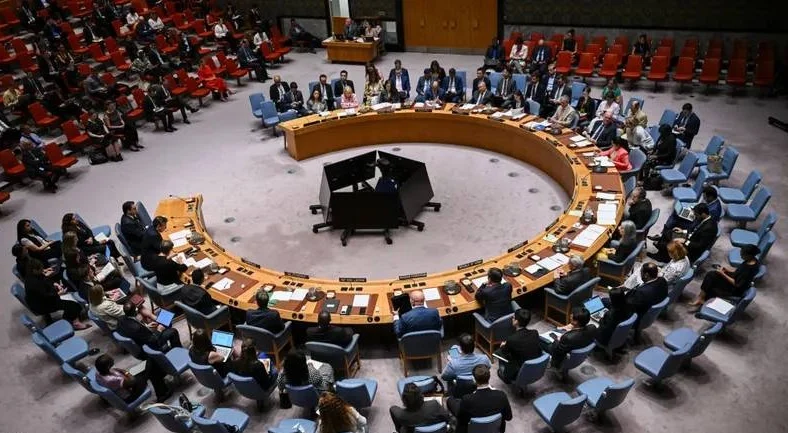
Tasnim” agency reported on Sunday evening that Iran had sent an urgent message to the UN Security Council, expressing its strong protest against what it considered “US interference in its internal affairs and incitement to violence and destabilization.”
The agency stated that the Ambassador of the Islamic Republic of Iran and its Permanent Representative to the United Nations addressed the message to both the Security Council and the United Nations, emphasizing that “no principle or rule of international law allows any country, under the pretext of human rights or under the guise of supporting peoples, to incite violence, destabilize societies, or engineer chaos.”
The message clarified that “such allegations are a flagrant distortion of international law, and cannot be used as a tool to justify coercion, threat, or interventionist policies.”
In a related context, “Tasnim” reported that the Iranian Foreign Ministry summoned the British Ambassador in Tehran and handed him a strongly worded letter of protest, against the background of the attack that targeted the Iranian embassy in London, in addition to some statements made by the British Foreign Secretary regarding the ongoing protests in Iran.
At the same time, the Iranian authorities announced a three-day national mourning period in honor of the lives of the victims of the acts of violence, and indicated that Iranian President Masoud Pezeshkian will participate in the mourning ceremonies accompanied by the Council of Ministers, and called on citizens to participate in the march that will be organized on Monday.
Pezeshkian stated on Sunday that the United States and Israel are seeking to “sow chaos and turmoil” in Iran through the incitement carried out by those he described as “rioters,” and explained that Washington and Tel Aviv are issuing direct orders aimed at destabilizing the country, and called on Iranians to stay away from “rioters and terrorists,” according to Reuters.
The roots of the protests date back to December 28, following a strike carried out by merchants in Tehran’s bazaar due to the deterioration of the local currency and the decline in purchasing power, then these movements developed into confrontations and clashes that extended and expanded in different regions.
In a related context, an organization concerned with defending human rights stated that the unrest in Iran has resulted in the death of more than 500 people. The Human Rights Activists News Agency in Iran (HRANA), which is based in the United States, also reported the killing of 490 protesters and 48 members of the security forces, in addition to the arrest of more than 10,600 people since the beginning of the protests, based on information obtained from activists inside and outside the country.