Is the “financial gap” bill heading back to square one? It seems that the joining of more deputies, unions, and associations to its opponents has significantly reduced the number of its supporters. Only a few politicians and economists remain, led by Prime Minister Nawaf Salam, who still believe that the possibility of achieving financial regularity and recovering deposits is closer than ever after it seemed impossible.
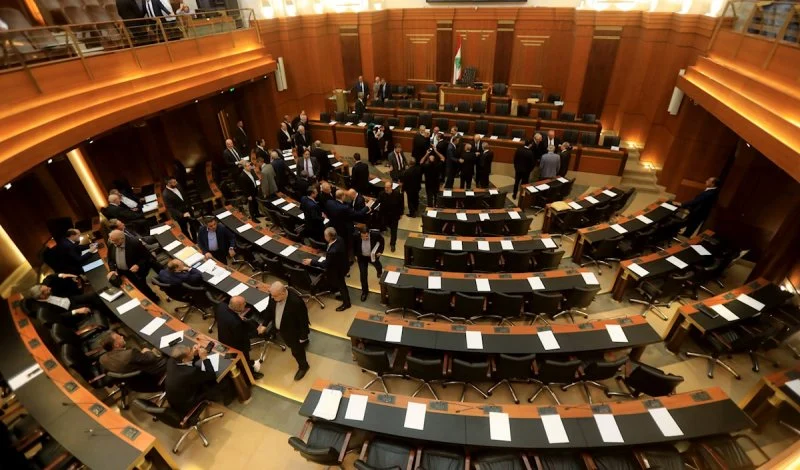
But the increasing escalation against the “gap” bill, especially in the vicinity of the Parliament, paints a new reality. The fate of deposits and how to distribute financial losses is now limited to two options: either a comprehensive confrontation between opponents of the bill in its current form, which may lead to a complete explosion of the deposit crisis, or re-submitting the bill to the dialogue table with the participation of the government, the Association of Banks, the Governor of the Central Bank of Lebanon, and representatives of depositors, in order to reach a law that holds multiple parties responsible for the losses, and not only depositors or banks.
Economic sources familiar with the banking collapse file stress the importance of “fairly distributing losses.” They believe that responsibility should extend to all beneficiaries of billions of depositors’ money since 2019, money that was used, spent, and distributed until it was wasted after the financial crisis exploded.
These sources explain to , that those responsible for the financial losses are those who exploited the deposits. They indicate that this category includes everyone who benefited from parliamentary legislation, government decisions, as well as from official support plans for some sectors and essential goods such as medicines, wheat, and fuel.
The sources add that citizens, institutions, and companies that repaid their bank loans exceeding $500,000 or $750,000 at the official dollar exchange rate in 2020 (1500 Lebanese pounds per dollar) benefited from the deposits and bear part of the responsibility for the financial losses.
Likewise, according to the sources, the category of beneficiaries of the deposits includes everyone who bought subsidized dollars from the Central Bank of Lebanon through the “Sayrafa” platform, as they contributed a certain percentage to the increase in financial losses. As for those who made huge financial transfers abroad, benefiting from political support or financial or economic influence that enabled them to pressure banks to carry out money transfer operations, they bear responsibility before the Lebanese for the losses of depositors.
The sources conclude by saying that the authority or decision-maker in using depositors’ money and the banks that were deposited in the Central Bank of Lebanon, is primarily and ultimately responsible for the losses incurred by depositors, or at least for a percentage of not less than 75 percent of these losses.