The United States’ arrest of Venezuelan President “Nicolas Maduro” and his wife, forcibly transferring them out of the country, represents an earthquake that threatens the foundations upon which the post-World War II global order was built. Concerns are growing that this step marks the beginning of a new era in which military force is placed above international law.
This arrest has caused a resounding shock in diplomatic and political circles around the world. Analysts describe it as a dangerous precedent that could redraw the map of power balances in the 21st century and herald unprecedented regional and international conflicts in the coming decades.
In a special statement to the “TASS” news agency, a high-level European diplomat from Brussels affirmed that “the kidnapping of Maduro by force sends a clear signal to the world that the United States is ready to use direct military force to achieve its political goals, even if it requires violating the sovereignty of a UN member state.”
The diplomat warned, “This message has reached Europe. For the first time in NATO’s 75-year history, European countries no longer feel like partners in this policy, but may become potential targets for it, especially in light of repeated American demands to control Greenland.”
He indicated that this shift exacerbates what he described as a “security vacuum” on the European continent, pushing EU countries to accelerate their rearmament plans away from American protection.
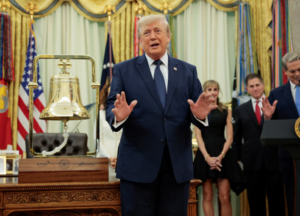
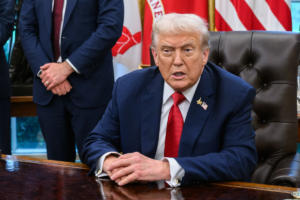
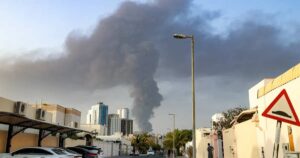
The military operation, which US President “Donald Trump” described as “perfect” and taking “less than 30 minutes,” did not target – according to numerous reports – drug smuggling centers as initially claimed, but focused on destroying air defenses and bombing military bases and airports, reinforcing the belief that the real goal was to overthrow the regime and not combat crime.
By declaring victory from the “Mar-a-Lago” resort, “Trump” has established an updated version of the “Monroe Doctrine,” which observers have dubbed the “Donroe Doctrine,” which stipulates that “the Western Hemisphere is the exclusive backyard of the United States,” rejecting any military or strategic intervention by external powers.
The new US security strategy clearly emphasizes: “Preventing rivals from outside the Western Hemisphere from deploying forces or possessing strategic assets in our region.”
Russia condemned the operation, considering it “armed aggression,” and its Foreign Ministry described the American justifications as “false,” warning of a direct threat to regional and international peace, and called for an emergency session of the UN Security Council.
In Latin America, Brazilian President “Lula da Silva” described the incident as “a very dangerous precedent for the international community,” while Cuban President “Miguel Díaz-Canel” considered it “state terrorism.” Mexico also condemned the operation, considering it a blatant violation of Article 2 of the UN Charter.
Even within the Western camp, Switzerland and Austria expressed concern, demanding that Washington respect the principle of sovereignty. The European Union, for its part, contented itself with calling for “restraint,” in a position that reflects an internal division between the desire for “Maduro” to leave and the rejection of the way he was overthrown.
The Venezuelan constitution stipulates the transfer of power to Vice President “Delcy Rodríguez,” but the situation on the ground remains unclear.
Will Washington be satisfied with a “quick victory” as it did in Iraq and Libya? Or will it move towards a long-term occupation and the installation of a loyal government? And will the opposition, led by “Maria Corina Machado,” seize the opportunity to seize power?
But the most important question is no longer limited to Venezuela. Rather, it has become a global question: who will protect small and weak countries if international law is no longer sacred?
The arrest does not only threaten Venezuela, but opens the door to the dismantling of traditional alliances, the acceleration of the arms race in Latin America and Europe, and the collapse of the concept of sovereignty as one of the pillars of the international order.
Between Caracas and Gaza, many see that “exception” has become an argument to justify the use of excessive force, while international law turns into mere empty words when it conflicts with the interests of the powerful.