In a detailed analysis published by journalist Eli Leon, Maariv Online reviewed the recent notable developments in Venezuela, against the backdrop of news of American strikes targeting sites within the country. The site believes that these developments, despite their sudden appearance in terms of timing, come in the context of a continuous escalation for years.
According to the analysis, the announcement issued this morning by the Miraflores Palace in Caracas about an American attack inside Venezuela shocked global public opinion, but it was not surprising to observers of American policies since the return of President Donald Trump to the White House. For Trump, Venezuelan President Nicolás Maduro is not just a failed socialist leader, but an “open file” since his first term, and a symbol of the decline of American prestige in the region that Washington traditionally considers its sphere of influence.
The analysis indicates that the preparations for the American operation were not spontaneous, but took months, and constituted a top priority for the new Trump administration. These preparations included a significant military build-up in the Caribbean region, the implementation of naval operations under the guise of combating drug trafficking, the confiscation of oil tankers, in addition to direct political contacts and special operations, most notably the removal of Venezuelan opposition leader Maria Corina Machado from the country under the pretext of her participation in an event related to the Nobel Peace Prize.
The analysis mentions that Trump, in his first term, was the first American president to recognize Juan Guaidó as the legitimate president of Venezuela, imposed severe oil sanctions on the Maduro regime, and repeatedly brandished the military option, stressing that “all options are on the table.” However, the Pentagon’s hesitation and the objection of some circles within the American administration at the time prevented these threats from being turned into direct military action.
As for today, in his new term, it seems that these obstacles have disappeared. Trump has returned to the White House with a more hardline doctrine, based on reviving the “Monroe Doctrine,” which considers Latin America an exclusive American sphere of influence, and rejects any expansion of hostile forces or opposing ideological projects within the Western Hemisphere.
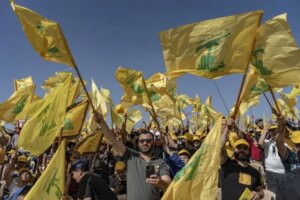
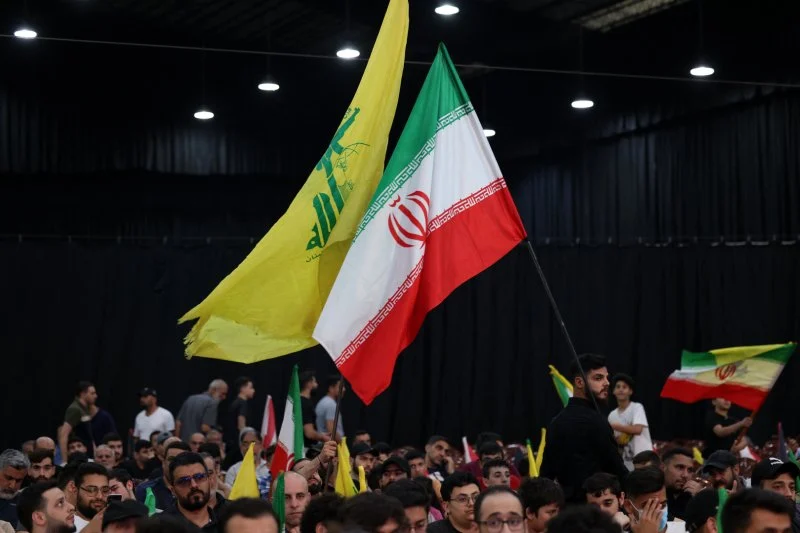
From an Israeli perspective, Maariv’s analysis clarifies that what is happening in Venezuela is not just an American-Latin affair, but a very dangerous security development, and has direct repercussions on Israel. Venezuela, under Hugo Chávez and then Nicolás Maduro, has become the most important forward base for the Iranian axis and Hezbollah in the American continent.
According to the analysis, the relationship between Caracas and Tehran is not just a symbolic relationship, but a structural and deep relationship, and includes direct flights used as a cover for the transfer of equipment and personnel, an active role for the Iranian Revolutionary Guard in rehabilitating the collapsed Venezuelan oil sector, in addition to providing safe havens for elements of Hezbollah. In this context, the analysis raises an important question about whether Israeli Prime Minister Benjamin Netanyahu, who was in Florida a few days ago, was previously informed of the nature of these developments.
The analysis indicates that Western and Israeli intelligence agencies have warned for years that Venezuela represents a major center for money laundering in favor of Shiite armed organizations, through drug trafficking networks and illegal gold mining. According to the analysis, the American administration’s description of the Maduro regime as a “narco-terrorist” regime is not just a political slogan, but a description of an economic role that finances Israel’s enemies in the Middle East.
From this perspective, Trump and his advisors believe that the overthrow of Maduro represents a direct strategic blow to the “lifeline” that feeds the Iranian regime outside the Middle East, and weakens its presence in the Western Hemisphere.
The analysis places this step within a broader context of redrawing the political map of South America, where Trump has worked in recent years to support the rise of conservative right-wing forces, and to weaken radical leftist regimes, considering that the spread of the left in the continent poses a security threat to the United States, no less dangerous than the immigration file.
Maariv Online’s analysis, by journalist Eli Leon, concludes by noting that any direct American confrontation aimed at overthrowing the Maduro regime will be the biggest bet in Trump’s foreign policy during his current term. Its success will undermine Iranian influence in the “backyard” of the United States, while its failure may lead to a long-term American involvement in South America, and give the Iran-Russia-China axis an additional boost. In any case, Israel is following these developments closely, considering that any blow that affects Tehran’s allies around the world is a strategic gain for it.