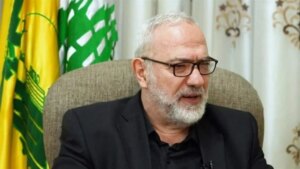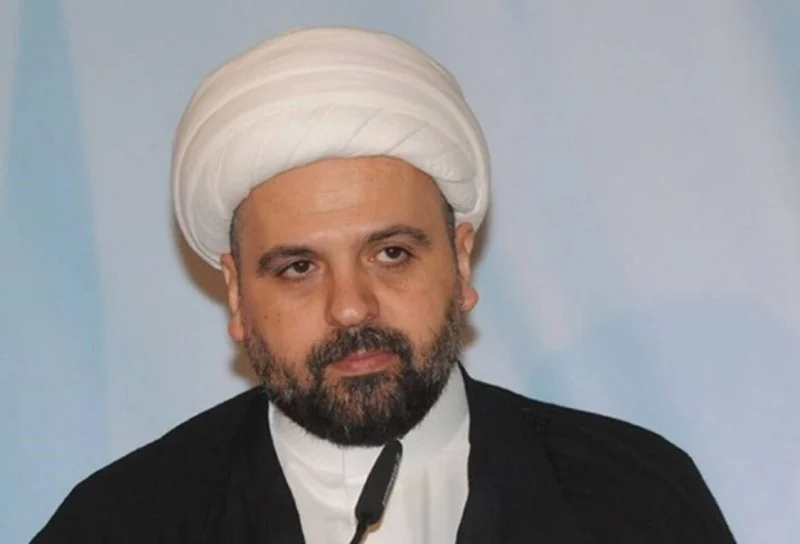
The Distinguished Jaafari Mufti, Ahmad Qabalan, addressed a message to the Lebanese on the occasion of the New Year, in which he considered that the country is witnessing the end of a year and the beginning of another amidst an escalating deterioration, and that its historical structure is facing deep crises at the political, sovereign, and intellectual levels. He considered that Lebanon is going through a moment of “clinical death” accompanied by clear social, political, livelihood, and front-line discontent, calling on centers of influence, especially official bodies, to realize the seriousness of the situation.
Qabalan pointed out that the reality of the country is the continuation of formal shapes and hollow positions, while the crises affect the national pillars and the traditional and sovereign foundations of Lebanon, which pushes the country towards consolidating the collapse and leaving it to the unknown. He considered that the most dangerous thing is the existence of an authority he described as “hollow” that lives in a state of morbid stubbornness without a sovereign decision, does not seek any administrative or livelihood reform, and has no intention of rebuilding the state or saving its structural priorities.
He pointed out that Lebanon is living under an ineffective administration, an unproductive government apparatus, a dysfunctional work team, and incapable ministers, while the Lebanese citizen remains the biggest loser, along with the Lebanese family, which represents the guaranteed value of the national project. He affirmed that political and national doubt is consuming what remains of trust, while what is required is to serve the people and play the role of national guarantor before reaching a complete explosion, warning that the danger does not lie in the “chair mill” but in the organized national and sovereign disruption.
Qabalan considered that the problem is not in the constitutional vacuum in itself, but in the political vacuum that has turned into a tool for disruption, misinformation, and changing priorities, with the aim of finding hybrid balances that are compatible with external dictates. He considered that the state is left without direction or reliable capabilities, under a leadership that seeks to involve it in general failure, stressing that a state cannot be built without reform or sovereign national leadership.
He explained that Lebanon today lacks structuring and accountability, an independent judiciary and effective oversight bodies, and national solidarity projects, while reform requires change, and change is absent due to the country’s immersion in political and financial corruption, especially with regard to burdening the Lebanese citizen with the cost of financial bankruptcy to satisfy the International Monetary Fund. He pointed out that the state has not borne any fair political or financial cost, and has not held anyone accountable despite the magnitude of the disaster, but those who were detained were released, to the point that failure no longer needs justification.
He stressed that what is required is to secure the practical value of the state project, not managing time and disruption, considering that the public order is threatened in its entirety. He considered that salvation can only be achieved through national programs and policies far from the tendencies of revenge and external agendas that will lead to the destruction of Lebanon, criticizing the absence of the citizen from the government’s calculations and depriving him of social protection, health, educational, and rescue guarantees, in addition to demolishing the structure of basic rights.
He warned of the danger of coexisting with the collapse as if it were a national destiny, stressing that what is required is Lebanese sovereignty, not international deals. He considered that the state is not playing its basic role, especially on the southern, Bekaa, and Dahieh fronts, where it has not regained its sovereignty and has not sought to restore it, especially south of the river, while ignoring what he described as Zionist terrorism and does not consider killing its people a national priority. He added that the political decision is either absent or used in a formal way, in light of the spread of clientelistic games, considering that Lebanon has not witnessed a government that has become accustomed to failure like this government, which threatens the idea of the state itself.
Qabalan considered that 2025 was disastrous at the sovereign and national levels, because the authority does not want to play the role of national guarantor or even save itself, warning against recklessness with national issues, deep crises, and fateful choices.
He affirmed that saving Lebanon requires identifying the crises, especially the sovereign ones, stressing that the country is threatened and has no guarantor except a strong government internally and with national sovereignty and constitutional capabilities, away from international agendas. He considered that among the priorities are the army and the resistance as a sovereign guarantor, stressing that there is no alternative to them, and that the weapon that liberated Lebanon and defended its survival for decades cannot be excluded, considering that denying this fact is treason.
Mufti Qabalan concluded his message by affirming that 2026 will be very fateful, and that the value of Lebanon’s national identity is linked to the choices of its government, warning that the absence of a sovereign national government will plunge the country into its most dangerous existential trials.