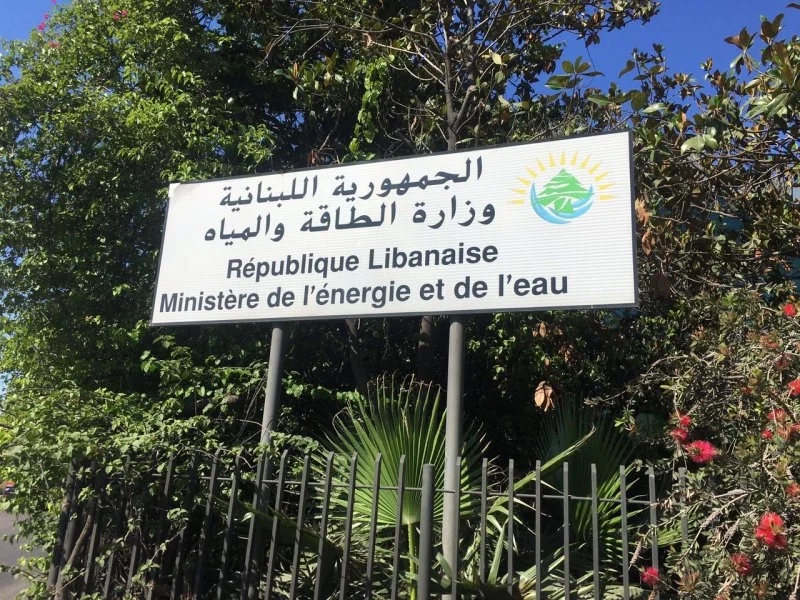
In a statement, the Lebanese Ministry of Energy and Water revealed that “the fair price for private generator electricity tariffs for the month of December is as follows: 29,975 L.L. for each kilowatt-hour.”
For subscribers who have meters in cities or densely populated areas or areas less than 700 meters:
* 5 amp capacity: 385,000 L.L. in addition to the monthly fixed charge multiplied by 29,975 L.L. per kilowatt/hour.
* 10 amp capacity: 685,000 L.L. in addition to the monthly fixed charge multiplied by × 29,975 L.L. per kilowatt/hour.
* 32,972 L.L. for each kilowatt-hour.
As for subscribers who live in villages or remote areas or areas more than 700 meters:
* 5 amp capacity: 385,000 L.L. (fixed amount) in addition to the monthly fixed charge multiplied by 32,972 L.L. per kilowatt/hour.
* 10 amp capacity: 685,000 L.L. (fixed amount) in addition to the monthly fixed charge multiplied by 32,972 L.L. per kilowatt/hour.
Knowing that “300,000 L.L. is added to the fixed portion of the meter tariff for every additional 5 amps.”
The ministry explained that “this tariff is based on an average price for a can of diesel (20 liters) in the month of December, which is 1,383,753 L.L., after calculating all expenses, interest, and generator costs, in addition to a good profit margin for their owners.” It also indicated that “the cost of distributing the can from the gas station to the generator was taken into account, in coordination with the Lebanese Ministry of Economy and Trade.”
It pointed out that the tariff “takes into account essential components, including the cost of oils, filters, and generator depreciation, in addition to the average monthly price of the dollar in the parallel market, which reached 89,700 L.L.”
The ministry confirmed that “this tariff was issued based on the accounting table adopted by the Ministry of Energy since 10/14/2010, and in implementation of Cabinet Decision No. 2 issued on 12/14/2011 regarding taking the necessary measures to control the price of private generators, and based on the joint implementation mechanism between the ministries (Energy, Interior, and Economy) announced on 12/20/2011.”
The ministry called on “generator owners to adhere to the decision of the Ministry of Economy and Trade requiring the mandatory installation of meters,” announcing that it “will conduct a documented study in this regard during the coming period, in preparation for updating the approved equation to be more in line with fluctuations in exchange rates and the economic and social conditions of citizens, taking into account the requirements of private generator owners.”
It also announced that it “sent to the Lebanese Ministry of Interior and Municipalities and the Ministry of Economy and Trade letters regarding the December 2025 tariff, to take the necessary action in accordance with the joint control mechanism.”
Regarding “elevators and common areas that share three-phase capacities (Triphase), the generator owner should calculate the fixed portion of the tariff based on the single-phase capacity (Monophase).” It provided a clarifying example: “If the elevator and common areas share a three-phase circuit breaker of 3×15 amps, the fixed portion is calculated based on a capacity of 15 amps and not 45 amps, i.e. 985,000 L.L. and not 2,785,000 pounds.”
The ministry warned private generator owners and citizens against “introducing the following additions to the indicative tariff issued by it”:
* Value-added tax that is not legally justified without official registration in the TVA Directorate in the Ministry of Finance.
* Fees or additional amounts under any pretext, such as the cost of maintaining the generator or networks or other.
* Pricing to the consumer in foreign currency.
* Imposing additional fees on citizens who use solar energy devices alongside private generators.
The Ministry of Energy and Water appealed to “those concerned with consumer protection, especially the Ministry of Economy and Trade, to intensify monitoring of the proper application of the above indicative tariff, and to take the most severe measures against violators, with the support of the Ministry of Interior and Municipalities and the competent judiciary.”
Finally, the statement indicated that “the Ministry of Energy and Water will publish a detailed table of the indicative tariff structure on the official website: www.energyandwater.gov.lb.”