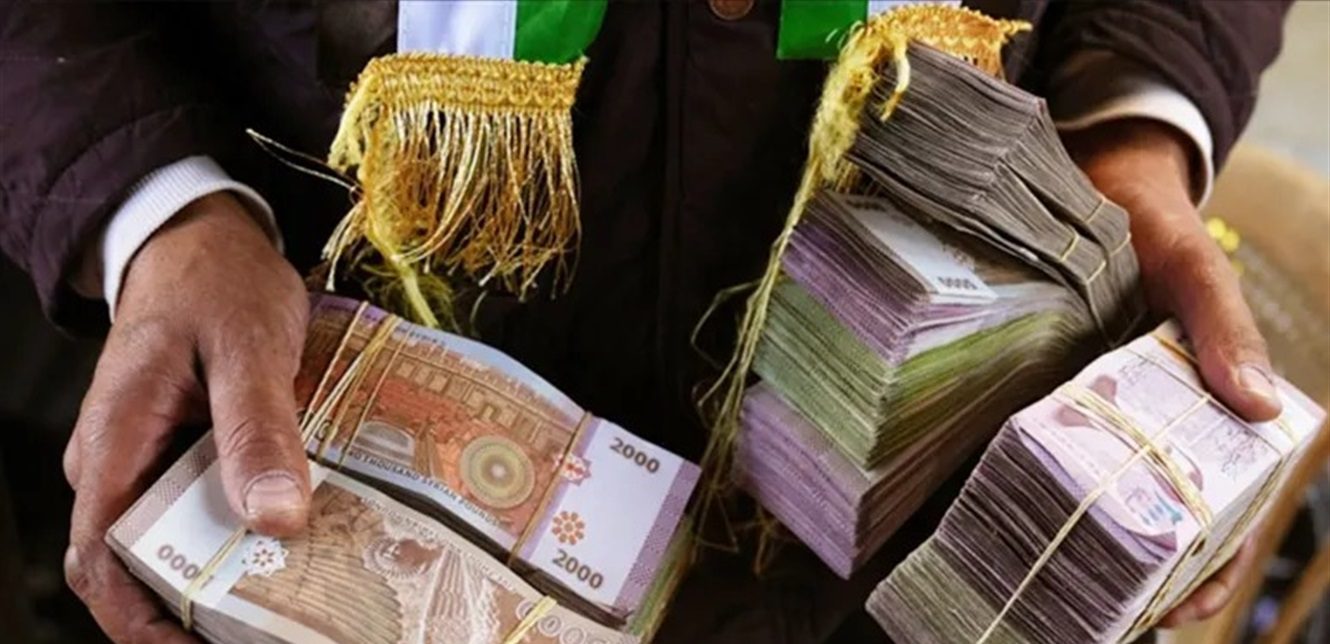
The Syrian government recently announced its intention to launch a new currency, a move aimed at replacing the current currency inherited from the previous regime, in the context of a broader plan aimed at restructuring monetary policy and building a new economic phase.
The Governor of the Central Bank of Syria, Abdel-Qader Al-Hosariya, stated that the country will begin, as of January 1, 2026, the process of replacing the banknotes currently in circulation with new banknotes, as part of an official plan to replace currencies issued during the Assad era.
Al-Hosariya added in a statement: “I am pleased, with pride and honor, to congratulate the issuance of Decree No. 293 of 2025, related to the birth of the new Syrian currency, in a pivotal national station that reflects the beginning of a new economic and monetary phase.”
In light of this development, several important questions arise, including:
- What are the reasons that make countries change or replace their currency?
- What is the difference between launching a new currency and printing a local currency within the existing monetary system?
- What are the most prominent Arab and Islamic countries that have had similar experiences?
- How much does it cost to launch or print a new currency?
- What are the most prominent countries where currencies are printed?
- What are the reasons that drive countries to change their currency?
Most countries in the world have their own national currency, which is considered an important sovereign and economic symbol of the state, but some countries may find themselves forced, at certain stages, to change their currency or replace it with another for various reasons.
Changing the currency is not just a formal or technical procedure with limited impact, but rather a deep sovereign step that is usually linked to major economic crises or important transformations in the financial and monetary path of the state. The success of this step depends on the stability of the accompanying fiscal and monetary policies, and not only on the issuance of the new currency.
The following are the main reasons that drive a country to change its currency, according to the International Monetary Fund and the Munich City Archives:
- Hyperinflation and loss of purchasing power: When prices rise very quickly, and the value of the local currency falls to the point where the numbers become large and impractical in daily life, central banks resort to reissuing a new currency by reducing the number of zeros or replacing the monetary unit, as happened in Turkmenistan in 2008.
- Rebuilding the economy after major crises or wars: In cases of political transition or post-conflict and civil wars, the new currency is used as a symbol of the beginning of a different economic phase and a break with the past, especially if the previous currency was linked to a collapsed regime, as is the case in Syria currently.
- Economic integration and joining a monetary union: In some cases, the currency system changes as a result of political and economic decisions, such as joining a common monetary union, as happened in the Eurozone countries.
- Collapse of the exchange system or weakness of the financial system: Chronic problems in the financial system, such as the collapse of the exchange rate or the widespread use of a foreign currency within the local economy, may lead to a reformulation of the monetary system or the adoption of a new currency to enhance stability.
- Combating counterfeiting and enhancing monetary security: With the development of counterfeiting methods, some countries adopt new currencies with advanced security technologies to protect the monetary system and enhance confidence in the currency.
What is the difference between launching a new currency and printing a local currency?
Launching a new national currency refers to replacing the current currency or introducing a radical change to it, which may include changing the name, shape, design, and basic unit of the currency, or even transitioning to a completely new monetary system that differs from the system previously in place.
According to the International Monetary Fund, the process of introducing a new national currency goes through 4 main interconnected stages:
- Availability of preconditions: This includes sound macroeconomic policies, in addition to a strong legislative and institutional framework for the financial sector, or working to create these conditions before starting monetary reform.
- Careful preparation and planning: This requires setting the necessary policies and procedures for monetary reform, in addition to preparing a detailed budget covering all stages of the process, including the costs of printing and minting the new currency.
- The currency production stage: This includes designing, printing, and minting the new banknotes according to the highest quality and security standards.
- Implementation phase: This is the most complex stage, as it includes introducing the new currency into circulation, gradually withdrawing the old currency, and ensuring a smooth transition without disrupting the markets or affecting the confidence of dealers.
As for the process of printing a local currency within the existing monetary system, it is less complex, and may include issuing a new banknote or updating the design of an existing banknote in order to combat counterfeiting, as the United States did when it issued a $100 bill with an updated security design (2013 series), while the US dollar and the existing monetary system remained unchanged.
In other cases, countries may resort to printing money within the framework of what is known as “quantitative easing,” which is a monetary policy that does not mean injecting new banknotes directly into the markets, but rather depends on central banks purchasing financial assets, often government bonds, from banks and other financial institutions, such as pension funds, according to the British newspaper “The Guardian.”
This additional liquidity is supposed to encourage banks to increase lending, which will positively reflect on economic activity.
What are the most prominent Arab and Islamic countries that have changed or replaced their currencies?
Many Arab and Islamic countries have witnessed monetary reforms throughout history, especially during periods of independence or economic reconstruction, whether by replacing foreign currencies or old local currencies with modern national currencies, or through re-evaluating existing currencies. The most prominent of these experiences include:
- Iraq: After the occupation of Iraq in 2003 and the fall of Saddam Hussein’s regime, the Provisional Coalition Authority issued a new currency known as the New Iraqi Dinar, to replace the old dinar known as the Swiss Dinar.
- Sudan: The Sudanese Dinar was replaced by the Sudanese Pound in 2007, according to the Comprehensive Peace Agreement signed in 2005 with South Sudan.
- Yemen: The dinar was used in South Yemen, and the riyal in the north before the unification of the country in 1990, and the Yemeni riyal later became the unified national currency.
- Saudi Arabia: The Kingdom moved from using foreign and local coins to a national paper currency, the Saudi Riyal, which was introduced in stages during the fifties and sixties of the last century, and official trading with banknotes began in 1961.
- Kuwait: On April 1, 1961, less than 6 months after independence, the Kuwaiti Dinar was issued with a value equivalent to 2.48828 grams of pure gold, to become the only legal currency in the country in May of the same year.
- Turkey: The Turkish Lira was revalued in 2005, where the extremely inflated currency was replaced with one new lira for every one million old liras.
How much does it cost to print a new currency and where is it printed?
Producing and distributing banknotes is a sovereign responsibility undertaken by central banks. Global spending on printing banknotes amounted to about $9.7 billion in 2018, and rose to about $11.1 billion in 2023, according to the “Nasdaq” platform.
Some countries, such as the United States of America, are committed to printing their banknotes within their territories by law, while other countries do not have their own printing presses, which prompts them to seek external parties. The United States prints about 7 billion banknotes annually to meet trading needs and replace damaged banknotes.
According to data from the Board of Governors of the US Federal Reserve (the central bank), the cost of printing a $10 bill is about 6.8 cents, rising to 7.3 cents for a $20 bill, and reaching about 11.3 cents for a $100 bill, due to its advanced security features.
In the Eurozone, banknotes are produced jointly by the central banks of the Eurozone member states, where each central bank is responsible for producing part of the banknotes according to a distribution determined by the European Central Bank.
In the Arab region, several countries have their own printing presses that are managed by central banks or the state. For example, the Central Bank of Egypt has managed its own printing press since 1967, while the Saudi Arabian Monetary Agency (SAMA) has had the exclusive privilege of printing and minting the national currency since the 1950s. The Kingdom of Morocco also established the national mint “Dar As-Sikkah” in 1987, and since then the dirham has been printed and minted within this institution.
Changing the currency, issuing new banknotes, or resorting to printing money are not isolated decisions, but rather precise sovereign tools linked to managing the economic stability of the state.
The success of any monetary step depends on the strength of fiscal and monetary policies, the clarity of legislative frameworks, and the ability of institutions to implement. The currency, no matter how its shape or name changes, reflects the strength of the economy that supports it.