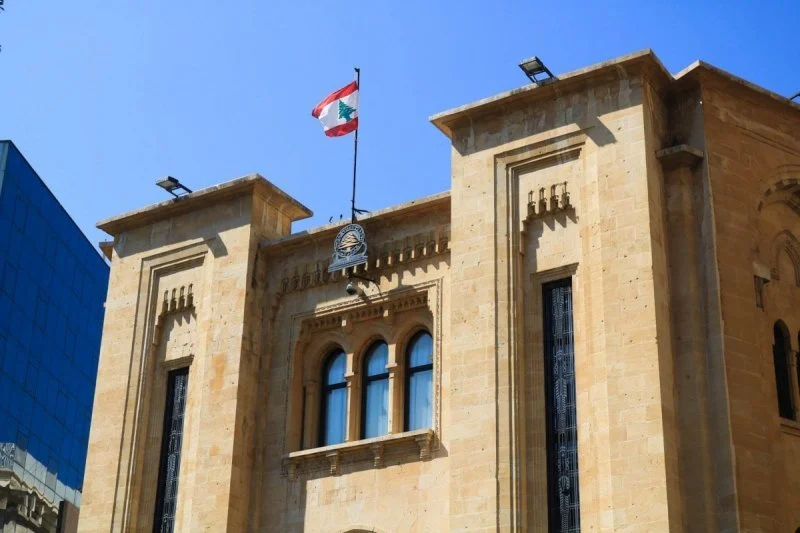
After thirteen ministers approved and nine opposed the Financial Gap Law in the Cabinet, the law now awaits referral to the House of Representatives for a final decision, sparking a wide debate about its content, the mechanism of its approval, and its impact on depositors and public finances.
In this context, MP Adib Abdel Massih stated to that “the fundamental problem with this law lies in the fact that it is not based on clear scientific data,” considering that representatives, in the face of such a serious law, are supposed to have accurate and comprehensive data before approving it. “This law is pivotal, as it is directly related to people’s money and the state’s money, and it outlines the features of the country’s public finances for the next twenty years.”
Abdel Massih explained that “any law of this kind must be based on reliable data submitted to the Parliament, including a criminal audit and an accounting audit, in addition to clear data from banks and data issued by the Banque du Liban. The parliamentary team needs to see this data in order to make a decision based on sound foundations, considering that what is presented today is nothing more than estimates that may be incorrect.”
Abdel Massih pointed out that “the law did not include any fair exception for free professional funds, such as the funds of engineers, lawyers, doctors, and other syndicates, stressing that there is a fundamental difference between an individual depositor who owns a deposit of 40 or 50 million dollars, and a fund that includes one hundred thousand engineers, for example, and whose deposits amount to 500 million dollars.”
He stressed that “these funds directly affect society, and they should not be treated in the same way as an individual depositor, considering that the distinction between a natural depositor and a legal depositor was necessary, especially with regard to funds.”
Regarding the distribution of losses, Abdel Massih raised a fundamental question about determining responsibility, asking who mismanaged the crisis, who caused it, and who colluded in it, stressing that “it is not possible to come up with a solution that does not include clear accountability, as if nothing happened.”
He pointed to a fundamental problem related to sources of funding, questioning the source of liquidity needed to implement the law, considering that providing liquidity requires a productive economy and a real flow of funds, which in turn requires a stable state, and finding solutions to major crises such as electricity and communications, in addition to addressing files of reconstruction, public and external debt, restructuring domestic debt, and the Eurobond file, which raises questions about the possibility of implementing the law.
Abdel Massih warned against “repeating the experience of the salary scale series, where laws were passed without a clear executive vision. This law is based today on a hypothetical economic vision that extends for four or five years, as if the political, security, and economic conditions will suddenly and radically change, which is an unrealistic assumption in his opinion.”
He stressed that “the economic vision associated with the law is impractical and is not based on realistic foundations or accurate data, which makes its approval in this form very dangerous.”
He added that “this law may constitute a real service to the International Monetary Fund, by opening the door to new loans that lead to increased debt without a real ability to pay, warning of the dangers of this path and the scenarios that may result similar to what happened in other countries.”
Regarding the fate of the law after its referral to the House of Representatives, Abdel Massih expected that “the next stage will witness a political buying and selling process, considering that the passage of the law, if it happens, may be the result of political trade-offs linked to electoral interests, because the passage of this law requires a large political price, which may include overlooking accountability or even postponing parliamentary elections.”
Abdel Massih concluded by saying that “the passage of the Financial Gap Law will not be without a clear return, questioning the nature of this return, and stressing that what is happening reflects a clear political buying and selling process regarding this law.”