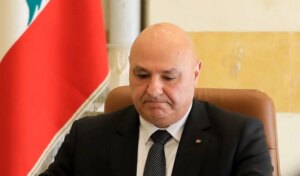
The President of the Republic, General Joseph Aoun, received a phone call from the Turkish President, Recep Tayyip Erdoğan, during which issues of common interest were discussed, in addition to discussing the current situation in the region.
During the call, President Erdoğan affirmed “Turkey’s support for Lebanon in various fields,” stressing “his country’s keenness to develop bilateral relations and enhance cooperation between the two countries.” In turn, President Aoun expressed his thanks to his Turkish counterpart for “Ankara’s supportive stances towards Lebanon,” stressing “the importance of strengthening joint relations in the interest of the two countries and peoples.”
In the context of foreign discussions, President Aoun also received a phone call from the King of Jordan, King Abdullah II Ibn Al Hussein, during which the most important regional developments were reviewed, within the framework of continuous coordination and consultation between Lebanon and Jordan.
The Jordanian News Agency (Petra) reported that “the call also dealt with bilateral relations between the two countries, where King Abdullah II affirmed Jordan’s support for Lebanon’s efforts to preserve its security, stability and sovereignty.”
For his part, President Aoun thanked the King of Jordan for his country’s interest in Lebanon in various fields, especially with regard to supporting the Lebanese army, stressing “the importance of this support in light of the delicate circumstances the country is going through.”
These communications come in the context of the continuous diplomatic moves led by the President of the Republic since assuming office, with the aim of strengthening the Arab and regional support network for Lebanon, in light of the current security and economic challenges.
The past weeks have witnessed repeated confirmation from friendly and sisterly countries, including Turkey and Jordan, of “supporting Lebanon’s stability and sovereignty,” particularly through “supporting the Lebanese army as the main pillar of national security,” alongside the rapid regional developments and existing tensions in more than one region.