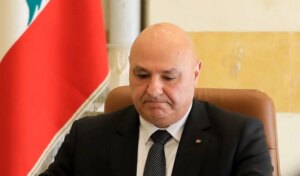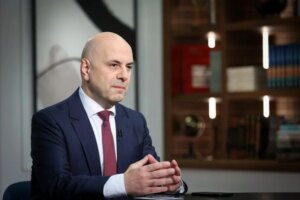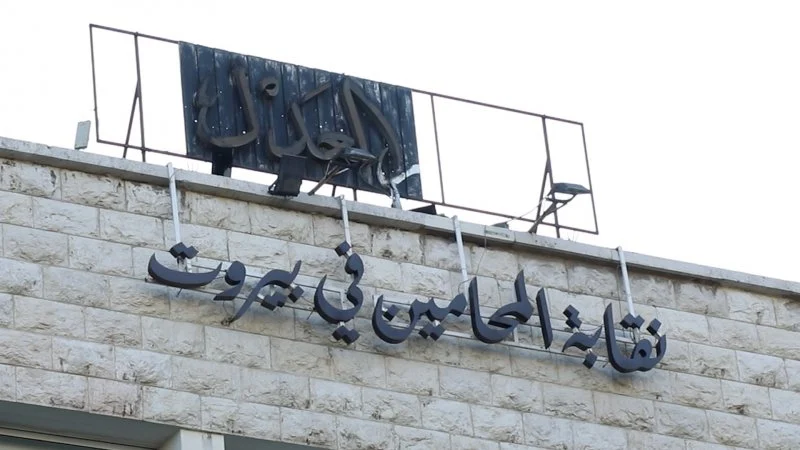
This statement came after an extraordinary meeting held by the Bar Association Council on Monday, December 22, 2025, chaired by the President of the Bar, Imad Mratinos, and attended by the members, and dedicated to discussing the draft law presented to the Council of Ministers.
The Bar Association explained that this project, which was supposed to be a foundational legislative text that paves the way for financial and economic recovery, reflects in its current form a series of continuous failures that have accompanied the management of the crisis since its beginning.
The Bar Association Council recorded several basic observations, the most important of which is the failure to approve the “Capital Control” law since the beginning of the crisis, which allowed influential people and those with power to smuggle their money abroad, which contributed to exacerbating the crisis and prolonging it. The Bar Association also criticized the failure to form an independent investigation committee comprising jurists and specialists to determine the causes of the financial collapse and clearly distribute responsibilities.
The statement pointed to the significant shortcomings in approving the law on financial regularity and deposit recovery in the early stages of the crisis, in addition to the delay in implementing the law on reforming and reorganizing banks, which was issued in August 2025, and whose implementation was suspended until the approval of the law on financial regularity.
The Bar Association also held responsibility for the failure to address the financial engineering carried out by the Banque du Liban, which cost the state billions of dollars, as well as the preferential transfers abroad in huge amounts, which led to a severe liquidity crisis and the banks’ cessation of payment.
The Bar Association strongly criticized the way in which the draft law deals with transfers exceeding $100,000, considering that imposing a tax of 30% on them under the name of “fine” has no legal basis, and these funds should have been fully recovered and subjected to the same conditions applied to frozen deposits, in respect of the constitutional principle of equality.
The statement affirmed that the project harms the rights of depositors, whether large or small, especially the Bar Association and the syndicates of liberal professions, because it entrenches a large deduction from deposits before any distribution, and limits the repayment of deposits to a ceiling of $100,000 over four years, while the remaining amount is converted into bonds instead of returning the money in cash, in addition to considering the depositor’s accounts in various banks as one account.
The Bar Association called for the immediate application of anti-corruption laws, in particular the laws on illicit enrichment, and the recovery of funds resulting from corruption and money laundering, and the amendment of banking secrecy, and laws on banks’ cessation of payment and seizure, in order to determine the responsibilities resulting from corruption, waste and mismanagement, and to protect what remains of depositors’ rights.
The Beirut Bar Association believes that the proposed draft law aims to turn the page on the crisis instead of solving it, by writing off deposits and acquitting the state, the Banque du Liban and the banks of their responsibilities, in complete disregard of the reasons that led to the financial collapse in 2019.
In this context, the Bar Association reiterated its adherence to the draft law it presented in 2022 under the title “Reforming the Situation of Banks That Have Stopped Payment and Reorganizing the Banking Sector,” as the real way to restore financial regularity and protect the rights of depositors and future generations.
The Bar Association concluded its statement by warning against proceeding with legislation that contradicts constitutional principles, especially Article 15 of the Constitution, and violates the principles of justice, equality and human rights, and exempts the state, banks and Banque du Liban from their obligations at the expense of confidence in Lebanon and the future of its financial system.