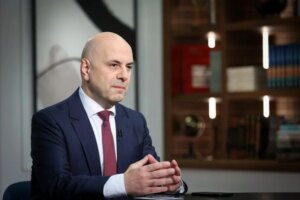
Bronstein also expressed skepticism about Lebanon’s ability to complete the task of disarming Hezbollah’s military wing before the end of this year, stating: “I don’t think they will be able to complete this task by the end of the year. They should be given more time, a few more months, and then Israel will deal with the Lebanese government.”
Bronstein believes that Israel has no justification for entering into a conflict with Lebanon, unlike the situation with the Palestinians and Syria, where there are territorial disputes. He mentioned that the Shebaa Farms “is land occupied by Israel and disputed not only between Israel and Lebanon, but also between Lebanon and Syria,” considering that “thousands of people should not die for a few meters of land.” He called for an agreement on the Shebaa Farms with the participation of the United States and France, in addition to Lebanon, Syria and Israel.
The French advisor welcomed the first direct contact between Lebanese and Israeli officials in three decades, stressing that “negotiations through a mediator are absurd” and that they often lead to mistakes and misunderstandings, and stressed the importance of direct negotiations under a ceasefire.
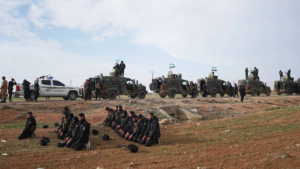
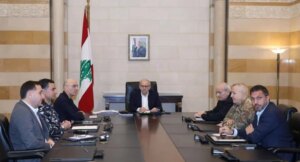
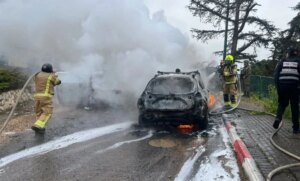
In late August, the Lebanese government commissioned the army to prepare a detailed plan to restrict weapons to the state only, to be completed before the end of the year. The army has already begun deploying reinforced units in the south and dismantling weapons depots and tunnels belonging to Hezbollah, in compliance with the ceasefire agreement with Israel that was signed on November 27. However, Israel continues to bomb Lebanese territory, threatening a large-scale military operation if the Lebanese authorities do not adhere to the deadline for disarming Hezbollah.