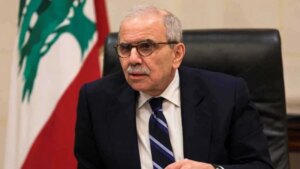
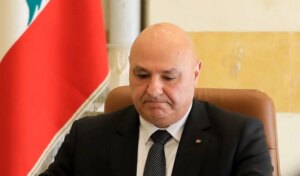
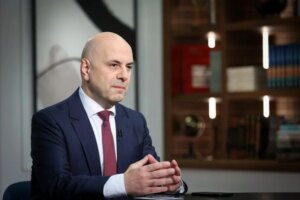
In a notable diplomatic move regarding the Lebanese-Israeli issue, Lebanon has entered a new phase in managing the political and security conflict by appointing diplomat Simon Karam as a civilian representative in the “Mechanism” negotiation committee in Ras al-Naqoura.
This change in the nature of representation raises questions about whether Lebanon is gradually moving towards de facto direct negotiations, amid ongoing Israeli raids on the south and increasing American and international pressure to impose new security arrangements. In this context, retired Brigadier General Bahaa Halal provides, via , an in-depth analysis of this sensitive phase and its implications, conditions, and challenges.
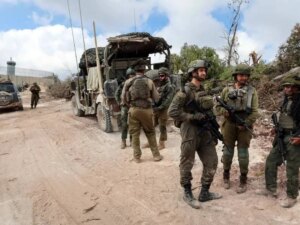
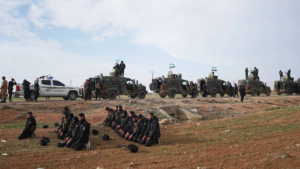
Brigadier General Halal points out that on December 3, 2025, the first implicitly direct and outwardly indirect talks were held in Ras al-Naqoura, under American auspices. These were civilian talks between representatives from Israel and Lebanon for the first time in decades, and served as a diplomatic step to discuss the implementation of a ceasefire (after the war on Lebanon and specifically Hezbollah in 2024) within the framework of de-escalation. However, this meeting coincided with a field escalation, as Israel launched raids in southern Lebanon despite timid American calls for restraint.
This contradiction between civilian negotiation on one hand and military bombardment on the other, according to Halal, calls for a deeper reading of the fundamental question: What is Israel trying to say, and what awaits Lebanon if it accepts the “conditions”?
Messages Israel wants to convey:
Halal deduces a number of strategic messages from this contradiction between negotiation and raids:
-Negotiation is not a cessation of actions.
-The raids confirm that Israel views negotiation as a temporary cooling tool or tactic, not as a truce with obligations.
-Israel wants to show that it retains complete control over the “keys to engagement,” and that no one can guarantee a ceasefire, even if they sit at a negotiating table.
-The goal is not negotiation per se, but to redraw the rules of engagement from a position of strength.
Pressure on Lebanon to impose a “conditional truce”:
Halal believes that the continued bombardment despite the talks exerts clear pressure on the Lebanese state to accept security conditions related to the demarcation of borders and the arms of militias (often referring to Hezbollah), and to place the south under Israel’s direct authority or under the authority of the Lebanese state in coordination with it, reminiscent of some provisions of the May 17, 1983 agreement when Israel occupied Lebanon.
Weakening the morale of the resistance and Lebanese society:
He points out that the most prominent security message is:
-No location in the south is safe anymore, even if the government negotiates and proceeds in an official manner. The goal is to create doubt among citizens about the ability of the resistance and the state to protect the south, and to make the acceptance of political-security concessions more palatable, in order to put pressure on Hezbollah and break its will.
-Conditions imposed on the Lebanese side
Conditions:
Halal concludes from the Israeli and American positions after the raids and the meeting that some conditions are being presented to Lebanon, most notably:
-Civilian rather than military negotiating representation: Lebanon appointed diplomat Simon Karam to lead the Lebanese delegation in the “Mechanism” negotiations with the Israeli civilian side, with the aim of removing the military character from the file and transforming it into a political-technical file.
-Disarming the resistance south and north of the Litani.
-Continuation of raids as long as there is “military infrastructure” for Hezbollah in the south.
-Lebanon’s challenges in facing this stage
Challenges:
In contrast, Halal considers the challenges to be significant, most notably:
-The need to negotiate from a position of strength, not weakness.
-Accepting conditions under pressure deprives Lebanon of part of its sovereignty and defensive capability.
-Any security solution that is not based on a political horizon will be fragile.
-Security changes do not become permanent as long as the files of borders, weapons, and the decision of war and peace remain open.
-The “economy of de-escalation” does not compensate for the security and dignity of the citizen.
-Any understandings with Israel must be preceded by international and local guarantees, not secret compromises.
-The need for the state, the resistance, and the public to agree on a national strategy that protects Lebanon from blackmail.
What does the appointment of Simon Karam mean?
Regarding the significance of appointing a civilian to the “Mechanism” committee, Halal believes that this step carries several indications:
-Transformation in form and character
-Military representation is no longer the dominant one as it was in previous demarcation negotiations.
-Choosing a diplomat gives the negotiations a political and technical character and reflects greater civilian involvement from the state.
-Signal of negotiating flexibility
-It may be read as a positive message to the West and the American mediator.
-But it raises concerns about opening the door to additional pressure or gradual concessions.
Have we entered into direct negotiations?
Technically: Still indirect.
Practically: A step that brings Lebanon closer to direct negotiations if the files expand towards security, weapons, and land borders.
Deeper political significance:
-Perhaps the state aims to separate its official path from Hezbollah to avoid international embarrassment.
-It may be a preparatory step for subsequent economic paths.
Brigadier General Halal concludes that Lebanon has not officially announced its entry into direct negotiations, but by appointing a civilian representative, it has actually entered a phase of flexible negotiation that requires national vigilance, because the form may gradually evolve towards direct political negotiation if clear boundaries are not defined for it from the outset.