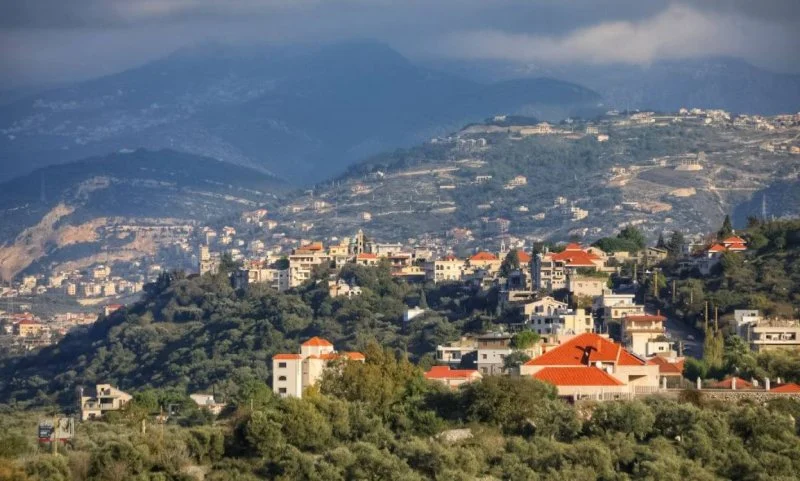
The arrest of Mohammad.A, his mother Maryam, and his sister Maya was not just a routine procedure in the pursuit of drug dealers, but a severe blow aimed at one of the most dangerous and secretive networks in Mount Lebanon. This family network has been operating silently for years, moving easily in crowded neighborhoods, and expanding its influence from areas such as Burj al-Barajneh, Laylaki, Sabra, and Shatila to Baabda, Hadath, Ghazir, and Keserwan, as revealed by initial investigations.
This family, which includes the mother, son, sister, and cousin known as “Al-Hindi” (The Indian), was not operating randomly or on a limited scale. Instead, they were engaged in organized activity based on a precise division of roles: Mohammad for promotion and distribution, the mother for packing and accounting, and the sister for communication and coordination with customers. This is considered the most dangerous model facing drug enforcement: small families operating in complete secrecy, not visible, and moving within a familiar residential area so as not to raise suspicions about their activity.
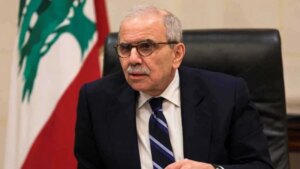
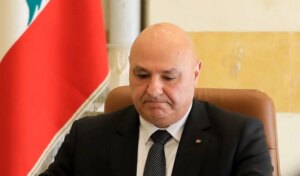
However, this camouflage did not succeed in hiding their activity from the “eye of drug enforcement” in Mount Lebanon, which followed a small thread until everything was revealed. The specialized detachments working under the supervision of the Attorney General of Appeal in Mount Lebanon, Judge Sami Sader, had held successive and intensive meetings in recent weeks at his invitation, with the aim of implementing a decisive security plan to strike at drug trafficking dens and vigorously pursue major promoters, after this file became a top priority at the level of the judiciary and security agencies.
Judge Sader, known for his legal rigor and continuous follow-up of drug-related files, gave direct instructions to carry out raids without hesitation, and opened a daily line of communication with the leaders of the detachments, demanding that “Mount Lebanon be cleaned of networks hiding behind homes, families, and relationships.” The starting point was the suspicious apartment in the Maamoura area behind Ofran al-Wafaa (al-Wafaa bakeries) – third floor, which turned out to be used to store and pack drugs before distribution.
Based on his indication, the security force raided the apartment and arrested Mohammad.A, his mother Maryam, and his sister Maya, and seized large and varied quantities of cocaine, hashish, heroin, and XTC pills, in addition to sums of money, phones, empty bags, notebooks, cigarette rolling paper, as well as a “Glock” type pistol that was inside the house.
In his confessions, Mohammad.A revealed a wide-ranging network showing the size and seriousness of the crime: he earns $80 a day for promotion, and has been working for 3 years for the merchant Hassan.Z, while his mother packs the materials, manages the accounts, and receives the revenues. He confessed that he supplies a Palestinian merchant in Burj al-Barajneh camp known as “Al-Dudu,” who in turn works for another person nicknamed “Al-Hindi” (The Indian), and also delivers drugs to an unidentified man near Audi Bank at the entrance to Burj al-Barajneh, who owns a silver “Avanza” car. In addition to Mohammad al-Moussawi, who works for the merchant nicknamed “Al-Hindi” (The Indian) and receives drugs from him in the Laylaki and al-Kafaat areas.
The network that was uncovered, according to the size of the seizures and the complexities of distribution, is not just a “group” but an integrated system that relies on more than one supply and distribution point, and connects Lebanese, Palestinian, Syrian promoters, and unidentified persons who are hiding, some of whom are wanted for additional crimes such as drug cultivation.
After Judge Sami Sader charged the entire group under Articles 125 and 127 of Law 673/98, and requested the arrest of those detained in person and the prosecution of those absconding in absentia, he issued instructions to attach to the file an additional report that includes listening to the detainee Noah Zaiter, in an additional step that confirms a clear message: Mount Lebanon is no longer an open area for poison dealers, and the era of “turning a blind eye” has ended.
This is how one of the most dangerous family networks in the suburbs and Mount Lebanon fell, in a complex operation that combined precise security follow-up and a firm judicial decision, in the context of a broad campaign led by Judge Sader against drug trafficking, which appears to be revealing more and overthrowing other networks in the coming days.