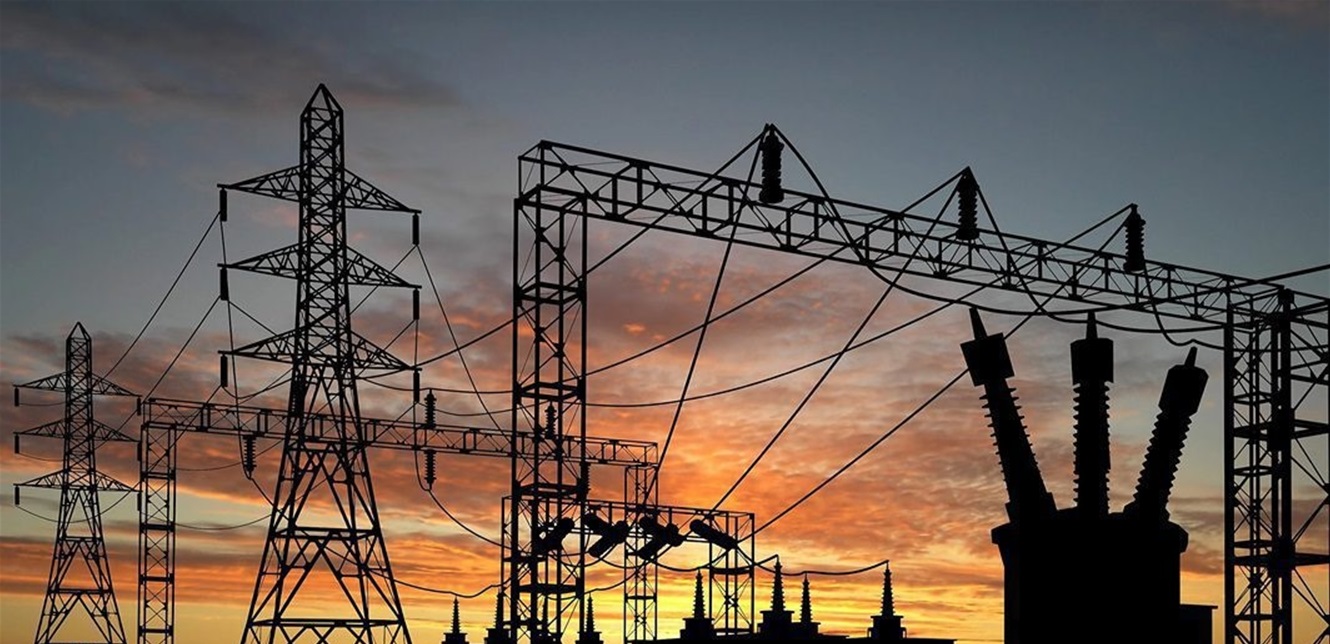
Following an annual growth of 9%, the value of exports of electricity and generation equipment reached approximately $7.6 billion. However, the striking aspect is the significant disparity between these two components: electricity exports amounted to only $145 million, equivalent to 2%, while power generation equipment exports reached $7.4 billion, or 98% of the total.
Approximately 85% of electricity and generation equipment exports are concentrated in five countries: the UAE, Saudi Arabia, Tunisia, Morocco, and Kuwait, with a total exceeding $6.4 billion. The United Arab Emirates tops the list with exports valued at $4.5 billion, equivalent to 59% of total Arab exports, followed by Saudi Arabia with $774 million, then Tunisia, Morocco, and Kuwait with shares ranging between 4.4% and 6%.
As for Arab electricity exports, they decreased compared to 2023 to reach $145 million, with a decline in exports from Egypt, Morocco, Jordan, Mauritania, and Algeria. In contrast, exports from Syria, the UAE, and Oman increased. Only three countries account for approximately 87% of electricity exports, namely: Egypt $83 million (57%), Morocco $30.2 million (21%), and Jordan $13.8 million (9.5%).
In contrast, exports of electricity generation equipment achieved a growth of 9.5% to reach $7.4 billion, with approximately 86% of them concentrated in the UAE, Saudi Arabia, Tunisia, Kuwait, and Morocco. Fifteen Arab countries recorded growth in equipment exports, while 7 countries witnessed a decline due to economic and production pressures.
On the import side, ten countries accounted for 58% of the region’s exports, with France topping the list of importers with a value of $592.8 million, followed by Iraq with $517 million. Libya topped the list of the largest importers of electricity from Arab countries with a value of $59 million, which represents 40% of total electricity exports. (Al- প্লাটফর্ম taqa)