According to the newspaper, the network includes imams and preachers linked to the group, who face accusations of embezzling taxpayers’ money through the private school system, where the value of the stolen funds exceeded $100 million. Among those involved is a former Swedish parliament member of Somali origin, suspected of illegally transferring millions of dollars to finance nightclubs in Thailand and support his Islamic party in Somalia. In addition, a school owner was involved who transferred millions to Malta before leaving Sweden, along with other elements belonging to the group.
The Swedish investigation also revealed educational and economic institutions that were used to collect and transfer money to the organization’s accounts, including the “Ler Och Lek” kindergarten, which received millions of dollars, a large part of which was transferred to the Andalus Association affiliated with the Brotherhood, and from there to the Swedish Muslim Union, classified as an extremist entity. The kindergarten was run by two elements belonging to the group, who were covering up the transfer activity under the guise of “non-profit”.
The data indicates that the Brotherhood’s use of schools and kindergartens as financial arms is not new, but dates back to the era of the founder Hassan al-Banna. According to an Egyptian security source for “Al-Arabiya.net” and “Al-Hadath.net”, in the thirties and forties, the group exploited the social conditions of the Egyptians, collected donations under the pretext of helping the poor, and then used them to establish private schools. The first school for the group was in the Ismailia Governorate, where al-Banna resided. In 1946, al-Banna founded a committee to establish a chain of schools that later became a major financial arm of the organization.
The security source confirms that 120 Brotherhood schools were confiscated in 2013 by a decision of the committee to seize the organization’s funds, after it was proven that they were involved in financing the group’s activities through the education and cubs departments, and that their profits went to the organization’s treasury despite being registered in the names of leaders and their families.
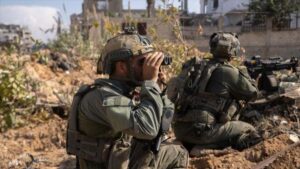
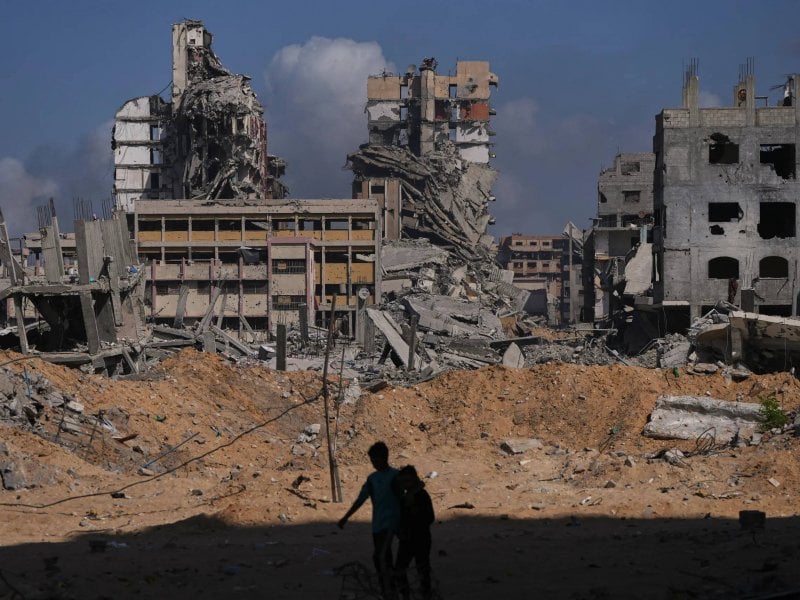
The group’s financial arms are not limited to schools and associations, but extend to exploiting disasters and wars, from Afghanistan to Bosnia to Gaza. Last February, the group prepared a detailed plan worth $132 million to participate in the reconstruction of Gaza, according to a 98-page document obtained by “Al-Arabiya.net” and “Al-Hadath.net”. The plan includes equipping equipment to remove rubble, open roads, and secure the return of the displaced, through bodies affiliated with the group in Palestine.
Major General Ahmed Aliwa, the former leader in the national security in Sinai, reveals a major recent financial scandal related to the funds of the “Ummah Endowment” in Palestine, where donations were stolen and converted into private investments and the purchase of hotel apartments in Europe, confirming that the perpetrators are Brotherhood elements working within bodies that collect donations for the sector in Europe.
For his part, Major General Adel Azab, the former official of the Brotherhood file in Egyptian national security, explains that money in the group’s عرف has never been just a tool for relief, but a means of political influence hidden behind charitable work. He points out that the roots of what is happening today in Gaza go back to Afghanistan, where the Brotherhood collected millions of dollars in the eighties in the name of “supporting the Mujahideen”, and then came out with financial expertise and regional donation networks that later turned into permanent sources of funding.
Major General Azab recalls case 404 high state security (2009), which revealed huge financial transfers collected in the name of supporting Gaza, and then entered Egypt through accounts linked to Brotherhood elements. According to investigations, donations amounted to 2.7 million euros collected in Europe following the 2008 aggression, and nearly 2.8 million euros were seized inside Egypt in personal accounts, not accounts of relief associations.
A document was seized in the case entitled “The General Guide’s Document.. When Gaza’s Money Becomes Organizational Property” signed by Mohamed Mahdi Akef, which stipulates that donation funds may not be disposed of before referring to the Guidance Bureau. Azab points out that the goal was not relief, but to control the financial decision and later turn it into political influence.
To ensure control over the funds, the organization established the Palestine section within its structure, under the supervision of Khairat al-Shater, and its task was to organize relations with funding networks and direct the paths of money under the guise of supporting the Palestinians.
Major General Azab adds that the issue for the Brotherhood is no longer “jihad” or “donations”, but has become reconstruction money, saying that Egypt realizes that reconstruction is not just rebuilding, but determining who owns the keys to the future inside Gaza. Therefore, the Egyptian warning came that reconstruction must be transparent, monitored, and far from any organizational political employment.
He concludes that the real danger to Gaza today is not what the war has destroyed, but what may be built on the rubble if money is left unchecked.