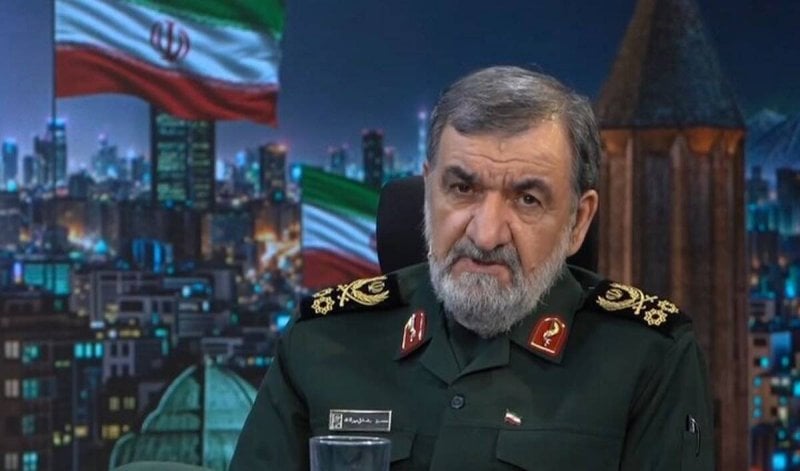
Likewise, a leader in the “Revolutionary Guard” and member of the Expediency Discernment Council, Mohsen Rezaei, called on Hezbollah to reconsider the policy of strategic patience, considering that the assassination of resistance leaders “does not shake the front, but creates a new wave of fighters joining.” He described the Israeli operation in Beirut as a “terrorist act,” accusing Israel of “exploiting the ceasefire and the restraint shown by the resistance.”
Rezaei explained that “larger groups have joined the resistance today, and Hezbollah is managing the field with patience and strategic restraint,” but he believes that this approach “must be reconsidered.” The Fars news agency quoted him as saying that Israel “deludes itself that assassinations will force people to surrender, but it is mistaken; every operation brings it closer to the end of its life.”
He added that the United States and Israel are facing an “unprecedented phenomenon” as a result of the steadfastness of Gaza and Lebanon, pointing out that “global equations have changed.” He recalled the 12-day war in June, which witnessed American strikes on uranium enrichment facilities and an Israeli attack on the headquarters of the “Revolutionary Guard,” before Iran responded with missiles and drones. He stressed that Washington and Tel Aviv “used all their strength but did not last more than 12 days.”
Rezaei considered that the absence of resistance would have exposed Iran to great danger, as happened in the two world wars, noting that “the doctrine of resistance gave the Iranian people their strength.” Rezaei delivered his speech in the city of Kerman near the tomb of Qassem Soleimani, during his participation in the funeral of the remains of unknown soldiers.
In the same context, Ali Larijani described Tabatabai as “one of the most prominent leaders of the party,” and wrote on the “X” platform that Israeli Prime Minister Benjamin Netanyahu “continues his adventures,” considering that this path “will lead to the conviction that confrontation has become the available option.” His statements came before his departure to Pakistan, where he praised the position of the Pakistani people during the 12-day war.
For his part, Ali Shamkhani, a member of the Supreme Defense Committee and advisor to the Supreme Leader Ali Khamenei, stated that “the continuation of Tel Aviv’s crimes will not build a secure future for the Zionists, but will make the path of resistance brighter,” considering that “the Zionist entity only understands the language of resistance.”
At the same time, the Iranian Foreign Ministry announced that it “strongly condemns” the assassination, which also killed four other members of “Hezbollah,” according to “Agence France-Presse.” Tabatabai is the most prominent leader in the party to be killed since the ceasefire came into effect about a year ago, despite Israel’s continued raids on Lebanon.
Hezbollah emerged exhausted from the last war with Israel, and what complicated the situation further was the fall of its main ally, the ousted Syrian President Bashar al-Assad, in December. The Iranian Foreign Ministry affirmed that the assassination of Tabatabai “constitutes a flagrant violation of the ceasefire concluded in November 2024, and an attack on Lebanese sovereignty.”
Tabatabai assumed military leadership of Hezbollah after the killing of its most prominent figures in the last war. He was not widely known among the Lebanese. Washington stated that he assumed tasks in Syria to support Bashar al-Assad’s forces until his fall at the end of 2024. A source close to the party reported that he was “responsible for the Yemen file” and was linked to supporting the Houthis.
The Lebanese developments coincided with a state of anticipation in Tehran after warnings from Intelligence Minister Ismail Khatib of “attempts to target the Supreme Leader Ali Khamenei and incite internal unrest.” He pointed out that the United States has moved from the strategy of “regime change” to “containing it through pressure,” pointing to the expansion of the American military presence and “NATO” forces in the region.
A decline has been observed in the appearance of Khamenei (86 years old) recently in parallel with Israeli threats to target him, which has raised speculation within the Iranian media about arrangements for the position of Supreme Leader. Khatib accused internal parties of “increasing discontent” and “aligning with opponents” amid economic pressures.
These developments come after statements by Iranian President Masoud Pezeshkian, who said that he “feared the assassination of the Supreme Leader during the war,” considering that this would lead to “serious internal divisions.”