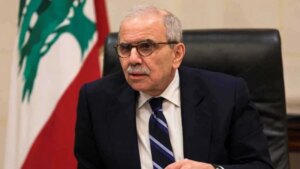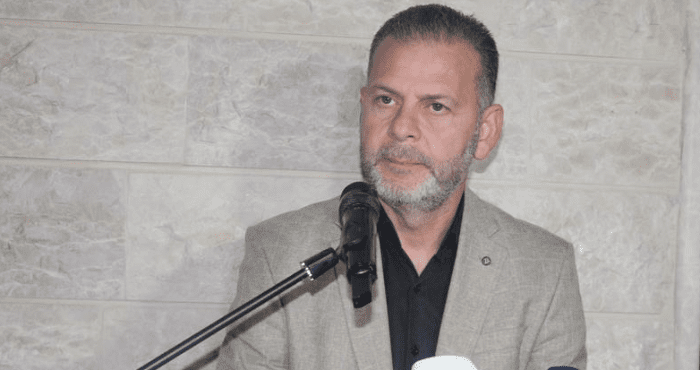
During the ceremony, MP Yanal Solh, a member of the Loyalty to the Resistance Bloc, delivered a speech in which he said: “We meet today on the anniversary of Independence Day, which is not limited to a day on the calendar, but is a long path of sacrifices and steadfastness. Independence shaped by men and women who carried the nation in their hearts, and paid a heavy price to remain free, sovereign, and independent.”
He added: “Independence is not born from a vacuum, but is built daily by the Lebanese people’s insistence on life despite the pain, on building despite the rubble, and on adhering to the land no matter how severe the storms.”
He also affirmed that the commercial sector has always been and will remain one of the pillars of steadfastness in Lebanon. He considered traders and business owners as the “unknown soldiers” of the economy, because they opened their shops despite the economic collapse, stood firm in the face of crises, and insisted on the continuation of life so that the whole country would not collapse. He paid tribute to every merchant, professional, institution, and farmer, stressing that they are not only the drivers of the market, but also the protectors of social and economic stability, and a fundamental pillar in protecting independence, because the independence of countries is made with weapons as it is made with the economy and the ability to persevere.
He continued: “At the heart of this national scene, the Lebanese Army remains the steadfast pillar, the loyal guardian, and the guarantor of the country’s unity. We affirm today, as always, that our army is an integral part of the equation that has protected Lebanon for years: the army, the people, and the resistance, which is the equation that preserved sovereignty, defended the land, and repelled aggression, and without it, Lebanon would not have remained steadfast in the face of threats.”
He pointed out that the homeland cannot be strong without a strong army, and the economy does not stabilize without stable security. He then paused at the recent statement of the Lebanese Army, describing it as a “courageous national statement that clearly expressed the army’s position in the face of attacks.” He added that this statement “bothered some abroad, as if what is required is a silent army, not an army that defends its land,” affirming his support for the army, the independence of its decision, its national role, and its right to remain a strong institution that protects the sovereignty of Lebanon and the dignity of its people.
Solh stressed that sovereignty is not just a negotiating paper or a clause in political salons, or a number on maps drawn abroad, but is the essence of existence, a red line, and a natural right to live on free land with dignity. He affirmed that Lebanon’s borders are not subject to amendment or compromise under any circumstances, and have been established with the blood of martyrs from the army, the resistance, and the people. He added that independence is not complete without development, and sovereignty has no value if people remain marginalized without services or job opportunities.
He then moved on to “the third pillar of Lebanon’s strength,” which is the municipalities and civil society organizations, stressing that municipalities are not just service providers, but are the first line of defense for people’s daily needs, the voice of villages and neighborhoods, and the main channel for transforming initiatives into achievements and building infrastructure capable of facing crises. He added that civil society organizations and the local community have formed a real pillar of social steadfastness through their development programs, their support for families, and their initiatives in the fields of education, health, and the environment, and filling the gaps left by the crises.
In conclusion, he affirmed that the integration between the state, municipalities, and civil society is the best way to achieve sustainable development, enhance social cohesion, and build a society that preserves human dignity, stressing the need to support municipalities with powers and resources and expand partnerships with local associations and institutions, because development is a national path that begins in villages and neighborhoods and is made with the will of the people and for the future of their children.