In contrast, the Finance Ministry is demanding that the Israeli army stop the “waste party” and take measures to reduce expenses. Finance Minister Bezalel Smotrich is demanding that the army and the Ministry of Defense reduce and streamline the budget by 10%, pointing out the possibility of easily reducing 5%.
The Finance Ministry emphasizes that the security establishment has received huge budgets for equipment and war financing: “They received an open check. The war is over – they must return to the specified framework. They cannot continue to keep tens of thousands of reservists who are not part of the combat force or combat supporters. This costs us billions of shekels every month,” according to statements from the Finance Ministry.
While the Director-General of the Ministry of Defense, Major General (Res.) Amir Baram, asserts: “The Ministry of Finance is obstructing the Ministry of Defense and delaying the signing of dozens of vital deals that affect basic security.”
According to “Maariv”, the dispute between the two ministries escalated this morning, Tuesday, regarding the preparation of the defense budget, as the Finance Ministry does not currently intend to approve the demands of the Israeli army and the Ministry of Defense, and demands that the budget be determined according to the decisions of the Nagel Committee and the agreements approved by Prime Minister Benjamin Netanyahu in July of this year.
The Finance Ministry pointed out that any additional exceeding of the budget framework would lead to an increase in the debt-to-GDP ratio, which would cause significant spending on interest payments, and would, in the long term, lead to a significant reduction in the state budget, including the defense budget.
The Finance Ministry presented examples of waste in the security establishment. For example, after the Iranian missile attack on Tel Aviv, a building under the responsibility of the Ministry of Defense was damaged. The Finance Ministry put out a tender to repair the damage, and received an offer from a contractor worth 150 million shekels. The Finance Ministry considered the amount excessive and intended to negotiate to reduce it, but the Ministry of Defense announced that it would ask a contractor on its behalf to carry out the work, arguing that the area fell under its responsibility. According to the Finance Ministry, the Ministry of Defense estimated the cost of renovating the two floors at 700 million shekels.
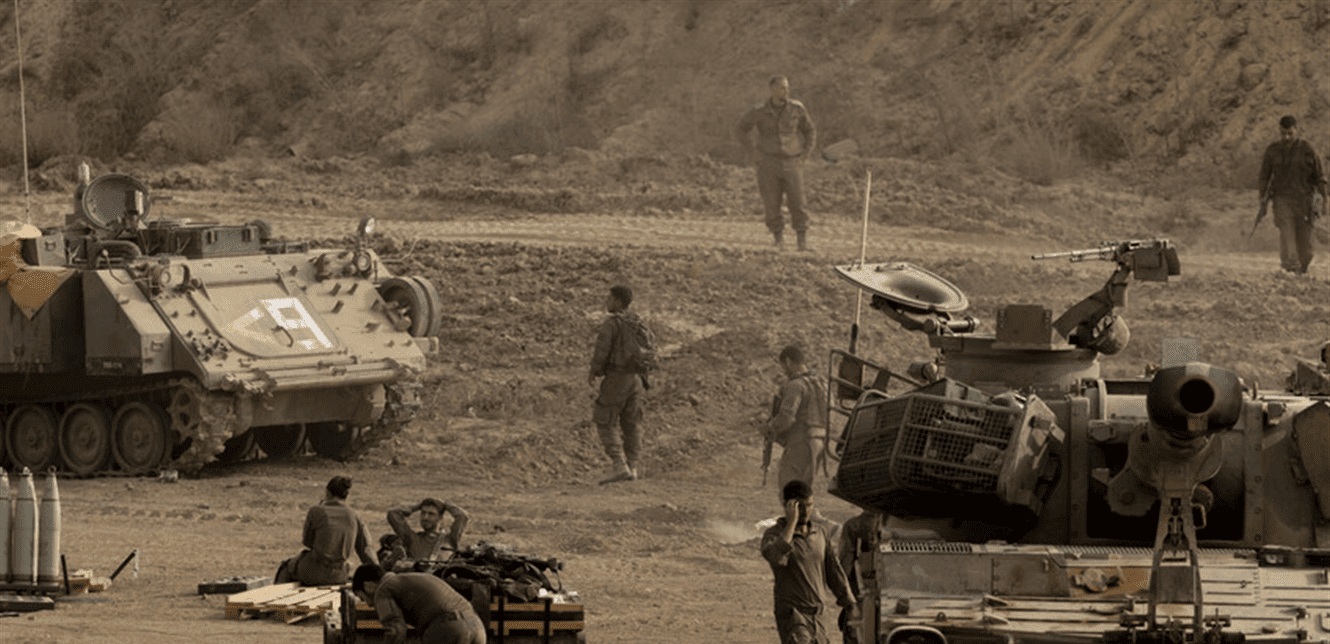
The Finance Ministry also mentions that at the beginning of the campaign, a reserve soldier, who has a connection to the Finance Minister, purchased camera systems, four cameras installed around each tank and armored vehicle. The reserve soldiers bought the cameras at a cost of 2,100 shekels per armored vehicle or tank, while the Ministry of Defense is currently purchasing the exact same system at a cost of more than 7,000 shekels per vehicle and tank. The Finance Ministry presented other examples, while the dispute is mainly focused on the Finance Ministry’s demand for the Israeli army to reduce the number of reservists who do not form an essential part of the fighting and the operational efficiency of the army.
In contrast, the Ministry of Defense and the Israeli army launched a campaign this morning to convince the Finance Ministry to increase the budget. Major General (Res.) Baram held a meeting of the Ministry’s management forum that addressed, among other things, the management of the defense budget in light of the development of security threats.
Baram said: “After two years of an intense, multi-front and unprecedented war, which included intensive activity by the security establishment on seven fronts, the Finance Ministry is shifting its attention and focusing on issues whose impact is very small compared to the serious security threats emanating from Iran and other fronts, near and far.”
He added: “In light of the focus of our enemies’ efforts, the State of Israel is committed to investing now in intensive equipment, in the form of emergencies. We must work in every way to restore the depleted combat systems to full efficiency.”
He continued: “Instead, the Finance Ministry is obstructing the Ministry of Defense and delaying the signing of dozens of vital deals worth billions of shekels, including: ammunition, spare parts for tanks, the purchase of drones for maneuvering units, and the protection of residential communities along the borders of Lebanon and Gaza, and others. The Finance Ministry also refuses to sign contracts for the construction of the border fence on the eastern border, contrary to the decision of the Ministerial Committee for Equipment and despite the clear threats arising.”
The Director-General of the Ministry of Defense concluded by saying: “The security establishment is committed to learning lessons and streamlining expenses, but while the Finance Ministry claims that we are repeating the mistakes of the past after the “Yom Kippur” War (October War), when the defense budget was 35% of GDP and led to the ‘lost decade’, the budget now, after a year of intense war, is 6.7% of GDP, and our budget demands will reduce it within two years to only 5% of GDP.” (Russia Today)