A new study suggests that heart damage, even if it is not apparent and asymptomatic, may be a warning sign of dementia decades later.
According to Earth.com, researchers followed nearly 6,000 people for 25 years, and the results showed a link between the heart, blood and brain in ways that cannot be ignored.
## One protein reveals a lot
The study was conducted by researchers from University College London (UCL). The team focused on cardiac troponin, a protein that doctors check when they suspect someone is having a heart attack.
In this study, the participants did not have any major cardiac symptoms. Their troponin levels were slightly higher than normal, but this had significant implications.
The researchers found that people with the highest levels of troponin between the ages of 45 and 69 were 38% more likely to develop dementia by the end of the study.
This relationship remained strong even after accounting for factors such as gender, race and education.
## Dementia does not happen suddenly
Dementia develops slowly over decades. According to scientists, signs of damage began to appear in blood tests 25 years before a person was diagnosed with dementia.
This is a long warning period, and it could make a real difference if doctors knew how to use it.
Professor Erik Brunner, one of the senior authors of the study, pointed out that poor heart health in middle age increases the risk of developing dementia later in life.
Professor Brunner said: “The brain damage observed in people with dementia accumulates slowly over decades before symptoms appear.”
“Controlling common risk factors for heart disease, stroke and dementia in middle age, such as high blood pressure, may slow or even stop the progression of dementia as well as cardiovascular disease.” These early changes do not only appear in examinations, but also in the brain itself.
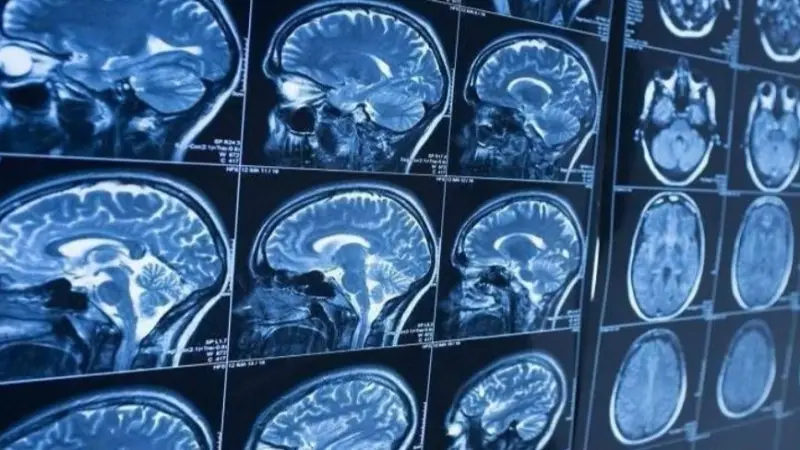
For a more detailed examination, the team studied brain images from a smaller group of 641 participants.
The experts found that people with higher levels of troponin in middle age tended to have a smaller hippocampus size – the memory center in the brain – after 15 years. They also had less gray matter, the part of the brain that helps us think clearly and solve problems.
The differences in brain size seemed similar to what is expected in a person three years older. In other words, the brains of people with higher troponin levels appeared to age faster.
## Signs of cognitive decline
Over time, participants underwent tests to measure memory, thinking, and other mental skills. People with higher levels of troponin experienced a more rapid decline in these areas.
By age 80, their mental acuity seemed like that of a person about a year and a half older. By age 90 it was closer to that of a person two years older.
## The connection between the heart and brain is real
Dr. Simon Chin, who led the study, said: “Our study represents the longest follow-up to date to investigate the links between elevated levels of cardiac troponin and cognitive decline and dementia.”
He added: “We also found that elevated levels of troponin in the blood of people with dementia compared to the control group were more pronounced in middle age compared to late age, suggesting that troponin levels in the blood in middle age may be a better biomarker for predicting the risk of developing dementia.”
So, it’s not just about one number in your blood. It’s about how your heart and brain work together – or don’t – over time.
(Translations)