“Zvika Nave,” head of the Israeli security company CGI Group, told the German newspaper Bild that a person claiming to represent the thieves contacted his company through the official website five days after the theft. This person offered to negotiate the sale of the stolen artwork, stipulating a response within “only 24 hours.”
“Nave” indicated that the company coordinated with an unknown person connected to the Louvre Museum in an attempt to trace the origin of the jewelry. He added that after careful negotiations and checks, the security team confirmed that the unknown intermediary actually possessed part of the stolen pieces, which prompted the company to initially agree to the terms to buy time.
Immediately, the company informed the competent French authorities, but routine procedures delayed the implementation of a quick plan to recover the pieces, allowing those involved to escape surveillance again.
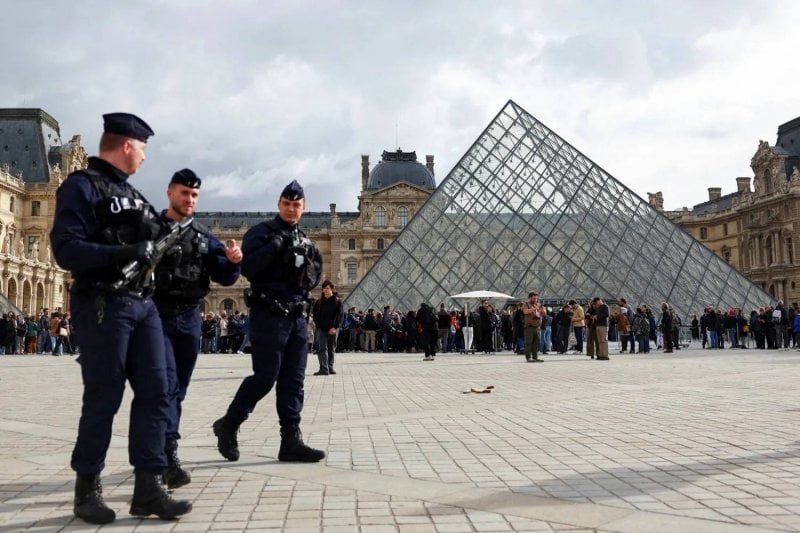
The details of the crime date back to “October 19,” when nine rare pieces of jewelry were stolen from the Louvre Museum, including crowns, earrings, necklaces, and brooches belonging to French queens and empresses. The total value of the stolen items is estimated at around “88 million euros,” making it one of the largest art thefts in Europe in the last decade.
The French authorities were able to arrest two suspects on “October 26,” after DNA samples found at the crime scene helped identify them. The first was arrested at Charles de Gaulle Airport while trying to travel to Algeria, while the second was stopped in a suburb of Paris before leaving for Mali.
On “October 30,” the Public Prosecutor’s Office announced the arrest of a third suspect, while French media reported five additional arrests on the same day, expanding the scope of the investigation into the case that shocked one of the most famous museums in the world.