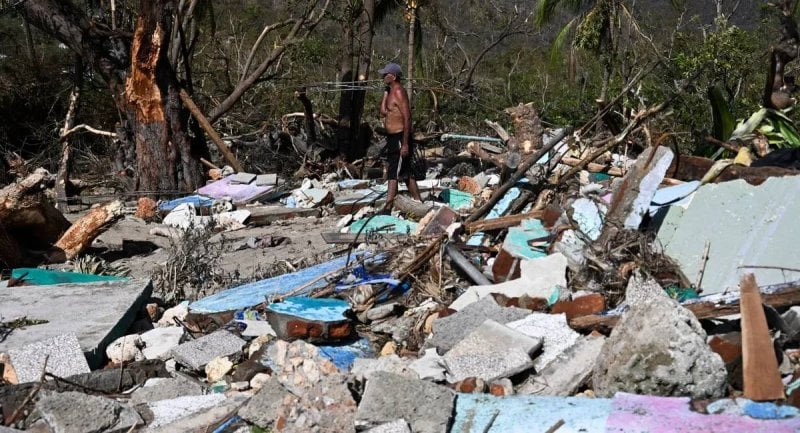
After the storm moved north, the first relief planes landed in Jamaica, which is among the countries most affected. Authorities there announced that the population is in dire need of humanitarian aid, as a result of the great devastation that befell large parts of the island.
The US National Hurricane Center in Miami reported that Hurricane “Melissa” passed west of Bermuda late Thursday, and its strength had decreased to Category 2, with winds of 155 kilometers per hour.
The hurricane hit Jamaica last Tuesday as a Category 5 storm, one of the strongest storms the Atlantic has witnessed in history. This resulted in the death of 19 people, according to what the Minister of Information, Dana Morris Dixon, announced in an initial official toll.
In Haiti, the death toll rose to 30, while one death was recorded in the Dominican Republic, bringing the total number of victims in the Caribbean region to at least 50. There are warnings that this number may rise as rescue operations continue.
Strong winds and heavy rains caused devastating floods and sea storms, which led to the destruction of a large number of buildings and infrastructure. As a result, the Jamaican government declared the island a natural disaster area.
When the hurricane reached Cuba, the Bahamas, and Haiti, it had lost much of its strength. However, it left behind catastrophic effects that require weeks of relief and reconstruction efforts.