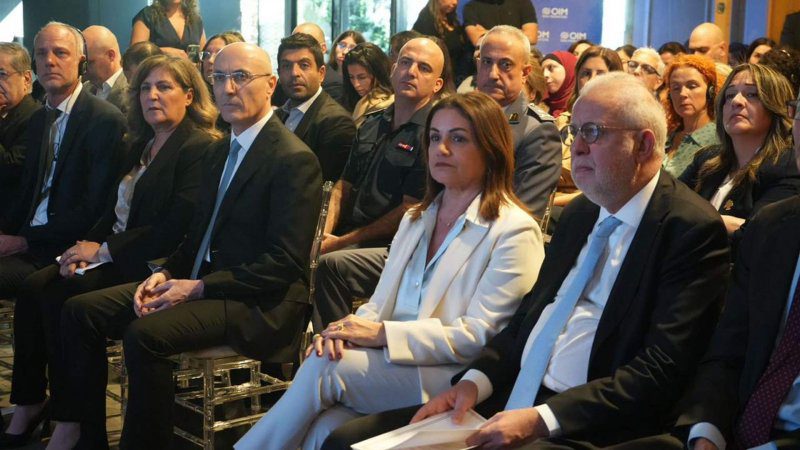
At the “Smallville” Hotel in Bdadaro, the Unified Standard Operating Procedures document for identifying, assisting, and protecting victims of trafficking in persons in Lebanon was launched, in the presence of a number of officials and representatives of judicial, security, social bodies, and international organizations.
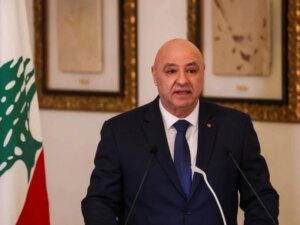
In his speech, the Minister of Justice affirmed that this event goes beyond merely presenting a technical document, but is rather a declaration of values and commitment from institutions, and a promise to every victim and survivor who has suffered from the scourge of trafficking in persons. He added: “It is a collective affirmation that Lebanon refuses to reduce human beings to commodities, and that our response as a state must be coherent, humane and firm.”
The Minister stressed that trafficking in persons is not just a crime, but a blatant attack on human dignity, freedom and the moral foundations of society. He pointed out that the victims are often from the most vulnerable groups, “trapped in poverty, coercion, deception, or violence, their suffering is often silent, and their dignity is the first thing violated.”
The Minister of Justice also explained that Lebanon has taken important legal steps to combat this crime, noting that with the enactment of Law No. 164 of 2011, all forms of trafficking in persons were criminalized, and that Lebanese legislation is in line with international standards, including the Palermo Protocol.
In a statement, the Lebanese Ministry of Justice affirmed its firm commitment to fully investigate trafficking crimes, prosecute perpetrators, and bring them to trial in accordance with the highest standards of justice, in line with Lebanon’s international obligations in the field of protecting human dignity and human rights.
The Minister considered that the launch of this document represents an important turning point in the fight against trafficking in persons, “but it is also a beginning. The task today is to transform this framework into daily practice, and to ensure that every judge, every officer, every social worker, and every institution speaks one language: the language of protection, humanity, and accountability.”
At the conclusion of his speech, the Minister of Justice expressed his appreciation to the Kingdom of the Netherlands for its support and continued commitment to protecting human dignity and human rights in Lebanon.
In his speech, the Minister of Justice affirmed that this event goes beyond merely presenting a technical document, but is rather a declaration of values and commitment from institutions, and a promise to every victim and survivor who has suffered from the scourge of trafficking in persons. He added: “It is a collective affirmation that Lebanon refuses to reduce human beings to commodities, and that our response as a state must be coherent, humane and firm.”
The Minister stressed that trafficking in persons is not just a crime, but a blatant attack on human dignity, freedom and the moral foundations of society. He pointed out that the victims are often from the most vulnerable groups, “trapped in poverty, coercion, deception, or violence, their suffering is often silent, and their dignity is the first thing violated.”
The Minister of Justice also explained that Lebanon has taken important legal steps to combat this crime, noting that with the enactment of Law No. 164 of 2011, all forms of trafficking in persons were criminalized, and that Lebanese legislation is in line with international standards, including the Palermo Protocol.
In a statement, the Lebanese Ministry of Justice affirmed its firm commitment to fully investigate trafficking crimes, prosecute perpetrators, and bring them to trial in accordance with the highest standards of justice, in line with Lebanon’s international obligations in the field of protecting human dignity and human rights.
The Minister considered that the launch of this document represents an important turning point in the fight against trafficking in persons, “but it is also a beginning. The task today is to transform this framework into daily practice, and to ensure that every judge, every officer, every social worker, and every institution speaks one language: the language of protection, humanity, and accountability.”
At the conclusion of his speech, the Minister of Justice expressed his appreciation to the Kingdom of the Netherlands for its support and continued commitment to protecting human dignity and human rights in Lebanon.