Samer Zreik – Nidaa Al-Watan
Lebanon is currently facing what can be described as a replication of the same scenario it experienced last year, in terms of the gradual Israeli escalation, the increasing pace of targeting “Hezbollah” leaders both quantitatively and qualitatively, in parallel with escalating political and diplomatic pressures, accompanied by a movement of envoys aimed at pushing “Hezbollah” to show some flexibility. We all remember the rounds of the American envoy Amos Hochstein to reach a settlement that would shield Lebanon from the Israeli radar of oppression, and his warnings of the seriousness of the threats, which fell on deaf ears because Iran refused and slaughtered the historical leaders of its party.
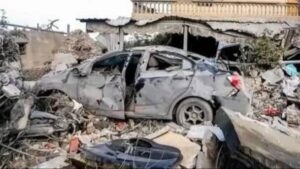
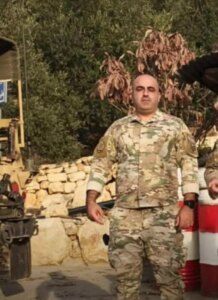
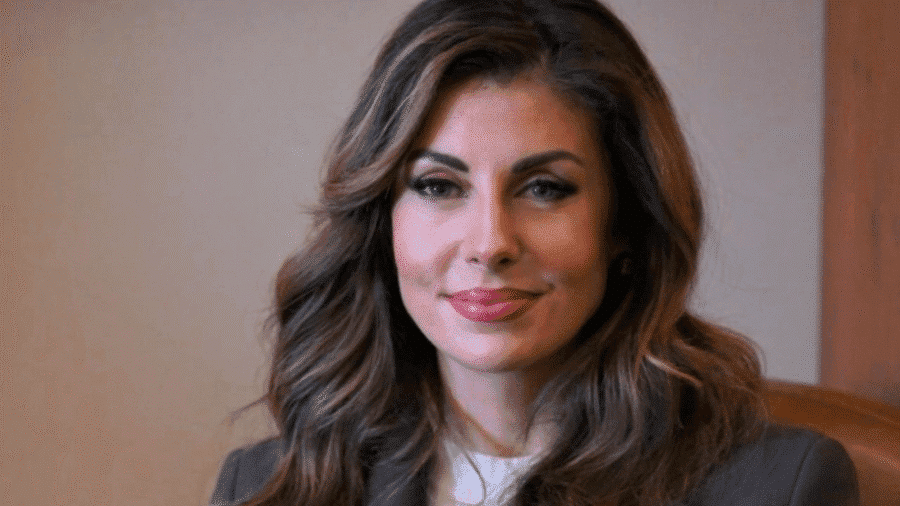
Over the past few days, Israel has expanded the scope of its operations to include prominent field military leaders in “Hezbollah,” who it knows better than its closest circle, coinciding with the tour of the American envoy, Morgan Ortagus, near the Lebanese border, accompanied by Netanyahu’s war minister, and her supervision of the implementation of one of the operations.
This carries a message of pressure on Lebanese decision-makers, packaged with a warning of worse to come, aimed at preparing the ground for her visit to Beirut, before reaching the peak of the explosion according to the Israeli timing, covered by the United States, which considers it a Lebanese decision not to have a political confrontation with “Hezbollah,” and preferring to implement the “exclusivity of weapons” in a cooperative manner that does not achieve the desired benefit, as the state left Prime Minister Najib Mikati to fight alone, and portrayed him as if he were carrying a personal vendetta against “Hezbollah,” while he is seeking, with the limited papers and tools available to him, to stabilize the path of the state, protect the country, and the “Shiite duo” in particular, from an Israeli strike whose consequences cannot be predicted.
However, there are messages reaching Lebanon as well as “Hezbollah,” draped in what can be considered a “Fig leaf” from some regional actors, Arabs and Muslims. There are two conflicting views regarding these messages and the interpretation of their meanings: The first is that influential regional powers do not welcome the overthrow of the mullahs’ regime, and prefer it to remain weak and in need of their assistance in particular.
The proponents of this view cite the “tuning” of the official state discourse, and the selection of the “Al-Mayadeen” channel’s platform by President Najib Mikati to launch positions that fall within the realm of softening the relationship between the government palace and “Hezbollah” and, behind it, its popular base. In parallel with a mediation led by a regional actor to rearrange matters between Damascus and Tehran, exchange diplomatic relations and open embassies, and facilitate the arrival of “some” weapons to Iran’s agents. In this context, it is noted that the latter has refrained from issuing negative statements towards Damascus for some time.
The second view, however, places these messages within the framework of luring “Hezbollah” into the Israeli trap. This view is consistent with what is being heavily published in Western and Israeli media, about exaggerating its recovery of its military strength, in order to prepare international public opinion for targeting it in a crushing manner, in addition to the wavering of the conference to support the army and reconstruction.
Proponents of this view believe that President Najib Mikati is still adopting the same discourse since entering the government palace and has not changed at all, and they recall what he said previously that the doors of the government palace and his house are always open to “Hezbollah,” as well as how he contained the anger of the “duo” on the eve of his assignment, and his keenness not to cut “Muawiya’s hair.” Therefore, the positions he launched are nothing more than a re-emergence of balance in his discourse.
The problem with the replicated scene lies primarily in “Hezbollah,” as it realizes the goals of highlighting its arsenal after experiencing last year’s experience, but it deals with the two scenarios presented with a single strategy that belongs to the past, and expresses the extent of its inability to adapt to any geopolitical transformations, where it becomes like someone making a repeated tragic scene, and the worst thing is that the performance of its actors is weak and lacks creativity and persuasion, which makes it tend towards “cliché,” especially with the amazing decline in its discourse and the elites surrounding it to a degree that portends a dire spark.
Last year, “Hezbollah” dealt with Hochstein’s demand to withdraw a few kilometers, as with facilitating the election of a president of the republic, with its favorite characteristic of “dilution” and waiting for the maturation of solutions that bring better gains, which it calls “strategic patience,” and that was that. Today, it is seen killing time, anticipating the fall of President Bashar al-Assad and the return of Syria to the bosom of the axis, as it promotes, in parallel with waiting for Trump’s departure or his turning to other issues. Even Ortagus is about to remind its Secretary-General Naim Qassem, and its stars spread in the worlds of media on the pattern of “reality television” to consolidate the legend of steadfastness and resurrection from the ashes, that “the storm blows twice.”
source: 961 today