Lebanon Today
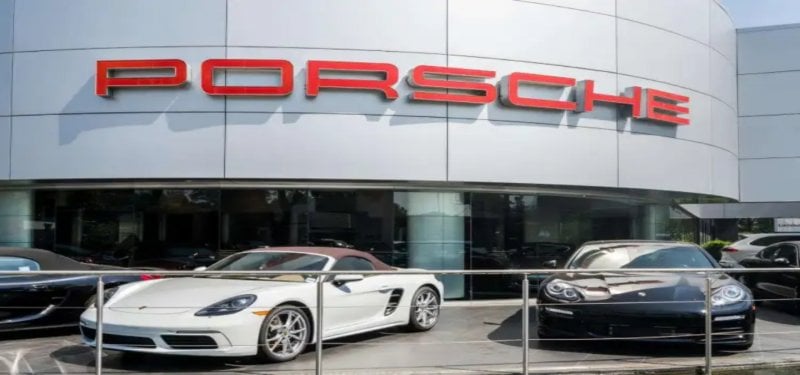
“Porsche”, the renowned brand in the world of luxury sports cars, is facing significant financial challenges unlike any it has faced before.
The company’s profits have declined markedly by 99% this year, recording losses of approximately one billion euros in the third quarter of 2025, compared to similar profits achieved in the same period last year.
The company’s financial report indicates a decrease in the expected profit margin for 2025 to only 2%, after it was 14% in 2024.
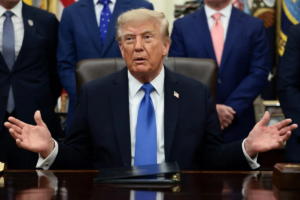
This decline is attributed to a double crisis that includes difficulties in transitioning to electric cars, in addition to the sudden economic decisions taken by the US President: Donald Trump, which directly affected trade between Europe and the United States.
“Porsche” revealed that its total profits for the first nine months of the year amounted to only 40 million euros, compared to 4 billion euros during the same period last year, reflecting a sharp decrease of 99%.
The company’s financial director, :Jochen Bröckner, explained that the losses are mainly due to the trade war between Europe and the United States, after Washington imposed high customs duties on imported cars, which cost the company approximately 700 million euros in revenue.
He added that the company will have to raise the prices of some models in the American market to limit losses, although this step may negatively affect sales volume.
Bröckner pointed out that the rapid shift towards electric cars has greatly damaged the company’s performance, as the cessation of production of the gasoline-powered “Macan” model, which was considered one of the best-selling and most profitable models, caused a collapse in sales in the compact car category.
Sales of the 718 Boxster and Cayman models also declined after production of the traditional versions of them was stopped pending the new electric versions.
In addition, the Chinese market no longer achieves the profits that the company was accustomed to in the last decade, as a result of the slowdown in the local economy and increased competition from Chinese companies.
Bröckner said that “market conditions in China will not improve in the near future,” and announced a reduction in the Porsche dealer network from 150 to 80 branches by 2027.
The company also announced a restructuring plan in Germany that includes laying off 1,900 permanent employees, in addition to 2,000 temporary employees whose contracts were terminated earlier this year, as part of a broad cost-cutting program, the details of which will be revealed at the end of 2025.
Given the worsening crisis, the “Volkswagen” group, which owns the “Porsche” brand, announced the replacement of the CEO: Oliver Blume with his predecessor: Michael Leiter, who previously held leadership positions in the companies Ferrari and McLaren.
Leiter is expected to lead a plan to redirect the production strategy towards plug-in hybrid cars, with the aim of reviving sales and restoring investor confidence.
Blume will continue his duties as CEO of the “Volkswagen” group, which includes brands such as Audi, Lamborghini, and Bentley.
Analysts believe that the crisis that “Porsche” is going through goes beyond the financial aspect to reach an identity crisis within the company, which for years was considered a model in management, efficiency, and high profitability.
They point out that its hasty decisions to stop producing some successful models before introducing electric alternatives, in addition to the ambiguity in its marketing strategy, have lost it a large part of its competitive position in the luxury car market.
While the new management hopes to achieve gradual improvement in 2026, industry experts emphasize that “Porsche” needs a comprehensive reformulation of its production and marketing strategy if it wants to regain its position as a global symbol in the world of luxury sports cars.
source: 961 today