Lebanon Today
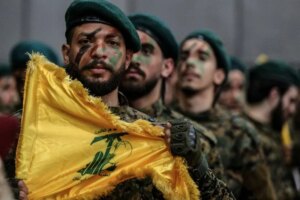
Israeli media outlets have circulated in recent days a series of leaks that appear, on the surface, to agree with what Hezbollah announces regarding its readiness and field recovery.
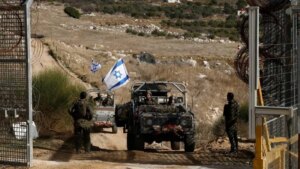
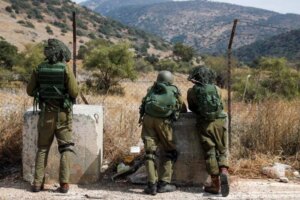
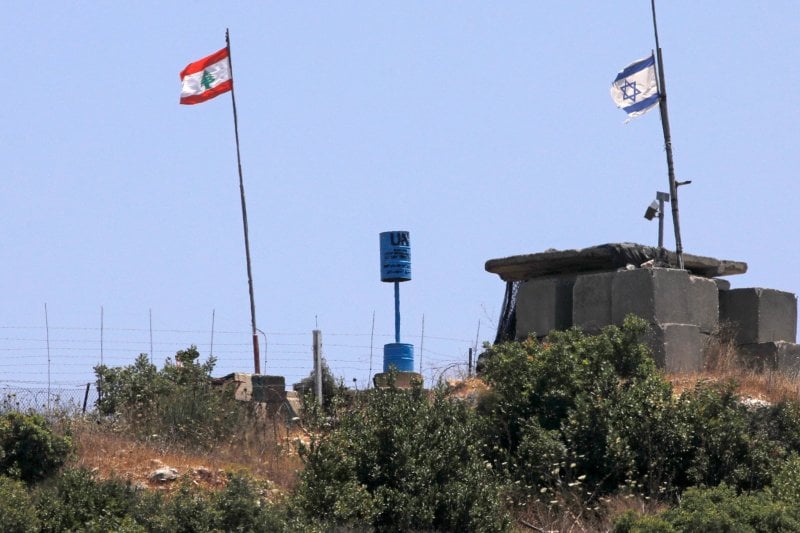
Interestingly, Tel Aviv, despite its animosity towards Hezbollah, shares this narrative with the party, perhaps to serve its own goals. It has heightened the suspense by allowing its media to broadcast what it called “live مشاهدات” of settlers on the border with Lebanon, who claimed to have spotted movements of Hezbollah members.
In reality, if I were in Hezbollah’s position, I would avoid publicly discussing through the media the recovery paths I am taking and to what extent I have achieved results, simply so that this information is not used as a pretext against me, and modern history is full of experiences.
In any case, anyone who follows the Israeli media, or has experience in how it works, realizes that it works to employ goals that serve the Israeli authority, and this is exactly what it is doing now. It is striking that the Israeli media, which recently began talking about the possibilities of war on Lebanon extensively, was preceded by some Lebanese who have been thinking about this idea since the ceasefire on the day the November 27 agreement was signed.
In form, the current scene falls within the context of preparing the atmosphere for a possible military operation against Lebanon. As an expression of this trend, or in the context of serving it to make it seem real, the enemy has raised its level of readiness in recent days and expanded the scope of assassinations targeting resistance fighters, even exceeding 3 operations per day, reaching the Bekaa region yesterday, coinciding with talk of security envoys arriving in Beirut, who were reportedly carrying urgent warning messages about Israel’s possible return to the war option.
In light of this, it is understood in Beirut that this “external diplomatic flow” carries a specific goal, which lies in urging Lebanon to stop procrastinating and move quickly to direct negotiations under the umbrella of what is known as the “Sharm el-Sheikh Peace Conference,” represented by a group of countries that are presenting themselves today as guarantors of any new negotiating path.
In depth, Israel seeks, by broadcasting an atmosphere of threat of war and expanding the circle of security targeting, to create a climate of anxiety and psychological pressure, both inside Beirut and among the political class. The goal is to push the state to exert internal pressure on Hezbollah to contain the escalation, or at least to justify its entry into a public negotiating track “to prevent war.”
However, contrary to popular impressions, the current circumstances do not seem to allow for a large-scale war that includes heavy aerial bombardment and ground advancement in the form that prevailed between September 27 and November 27. Rather, the current general assessment indicates the possibility that Israel will launch “lightning strikes” affecting Beirut in order to increase the pace of pressure and invest it politically.
Like the “wide war” option, it practically targets the Lebanese state, which today enjoys American and European sponsorship, and is considered, in the eyes of these countries, a political and military antithesis to Hezbollah and must be supported and provided with conditions for its success. It is illogical for Israel to wage a war on a “structure” that enjoys the support of these parties unless it itself agrees to it.
Historically, raising the level of field tension in Lebanon has been a means of imposing new political realities or establishing internal pressures that pave the way for changes in the general Lebanese path. Today, it seems that the combination of military and diplomatic pressure aims to create conditions that push the Lebanese authority to exit the state of stagnation and accept the idea of direct negotiations, under the slogan “preventing war” or “saving Lebanon from an imminent aggression.”
The reality is that the new Lebanese regime has found itself stuck in the bottleneck of negotiations, between the option of indirect negotiation and the option of going to public talks called direct negotiations regardless of the mechanism. Observers believe that the hesitation stems from the authority’s fear of the situation sliding towards internal clashes or political riots that show the “young state” as incapable of controlling things. From this standpoint, some external parties may find in military escalation a means to provide the cover that the state needs to justify its announcement of its willingness to engage in direct negotiations.
There is no doubt that an announcement of this kind will find support from a wide political bloc internally, out of concern for sovereignty or under the slogan of political realism, showing the state as “forced” to negotiate to avoid war.
But experience has taught us that going to negotiate in moments of weakness and without cards of strength often leads to making concessions that affect national sovereignty, as is happening today in the Syrian case.
Finally, Israel has increased its targeting of institutions and projects related to the reconstruction workshop, and deliberately destroyed machinery and logistical means that serve this path. In parallel, Washington is going in the context of its financial tightening in a clear manner, and pushing the Bank of Lebanon to move its fingers towards what is supposed to feed the Shiite environment with liquidity. In the near future, Washington will choose to reactivate the “packages of sanctions” to be used as a thick stick inside the Lebanese scene. All of this serves the theory of imposing something like a convincing siege, and in this way increasing the pressure on the Lebanese state or effectively, increasing the political tax on it, which politicians and pillars no longer hide!
source: 961 today