Lebanon Today
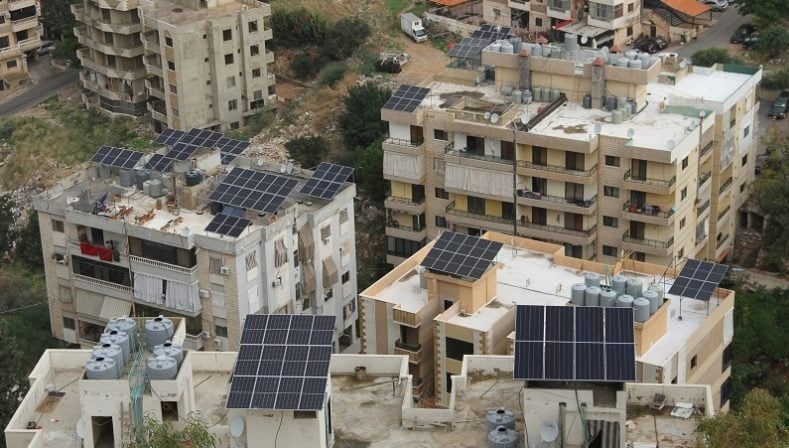
In light of the successive crises that Lebanon is witnessing, solar energy systems have become a basic option for many citizens. But behind this positive trend lie great challenges related to public safety and legal regulation, especially with the spread of unlicensed and unregulated panels and batteries.
Lawyer Indira Al-Zuhairi, head of the Lebanese Real Estate Authority, stated to “Lebanon Debate” that “their follow-up to public safety issues and their standards related to buildings, especially the old ones that are spread throughout the Lebanese territories, is of great importance, especially since most of these buildings are no more than 85 years old, including those that have been classified as heritage buildings and entered into the general inventory.”
She added: “After the electricity crisis, the Lebanese citizen resorted to alternative energies that had positive effects on sustainable development, the environment, and savings, and at the same time there are specific ways that must be followed to ensure respect for public safety standards in installation and the adoption of foundations that protect safety from any human or material damage.”
Regarding the licensing and installation of solar energy systems, Al-Zuhairi explained that “recently, directives were issued by His Excellency the Minister of Energy and Water: Joseph Sader, on the importance of regulating this sector, as citizens were granted an initiative to be exempted from obtaining prior approval to install solar panels for private use (such as homes and small buildings), and some licenses related to the establishment of electricity production fields from solar energy were issued, where licenses were granted to companies in 2022, and despite this, there is still a need for clearer regulation, especially with regard to installation supervision, as supervision is required not only from the Ministry of Energy and Water, but also from the Directorate General of Urban Planning.”
Al-Zuhairi pointed out that “the first phase of the crisis between the Corona crisis, the revolution, and depositors’ money witnessed utter chaos in the markets, where panels and systems lacking oversight were used and installed without engineering supervision, which led to accidents in the winter when storms intensified, where panels flew off and caused damage to public and private property, fortunately without casualties. We also witnessed some electrical supplies catching fire, water leaks, and the operation of some batteries, which led to the burning of many buildings.”
She mentioned: “We cannot accurately determine the numbers of panels, but on the positive side, this sector has contributed to supporting electrical energy and moving towards sustainable and green environmental development, with the need to strengthen control and oversight.”
She also added: “We must think about how to treat electronic waste resulting from panels and batteries, especially in light of the recent events that led to the destruction of tens of thousands of panels, which are still scattered and disorganized, and there must be mechanisms to control them in accordance with the protection of the environment, human health and safety.”
Al-Zuhairi stressed “the importance of oversight related to the approved safety specifications, especially with regard to the use of cables and connections that protect systems from storms and lightning, which must be under the supervision of a specialized engineer, with the need to ensure the ability of surfaces to withstand weights and how to install and connect the network with the Electricity of Lebanon Corporation. Equipment standards must also be respected, and counterfeit or forged materials must not be used, with mandatory periodic maintenance and cleaning to prevent wear and corrosion, and these operations must be under the supervision of specialized and licensed companies.”
She emphasized “the importance of ensuring the safety and thickness of the surfaces and their impact on the durability of the building, especially buildings built before 1990 that were not built according to safety standards resistant to earthquakes and fires. Therefore, focus must be placed on old buildings that may be cracked or partially cracked, which may accelerate the possibility of a partial collapse.”
She believes that “it is necessary to emphasize the role of the specialized engineer in examining the structures and determining the maximum permissible load, taking into account the safety of the extensions of old buildings, especially after several incidents resulting from the ignition of lithium batteries. The approval of the building committee and the common areas must also be obtained to avoid disputes related to priority in placing panels, preserving the aesthetics of the building, and placing the panels in an organized and orderly manner without prejudice to the heritage stones.”
She pointed out “the need to take into account the location of the panels, especially in mountainous and coastal areas exposed to strong winds and storms, with ensuring the presence of waterproofing for surfaces and installations.”
Al-Zuhairi concluded: “It is wonderful that we are moving towards a sustainable and environmentally friendly world, but this must be within a well-thought-out organizational structure that protects, develops and respects laws and public safety standards.”
source: 961 today