Lebanon Today
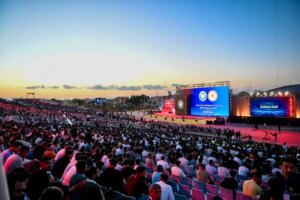
The symbolic Gaza court convened in Istanbul heard harrowing testimonies about the Israeli forces’ commission of genocide and serious human rights violations during their ongoing aggression against the Gaza Strip.
The court is considered an independent international initiative, founded in London in November 2024, with the participation of a group of academics, human rights defenders, and representatives of civil society organizations, as a reaction to what they described as “the international community’s failure to apply international law regarding Gaza.”
The court held its session yesterday, Thursday, under the title “Charges and Witness Testimonies,” as part of the closing sessions that will conclude with the issuance of the final decision next Sunday.
Palestinian academic Haidar Eid, currently residing in South Africa, participated in the session online, where he spoke about his suffering from repeated forced displacement, the loss of 54 members of his family, 39 academic colleagues, and 280 students from Al-Aqsa University.
Eid said: “The political and military leaders in Israel have begun a genocide to liquidate my homeland, Gaza, to the ground… What is happening is absolute evil, and the attacks deliberately targeted civilians and made Gaza uninhabitable.” He pointed out that the roots of the current genocide go back to the Nakba of 1948.
For her part, Palestinian lawyer and professor of law at Rutgers University in the United States, Noura Erakat, described what is happening in Gaza as a complete collapse of international law, stressing that “international judicial systems have failed to hold Israel accountable.”
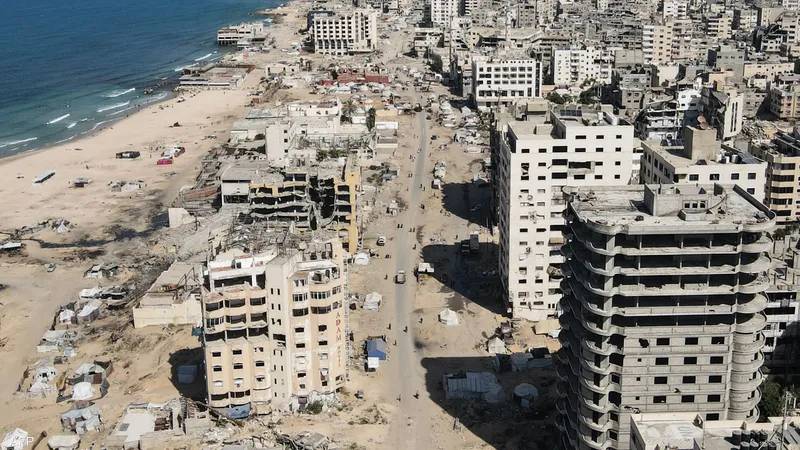
Erakat added that Israel displaced 80% of Palestinians and destroyed more than 500 villages between 1947 and 1949, and continues to enjoy “impunity,” thanks to continuous American support. She confirmed that the ongoing genocide for two years has resulted in the martyrdom of more than 68,280 Palestinians, the injury of 170,000 others, and the destruction of about 90% of the civil infrastructure in the sector.
Radwan Abu Muammar, a survivor, gave a moving testimony about the Khan Yunis massacre, where he mentioned that dozens of civilians took refuge in a house they believed to be safe for 18 days, before Israeli aircraft targeted it on December 20, 2023, which led to the martyrdom of 30 people, most of whom were women and children.
Abu Muammar recounted in tears: “It was the worst moment of my life… I found my father and brother among the corpses, and I lost my mother and my young niece from fear.”
Witness Samar Abu Foura also presented a horrifying account of the violations that occur at the border crossings, noting that Israeli soldiers insulted women and beat them in front of their relatives.
In another testimony, Mahmoud Al-Khatib said that Israeli forces “committed mass executions against young men in Rafah, after pushing them into a hole and shooting them in front of their relatives.”
The court sessions address multiple axes, including crimes against civilians, destruction of infrastructure, international collusion, resistance, and solidarity.
These sessions coincide with the organization of humanitarian and human rights events in Istanbul, aimed at highlighting the massacres committed in the sector during the war.
source: 961 today