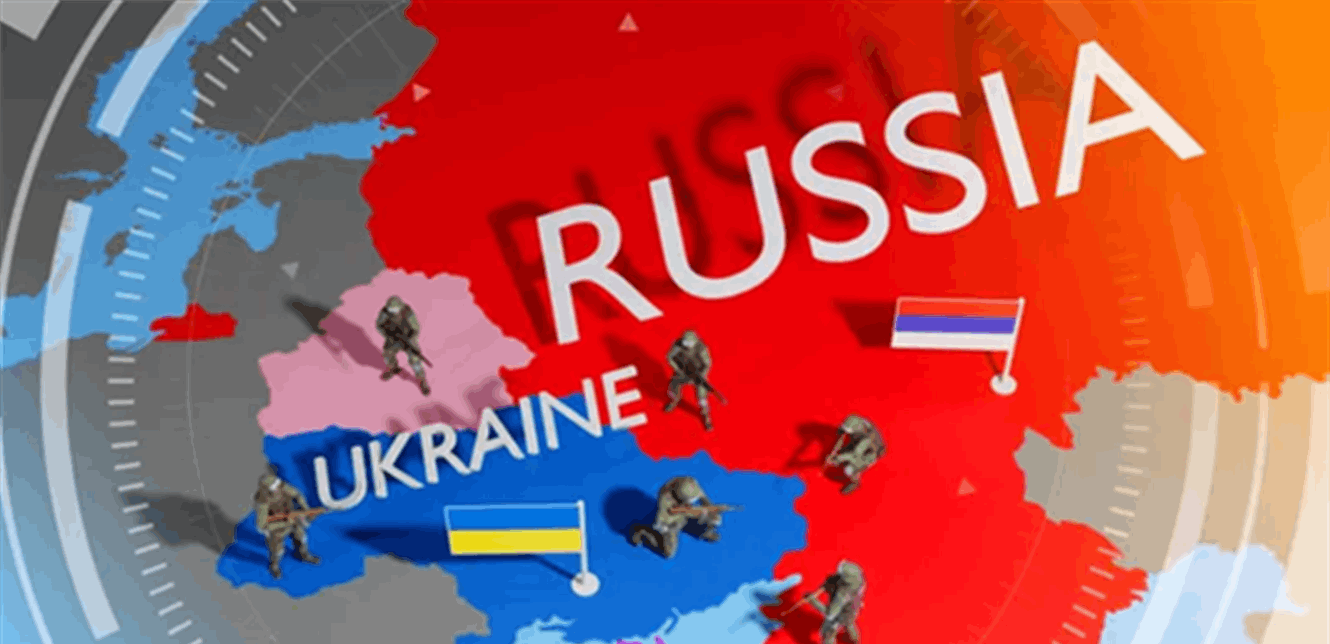
In the early hours of the invasion of Ukraine, Washington, Brussels, and London announced an unprecedented package of financial and sectoral sanctions.
Assets of the Russian Central Bank abroad were frozen, and major Russian banks were excluded from the SWIFT system for international financial transfers. Strict restrictions were also imposed on exports of advanced technology, aircraft, and military spare parts, in addition to freezing the assets and properties of dozens of “oligarchs” close to the Kremlin.
In 2022 alone, the European Union approved eight successive packages of sanctions, targeting oil and coal, with a temporary exemption for gas to avoid an energy crisis in Europe.
In response, Moscow sought to absorb the shock by raising global energy prices and using its gas exports as a political weapon against European capitals.
By 2023, the sanctions began to have a noticeable impact on the Russian economy, despite the Kremlin’s attempts to adapt. GDP contracted by nearly 2.5%, while the ruble lost more than 40% of its value against the dollar.
According to reports by the International Monetary Fund, foreign investment fell to its lowest levels since the 1990s, and the Russian market turned to heavy reliance on China, Turkey, and India to replace Western partners.
At the same time, Moscow resorted to creating what is known as the “shadow fleet” to bypass restrictions on oil exports and the Western price cap of $60 per barrel.
Today, Thursday, the European Union approved the nineteenth package of sanctions against Russia, which targets the disguised oil fleet and prevents imports of Russian liquefied natural gas (LNG) to European ports.
Danish Foreign Minister Lars Løkke Rasmussen, who announced the decision, stated: “Today is a good day for Europe and Ukraine. We have approved new and comprehensive measures against Russian oil, gas, and the financial sector.”
The package also included a system to restrict the movement of Russian diplomats within the European Union, in an attempt to limit Russian intelligence activities.
In parallel, the administration of US President Donald Trump announced additional sanctions on the Russian oil sector, aimed at pressuring President Vladimir Putin to sit down at the negotiating table.
Despite Western pressure, the Russian economy has not completely collapsed. High oil and mineral prices, and Moscow’s adaptation to Asian markets, helped maintain a level of revenue that allows for the continued financing of military operations.
Despite years passing since the conflict, it appears that the sanctions have not yet achieved their ultimate goal of forcing Moscow to withdraw, but they have succeeded in reshaping the global economic order, as Europe’s efforts to become independent of Russian energy have accelerated, investment in US liquefied gas and renewable energy sources has increased, while Russia’s position as a major energy supplier has declined.
At the same time, European Union officials warned that Russia may regain its military capabilities by the end of the current decade unless Europe strengthens its defense and economic capabilities.
source: 961 today