:
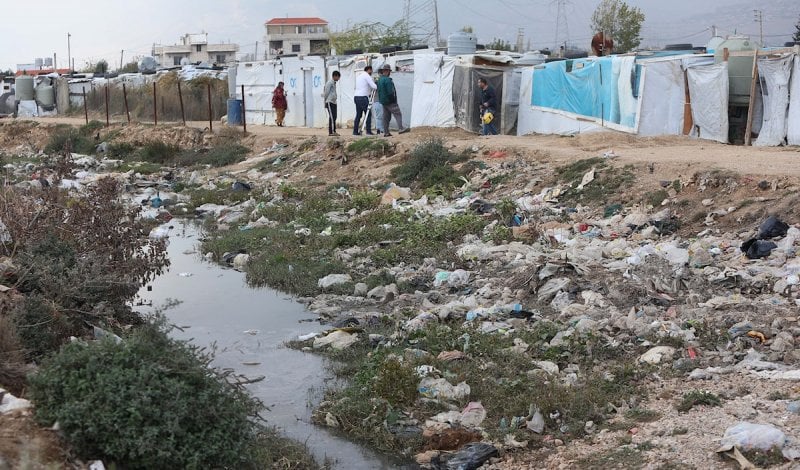
The National Authority of the Litani River has launched a new initiative aimed at protecting the river basin, through an official letter addressed to the United Nations High Commissioner for Refugees (UNHCR), urging it to take urgent measures to stop the severe pollution witnessed in the Litani River basin. The main reason for this pollution is the Syrian refugee camps discharging untreated sewage and solid waste, in quantities estimated at more than two million cubic meters annually.
The Authority attached to its letter illustrated evidence showing the extent of direct pollution, warning that this situation, which has worsened due to drought and declining water resources, poses a significant threat to the environment and public health in Lebanon. With the improvement of security conditions in large areas of Syria, the Authority called for an organized and dignified return of the displaced to their country, and criticized the exploitation of this crisis by some organizations and individuals to achieve political and financial gains, demanding the UNHCR to increase transparency and environmental accountability in its humanitarian operations.
A specialized expert explains to that the Authority’s appeal did not come out of nowhere, saying: “The presence of a large number of Syrian refugees on the banks of the Litani River, especially in the Bekaa region, has caused serious environmental, economic and health damage, most notably the pollution of the river with wastewater due to the absence of appropriate sanitation infrastructure in the camps, where sewage is discharged directly into the river or into waterways, which increases the proportion of bacteria and organic matter, which threatens the environment and public health.”
The expert also pointed out that “with regard to solid waste, the camps often lack an organized waste collection system, which leads to the accumulation of waste on the banks of the river or inside its course, in addition to the fact that plastic and organic materials contribute to the blockage of waterways and the aggravation of pollution.”
The expert also affirms that “the presence of the displaced on the banks of the Litani represents additional pressure on water resources, due to the excessive and unregulated use of river water for irrigation or for living purposes inside the camps, which depletes water and reduces its quality, in addition to the fact that the establishment of camps and random infrastructure on river properties constitutes an encroachment on the sanctity of the river, and hinders any project to rehabilitate or clean it.”
The expert warns that “water pollution affects both the Lebanese population and the displaced alike, by increasing the spread of diseases transmitted by polluted water, such as diarrhea and hepatitis. The responsibility does not only lie with the presence of the displaced, but also with the absence of sustainable treatment by the state, the weak coordination between local and international bodies, and the absence of basic infrastructure in the region.”
The expert concludes his speech by saying: “The solution lies in adopting a comprehensive approach that includes supporting host communities, organizing camps, developing infrastructure, and implementing environmental protection laws.”
It is worth mentioning that a study published by the National Authority for the Litani River Waters in 2020, under the title “The Repercussions of the Syrian Displacement Crisis on the Water, Environment and Electricity Sectors in Lebanon”, revealed that “the random refugee camps spread along the Litani River constitute a major source of pollution, as most of the camps directly divert the liquid and solid waste resulting from them into the course of the Litani River and its tributaries, as well as into the canals of irrigation projects belonging to the National Authority for the Litani River.”
The survey conducted by the technical teams of the National Authority for the Litani River during 2020 revealed that the approximate number of displaced persons in the upper basin is about 974 sites, comprising about 11,466 tents, and the number of displaced persons present in these sites is estimated at about 68,645 Syrian displaced persons. As for the approximate number of displaced persons in the lower basin, it is 4,238 Syrian displaced persons in the vicinity of the Qasimiyeh irrigation canal, and the number of tents of Syrian displaced persons located within the scope of the lower basin is estimated at about 934 tents, while the number of Syrians residing in homes within the borders of the lower Litani basin is about 52,331 displaced persons. Thus, the total number of Syrian displaced persons within the lower basin of the Litani River and within the scope of the Qasimiyeh irrigation project is about 57,000 Syrian displaced persons.
Knowing that the number of Syrian births in Lebanon is no less than 20,000 annually, which is approximately a quarter of a million people in 11 years. The United Nations High Commissioner for Refugees also recorded, as of March 31, 2022, about 839,086 Syrian displaced persons inside Lebanese territory, of whom 188,990 displaced persons reside in homes, which is only about 22 percent.
The impact of the presence of displaced persons on the water sector:
The study indicates that “the demand for drinking water in the camps is estimated, according to an approximate estimate of daily water use, assuming that the tanks are filled once a day with an average daily consumption of 100 liters per person per day. Knowing that the water sources for these camps vary, sometimes water is delivered by trucks, and in other cases it is provided through the existing network, and sometimes by drilling new wells to secure water.”
Studies indicate a 20 percent increase in domestic water use in Lebanon due to the refugee crisis (from 676 to 826 million cubic meters per year).
The impact of the presence of displaced persons on the sanitation sector:
Diverting huge quantities of untreated sewage to open ground or to the course of the Litani River:
The study estimates the quantities of wastewater resulting from the camps located on the banks of the Litani River, in the upper basin area, without prior treatment, at about 2,104,655 cubic meters annually. The quantities of wastewater resulting from the camps located in the vicinity of the irrigation canals in the lower basin area, without prior treatment, are estimated at about 135,000 cubic meters annually (depending on the displaced person’s consumption rate estimated at 84 liters per day).
Loading sewage networks in neighborhoods and areas located within the Litani River basin area above their maximum capacity:
The study also shows that during the surveys conducted by the technical teams of the National Authority for the Litani River on sewage networks and drains in the basin area, there is a problem of sewage overflowing between homes and on roads, reaching the tributaries and the river itself. The networks connected to homes crowded with Syrian displaced persons are witnessing a continuous flow in huge quantities that exceed the absorptive capacity of the existing networks, which leads to the formation of natural pools of sewage in neighborhoods and lands adjacent to the riverbed or irrigation canals.
In addition to the residents of those neighborhoods carrying out unlicensed sewage extensions, which leads to the blockage of the main drains and the overflow of rigars as a result of the network’s inability to absorb the quantities transferred to it, in addition to the absence of sanitary pits implemented in accordance with technical principles for the treatment of sewage.
The study concluded with the following results:
- The water sector in Lebanon faces an additional demand estimated at between 43 and 70 million cubic meters per year, an increase of between 8 and 12 percent on the volume of demand before displacement.
- Syrian displacement is the second largest factor in the deterioration of water quality in the Litani River basin area.
- Wastewater treatment plants built through international funding are still not operating or operating below capacity, meaning that only 8 percent of wastewater is actually treated, while sewage network coverage is 60 percent.
- Homes not connected to sewage networks often use absorption pits or sewage tanks that provide minimal protection, allowing raw wastewater to seep into the environment and pollute groundwater.
The Lebanese Ministry of Energy and Water estimates that at least 55,000 to 60,000 unlicensed wells have been dug, while more homes are being built outside the water network, sometimes illegally, and sometimes as a result of poor land use planning. Water networks are exploited by those who cannot afford bottled or trucked water, which drains resources to cost about $40 per month per family in the face of increasing poverty (compared to less than $21 for network supplies).
In addition, the disposal of wastewater from kitchens, washing and bathing is often done directly into the environment, leading to the spread of pollution and diseases, as is the case in informal camps.
source: 961 today