The article sheds light on the escalation of the American tone towards Lebanon and Hezbollah, focusing on the demand for negotiations with Israel, and links these movements to escalating regional tensions. The article clarifies that American pressure places Lebanon between the options of negotiations or the resumption of Israeli military operations.
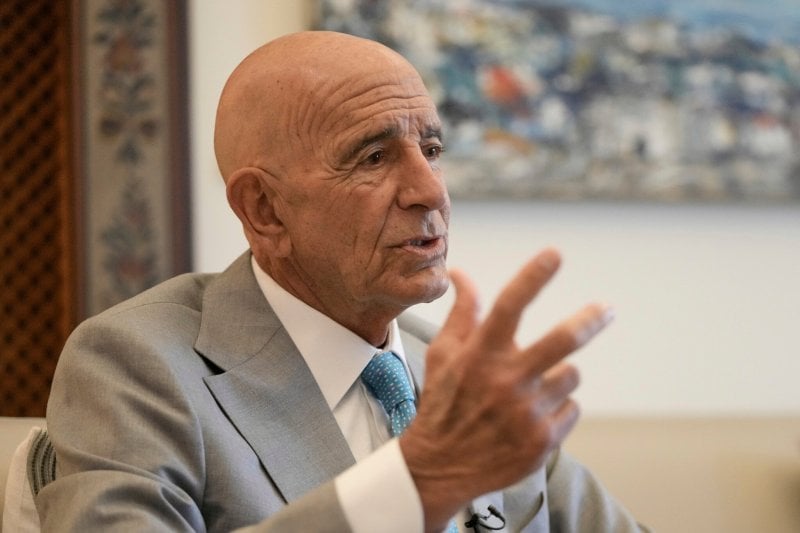
The issued position has not deviated from what Ambassador Tom Barack is accustomed to, with successive threats that he has been making for weeks after stopping his visit to Lebanon and his shuttle diplomacy between it and Israel. His warning messages to Lebanon and “Hezbollah” have exceeded the local scope to include regional countries, foremost of which is Iran, coinciding with the approaching international deadline expected at the end of this October.
It is true that Ambassador Barack is still insisting on escalating his tone towards the party, but this time he is directing the arrows of his criticism, with renewed emphasis, to the official Lebanese government. This comes in the context of moving towards conducting negotiations with Israel, with the aim of engaging in the understandings paths sponsored by Washington in the region, starting from Gaza and reaching Syria, passing through Lebanon.
If diplomatic data indicates a link between the date of resumption of international sanctions on Iran and the implicit American and Israeli escalation, then Barack’s renewed threat of war portends the sounding of war drums in Lebanon, as in Iran. This is despite the confirmation of informed sources that Lebanon has taken the necessary decisions regarding the exclusivity of weapons. In return, Barack stated that the agreement that stopped the war on the twenty-seventh of last November is no longer valid, calling on Lebanon to enter into negotiations with Israel to formulate a new understanding.
Barack continues to follow the Lebanese file, even though this file will be transferred in a few days to the custody of the US Ambassador to Beirut, Michelle Issa. At the same time, US envoy Morgan Ortagus is in contact with the “Mechanism” committee, limiting her tasks in Lebanon to the security and military context.
Informed diplomatic sources reveal that the American endeavor has focused, from the first moment following the cessation of hostilities or the ceasefire last November, on launching a negotiating track with Israel, whether directly or indirectly, through American mediation.
However, what is proposed in this track, as the diplomatic sources explain, is only conducting security talks, which are in the interest of the Israeli conditions based on the results of the recent war. These talks do not include any convergence with any previous experience, especially the maritime border demarcation talks led by Amos Hochstein, which lasted for years until they were able to achieve a diplomatic breakthrough that led to the demarcation agreement approved by the government of former President Najib Mikati.
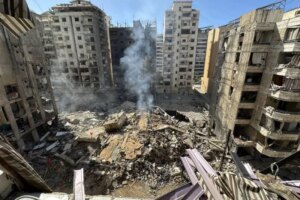
Accordingly, it seems clear that the Gaza agreement has launched American diplomatic pressure on Lebanon, and placed officials in it before two options, with no third: either agreeing to conduct direct security talks with Israel without any preconditions, or leaving the door open for Benjamin Netanyahu to resume his strikes and continue his attacks against Lebanon.
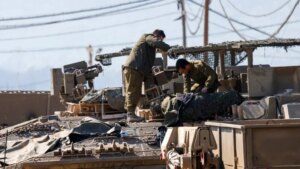
In return, observers point out that a new military reality has been formed on the Lebanese scene, explaining that the army has completed the takeover of the area south of the Litani militarily. At the same time, officials in “Hezbollah” announce the reconstruction of their capabilities, cadres and new leaders, away from the monitoring of Israeli drones that have not been absent in the past hours from the airspace of the capital Beirut and its suburbs, even flying at a low altitude for the first time, which was noticed by thousands of citizens who were preoccupied with this remarkable scene.
The positive point achieved today is the Lebanese consensus to refuse direct negotiation, despite all the political divisions related to internal entitlements. Diplomatic circles talk about intensive consultations between the three presidents on the issue of indirect negotiation, which resulted in a presidential decision to negotiate indirectly, similar to the maritime border demarcation negotiations. This angered Barack and prompted him to threaten a “major confrontation”, but not in Lebanon as many thought, but in Iran.
source: 961 today