The Lebanese arena has recently witnessed a kind of relative political calm compared to the past months, after a long period of tension and sharp debates that dominated the internal scene. This transformation does not seem fleeting or formal, but rather is linked to a group of overlapping factors that have begun to impose a different rhythm on political life in the country, and to rearrange the priorities of forces and parties according to a new balance that has imposed itself after recent developments in the region.
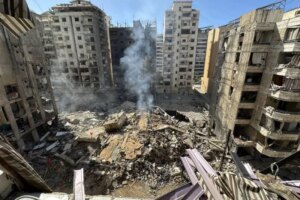
The most prominent of these factors relates to what can be called a “new equation” imposed by Hezbollah inside Lebanon for the first time after the last war that broke out about a year ago. The party, which found itself facing unprecedented political and media pressure, succeeded to a large extent in absorbing a large part of these campaigns, and repositioned itself internally through a calmer and more disciplined approach. This approach allowed him to reorganize his ranks and restore his political image in light of a volatile internal reality, which was naturally reflected in the behavior of his opponents as well, who began to review their calculations in light of regional changes.
The second factor is the general regional and international climate, which is moving at an accelerated pace towards settlements instead of confrontations. The entire region is experiencing a delicate transitional phase, during which the major capitals are witnessing a redrawing of relations and alliances after a series of long conflicts. This tendency toward regional calm is directly reflected in Lebanon, which is often an arena for outside influences. As the escalation in the region decreases, the Lebanese interest becomes more inclined towards internal stability, especially with the approaching sensitive political entitlements.
The political forces in Lebanon have also come to realize that escalation at this stage is no longer useful. The internal scene is approaching parliamentary elections that will determine the future balances within Parliament, and thus within official institutions. Therefore, most parties prefer to maintain a stable situation, at least until this entitlement passes, in order to estimate their true size in light of the results.
On the other hand, it cannot be said that the current calm means the end of disputes or contradictions between the Lebanese components. Rather, it is closer to a temporary “political truce” imposed by necessities. Everyone is anticipating the next stage, and everyone realizes that what comes after the elections will be different from what came before it. These elections may draw a new political equation that redistributes the centers of power and influence within the state, and opens the door to broader settlements, both at home and in the region.
The relative calm that the country is witnessing is not just a coincidence, but rather a cumulative result of internal and regional factors that made the Lebanese forces tend to cool the fronts while waiting for what the next stage will produce. Lebanon today stands on the threshold of a turning point, which may determine the features of its political balance for years to come.