The escalation between the Houthis and Saudi Arabia entered a more dangerous phase, after the group announced the imposition of a “naval blockade” on the Kingdom, threatening to move to a comprehensive war if what it describes as the blockade imposed on Yemen is not lifted, at a time when regional tensions are expanding in parallel with the confrontation between the United States and Iran.
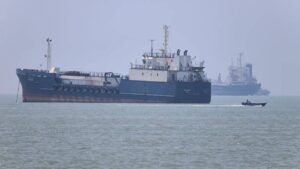
According to a report by journalist Lior Ben Ari, on the Israeli “Ynet” website, the Houthi military spokesman, Yahya Saree, said: “The Houthi forces announce the imposition of a naval embargo on the Saudi enemy, based on the tit-for-tat equation, and it will go into effect immediately upon publishing this statement.”
He added: “We also affirm the right of our people to respond to the siege with a siege, and to confront every escalation with a similar escalation.”
Sarie stressed that “the Yemeni armed forces are fully prepared for all eventualities,” warning that “any foolish action carried out by the Saudi enemy through any escalation will be met with a comprehensive and decisive escalation.”
He called on the Yemeni people to “continue general mobilization, fully prepare for all scenarios and developments, and support the fronts with fighters.”
He also greeted the participants in the demonstrations held in support of the Houthi forces, stressing that the group “will spare no effort to restore their rights and end the unfair siege imposed on them, whatever the repercussions.”
Shortly after the statement was issued, the Houthi leader Hizam al-Assad issued an additional threat, saying: “Yemeni forces are heading towards an all-out war if the siege on our country is not lifted.”
The practical implications of the Houthi declaration have not yet become clear, as the statement did not include any reference to the Bab al-Mandab Strait, the strategic passage linking the Red Sea to the Gulf of Aden, which the Houthis had previously tried to disrupt by targeting ships during the war in Gaza.
Reuters reported last week, in light of the escalation between the United States and Iran, that Tehran had asked the Houthis, its allies from whom they receive funding and weapons, to close the Bab al-Mandab Strait if US President Donald Trump carried out his threat to strike Iranian power stations and bridges.
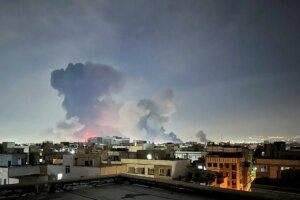
The new announcement comes exactly a week after the start of the escalation between the Houthis and Saudi Arabia, following a Saudi strike that targeted Sanaa International Airport.
The Houthis claimed that the Saudi attack aimed to prevent an Iranian plane from landing at the airport, as part of what they described as a “siege” that Riyadh is trying to impose on them to isolate them.
Hours after the Saudi attack, the Houthis, in response to it and within the “eye for an eye” equation, launched missiles towards airports inside Saudi Arabia.
Although no new attacks have been recorded since then, the level of tension has remained high between the two sides.
Saudi Arabia had previously led a massive bombing campaign against the Houthis, allies of Iran, after they took control of the capital, Sanaa, at the end of 2014 and overthrew the internationally recognized government.
At that time, Riyadh saw the Houthi advance as a direct threat to its security and its regional influence. In 2015, it formed a military coalition of Arab countries and launched a broad operation that included thousands of air strikes and the imposition of a naval and air blockade, in addition to supporting Yemeni government forces, with the aim of stopping the Houthi advance and returning the government to power.
Although the coalition prevented the Houthis from controlling all of Yemen, it was unable to defeat them, as they maintained their control in the north of the country, and over the years they continued to launch missiles and drones towards Saudi cities, airports, and oil installations.
On the other hand, the war led to one of the most dangerous humanitarian crises in the world, while the Saudi-led coalition was subjected to severe international criticism due to the deaths of civilians and damage to infrastructure.
Since 2022, Saudi Arabia has changed its approach and begun pushing for direct talks with the Houthis, and the border has remained relatively calm during most of the period leading up to the current escalation.
Riyadh also focused on trying to reach a political settlement and supporting the Yemeni government through economic aid, despite the failure to achieve a comprehensive peace agreement.
With the announcement of the naval blockade and raising the ceiling of threats to the level of “total war,” the path of calm between Riyadh and the Houthis returns to a very fragile point, while Bab al-Mandab may once again turn into one of the most dangerous pressure arenas in the region.