The confrontation between the United States and Iran is heading towards a more dangerous stage, amid Israeli estimates that the war may expand dramatically over the next few days, unless a fundamental change occurs at the last minute, with the possibility of Iranian missiles reaching Israel and the Gulf states engaging in a wide confrontation affecting oil and energy facilities, ports and airports.
According to a report by journalist Shai Levy on the Israeli “Mako” website, the American-Iranian confrontation is entering its ninth day, while Israeli circles are dealing with the possibility of launching Iranian missiles towards Israel as a “matter of time” if the situation remains as it is.
The report indicated that the two sides practically announced that the memorandum of understanding signed in June was no longer valid, which reinforces estimates that Washington and Tehran are moving towards a path that leads to the expansion of the war and its repercussions on the entire region.
In parallel, Reuters quoted a senior Iranian official as saying that the mediators put forward a proposal for a 10-day ceasefire, in an attempt to revive negotiations and prevent a slide into a broader confrontation.
Danny Citrinovic, a researcher at the Israeli Institute for National Security Studies, warned that “events are getting more and more out of control,” adding: “At first, it seemed that Washington and Tehran were interested in keeping the confrontation within certain limits, but the conflict is now worryingly approaching a point at which these limits may collapse.”
According to his estimates and the estimates of other experts and officials in the Israeli security system, the confrontation may expand in the coming days, leading to the Gulf states entering into a comprehensive war, especially through Iranian missile attacks targeting oil facilities, power stations, ports, airports, and other vital facilities.
The report considered that the Iranian missile attack that targeted yesterday the port of Aqaba in Jordan constitutes evidence of this danger and the Iranian pattern of action. According to the Israeli army, air defense systems were activated after the missiles were fired towards Aqaba, with the aim of preventing shrapnel from falling in Eilat, while Israel continues to threaten that any injury will be met with strong strikes inside Iran.
At the same time, the United States continues to significantly strengthen its forces in the region, after sending dozens of refueling planes to Israel to ensure greater flexibility in air operations. There were also reports that dozens of F-35 and F-16 fighters were on their way to the region.
So far, there are no signs of a ceasefire, as both sides continue to raise the level of escalation. On the other hand, the foreign ministers of the two countries spoke during the past hours about the possibility of returning to the diplomatic track, but no actual progress has been achieved so far.
The Iranian Foreign Ministry spokesman confirmed that the mediators presented new proposals, while the Iranian Interior Minister went to Pakistan to hold talks related to the file.
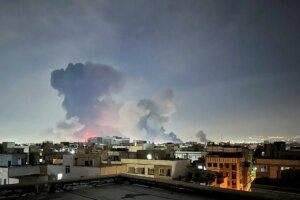
In the military context, the US Central Command reported that it carried out attacks targeting dozens of sites over a period of hours, and focused again on striking Iranian capabilities that threaten ships in the Strait of Hormuz.
After the United States expanded its list of targets, Iran responded by launching missiles at strategic structures inside the Gulf states. Kuwait suffered the bulk of the damage, as a water desalination facility and an oil refinery were damaged, while infrastructure in 7 countries was damaged, amid Iranian threats to target ports as well.
The American targets included major bridges in Hormozgan Province and a railway intersection near Bandar Abbas, in a move that seemed directed at paralyzing the IRGC’s logistical system.
The report indicated that these strikes isolate the region in preparation for the possibility of carrying out a limited ground operation inside Iran. Tehran also announced that missiles hit the construction site of the planned nuclear power plant in the southwest of the country.
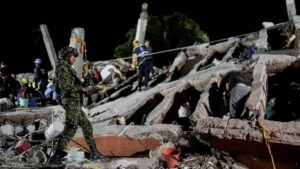
In parallel with the continuation of the strikes, the number of American deaths continues to rise. The US Central Command announced the death of an additional soldier in northern Iraq, after he died during a controlled detonation of unexploded ordnance originating from a downed Iranian attack drone.
A day before that, it was announced that two American soldiers were killed in a missile attack inside Jordan, while estimates indicate that the third soldier who was declared missing may have been killed in the same attack.
The US Central Command reported that remains that have not yet been identified were found at the site of the attack in Jordan, and that the verification process is still ongoing.
Since the beginning of the war, 17 American soldiers have been killed, while more than 420 others have been wounded.
Between the accelerating military reinforcements, the expansion of the target bank, and the escalation of Iranian attacks on Gulf facilities, the region appears to be facing critical days that may determine whether diplomatic contacts will succeed in curbing the escalation, or whether the war will move to a level that is difficult to contain.