The Ministry of Public Works and Transport, under the guidance of Minister Fayez Rasamny, continues to follow up on the repercussions of the tragic accident that occurred on the main Keserwan Road at the Wata al-Joz Junction, resulting in a number of victims.
The Ministry announced that Minister Rasamny made direct contacts immediately after the accident occurred, and also dispatched the Director General of Roads and Buildings, Engineer Pierre Maalouf, to the site, where he conducted a field inspection accompanied by the mayors of Faytroun, Rami Rizk, and Watta al-Joz, George Sfeir, in addition to representatives of the Keserwan Municipalities Union, to assess the reality of the road, the risks, and the procedures required urgently.
As part of following up on the file, it was decided to hold a meeting at the Ministry of Works next Thursday, with the participation of the General Directorate of Roads and Buildings, the mayors of Faytroun and Wata al-Joz, and the Keserwan Municipalities Union, to present the available maps and technical studies, and determine the most appropriate engineering option to address this point, in a way that achieves the highest standards of traffic safety and prevents the recurrence of accidents.
The Ministry confirmed that it is following up the file with the highest priority, in coordination with local authorities and concerned authorities, indicating that it will initiate the necessary procedures in accordance with technical and administrative principles, based on the results of field inspection and technical studies, to reach a sustainable solution that enhances the safety of road users.
The Ministry also renewed its condolences to the families of the victims, stressing that protecting the lives of citizens remains its top priority, and that it will continue to follow up on this file until the required treatment is completed.
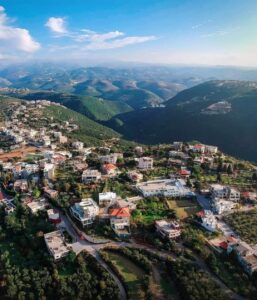
The Wata al-Joz junction on the main Keserwan road is one of the points that witnesses heavy traffic, and is used daily by thousands of vehicles linking the towns of Keserwan and Al-Futuh to the mountainous and coastal areas, which makes any engineering or traffic defect in this section a source of great danger to public safety.
The recent accident brought back to the forefront repeated demands for a radical treatment of black spots on Lebanese roads, by improving engineering design, strengthening means of protection and traffic signals, and addressing dangerous turns and intersections, in light of the high number of accidents that claim lives and leave serious injuries.
The Ministry of Works’ move comes within the framework of efforts to develop a permanent solution for the site, instead of just temporary measures, in a way that reduces the risk of accidents and improves the level of traffic safety on this vital axis.