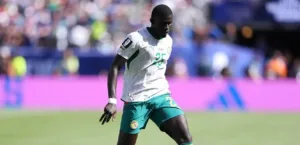
The 39-year-old player is shining in his sixth World Cup participation, a record he shares with Portuguese Cristiano Ronaldo, scoring 8 goals and providing 3 assists in this edition.
While he leads the Golden Shoe race jointly with Frenchman Kylian Mbappe, fans are seeing a completely different version of Messi compared to the player who began his career with Barcelona in 2003.
All eyes are on Messi again in the semi-final against England on Wednesday at Atlanta Stadium.
At a time when most of the big names suffer from decline with age, the elite find ways to adapt, such as Ronaldo, who turned into an outright striker when he lost his speed.
Messi style
But Messi did not change his playing style simply to cope negatively with his old age or to compensate for his physical slowness. Rather, he reinvented his method and changed his roles in order to remain dominant and the primary controller of the course of matches and tournaments.
In this edition of the World Cup, Messi shows a greater ability to create chances with less running, as he fired 33 shots and created 21 chances, bringing his total contributions to 54 attempts and assists, which is the highest combined rate since what the late legend Diego Maradona achieved in the 1986 World Cup, despite spending 47 percent of the distance on foot, which is the highest percentage for any player in the tournament.
Messi covers the shortest distance on average compared to all Argentine players who participated for more than 20 minutes, at a rate of only 8.2 kilometers per 90 minutes, with his quick starts declining to 2.7 starts per match compared to 5.3 4 years ago.
England will have to achieve what only Poland has succeeded in during Messi’s last 15 World Cup matches, which is to prevent him from scoring or assisting, as he has 16 goals and 7 assists in those matches.
Since the 16-year-old scored his first appearance with Barcelona in a friendly match against Porto led by Jose Mourinho, where he played on the right wing, dribbling and penetrating inside, Messi has reinvented himself at least five times to develop into the player he represents today with Argentina and the American club Inter Miami.
When Ronaldinho saw Messi training for the first time, he said, “He will be the best.” Two years later, in August 2005, the Argentine flea presented himself to the world in the Juan Gamper Cup against Juventus, and coach Fabio Capello was so amazed by the performance of the 18-year-old that he tried to sign him.
By the age of 21, and with Ronaldinho in decline, Barcelona coach Frank Rijkaard said clearly: “Right in the heart of events, the more he touches the ball, the better it is for the team.”
During the first months of Pep Guardiola’s tenure as coach of the Catalan team in 2008, the right side was his private corridor, and his decision to move him from the wing came for defensive reasons as he did not retreat into coverage, but the Spanish coach knew that Messi would end up deep in the offensive operations, so that the team would be built around his new position.
On May 2, 2009, at the Santiago Bernabeu Stadium against Real Madrid, Guardiola decided to move him from the wing to be at the front of the attack without traditional roles, and he moved back to receive, pass, and make decisions, so the confrontation ended with a score of 6/2 in favor of Barcelona, announcing the birth of the imaginary striker position, a style similar to what Gustav Sebes did with Hungary in 1953 against England, and what Johan Cruyff did with the Netherlands.
Messi turned into a dilemma with no solution. When he retreated between the lines, the defenders had to chase him and leave spaces behind them or give him freedom of movement, and no option worked with the presence of Xavi Hernandez, Andres Iniesta and Yaya Toure behind him.
Guardiola repeated the experience in the Champions League final against Manchester United, where Messi scored with a header 20 minutes before the end.
Between 2011 and 2013, the Argentine captain scored 96 goals in 69 matches in the Spanish League, making the Golden Ball for the best player in the world a semi-permanent possession for him in the years 2010, 2011, 2012, 2015 and 2019, reaching 8 Golden Balls, the first of which he won at the age of 22 years and the eighth at the age of 36 years.