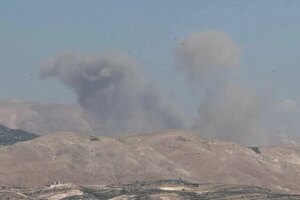
The killing of the commander of the 52nd Battalion in the Israeli Armored Brigade, Lieutenant Colonel Dor Gedaliah Ben Simhoun, and three other soldiers in an ambush carried out by Hezbollah in southern Lebanon, ignited a wave of intense debate within Israel, which was not limited to the political level, but extended to public opinion and social media platforms.
Following the operation, Israeli Minister of National Security Itamar Ben Gvir and Finance Minister Bezalel Smotrich quickly launched escalatory positions in which the former called for “burning Lebanon,” while the latter spoke of the necessity of “opening the gates of hell,” in statements that sparked widespread reactions within Israeli circles.
Ben Gvir wrote on the “X” platform that “the entire Lebanon must be burned,” considering that the security of the Israelis takes precedence over any other considerations, while Smotrich supported this approach, calling for a harsher military response.
However, these statements did not pass without internal criticism, as a number of Israeli commentators and activists launched a scathing attack on Ben Gvir and Smotrich, holding them, along with Prime Minister Benjamin Netanyahu, responsible for the continuation of the war and the fall of the soldiers.
Some critics described the two ministers’ statements as “reckless” and “dangerous,” warning of their political and diplomatic repercussions, while others saw that the escalatory rhetoric does not provide solutions but rather exacerbates the crisis and increases human losses.
Israeli commentators also pointed out that such statements might be used against Israel in international forums, considering that they give its opponents additional material to criticize its military policies.
On the other hand, Israeli voices emerged calling for the search for a political and diplomatic path that would put an end to the confrontation, considering that the continuation of the war would only lead to more losses, and that reaching long-term understandings would serve the interests of both parties more than the continuing spiral of escalation.
These debates reflect the extent of the division within Israeli society regarding the management of the war in Lebanon. They also reveal the extent of the pressures facing the Israeli government after the recent losses on the northern front, amid increasing questions about the feasibility of continuing the confrontation and its ultimate goals.