In a dangerous indication of the expanding confrontation with Lebanon, Israeli reports revealed that the political leadership granted the Israeli army greater freedom of action against Hezbollah, amid growing talk within the military establishment that “Beirut is no longer outside the target bank.”
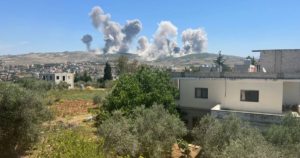
According to a report by journalist Amir Boukhbout on the Hebrew “Walla” website, the Israeli army has expanded its operations inside Lebanese territory until beyond the “yellow line,” while a senior Israeli officer hinted that the Lebanese capital is no longer immune from Israeli strikes if “operational opportunities” are available to target sites or figures affiliated with “Hezbollah.”
The report indicated that the Israeli security establishment is still subject to some American restrictions, after the White House requested to avoid targeting residential towers in Beirut, in order to preserve the chances of continuing negotiations with the Lebanese government.
However, despite these restrictions, the report quoted a security source as saying that the Israeli political leadership “loosened the restrictions” and gave the Israeli army a wide margin to act against “Hezbollah,” considering that the party “significantly violated” the ceasefire agreement.
The source added that Israel “is no longer able to control itself” towards what he described as “hostile attacks” against Israeli soldiers and residents of the north.
In this context, the Israeli political level approved a series of steps described as “thoughtful but firm,” while Israeli Chief of Staff Eyal Zamir approved an operational plan that includes a wide wave of strikes.
According to the report, the plan includes targeting Hezbollah leadership figures, field commanders, and weapons depots, in addition to the operators of the party’s drone systems.
Israeli security sources confirmed that “the equation has changed,” and that “any violation will be met with a harsh response.”
The report also revealed that the head of the Technology and Logistics Division in the Israeli army, Major General Rami Abu Derham, approved large-scale purchases of means of protection intended for military vehicles, armored vehicles, and military sites, with the aim of confronting the threat of Hezbollah drones.
The sources added that the logistics units operating inside southern Lebanon increased the pace of installing protection networks over military sites and vehicles, in an attempt to limit the losses of suicide marches.
This shift comes after escalating criticism within the Israeli security establishment of the policy of “restraint” towards Hezbollah, as military officials considered that the political delay had harmed the operational achievements achieved during the past months.
The state of waiting associated with the US-Iranian negotiations has also raised dissatisfaction within the Israeli security services, which believe that the delay in expanding operations weakens Israeli deterrence and exacerbates the northern residents’ feeling of loss of security.
This escalation in Israeli rhetoric reflects the extent of the shift in the rules of engagement on the Lebanese front, where threats are no longer limited to the south, but Beirut itself is now being mentioned publicly as part of any future response equation.